Blog
Need Awning Repair? Find the Best Service Near You
Door Serv Pro
Reviewed by the Door Serv Pro service team · Trained, professional garage door technicians
Last updated June 24, 2026
Why Professional Awning Repair Service Matters for Your Home
When your awning repair service needs arise, finding the right professional can make all the difference between a quick fix and ongoing frustration. Whether you're dealing with torn fabric, a malfunctioning motor, or structural damage, getting expert help ensures your outdoor space stays functional and beautiful.
Quick Answer: What to Look for in Awning Repair Service:
- Common repairs: Fabric tears, motor issues, frame damage, sagging material
- Professional benefits: Expert diagnosis, quality materials, warranty protection
- Service types: Retractable awning repair, fabric replacement, structural fixes
- When to call: Difficulty retracting, visible damage, water stains, operational problems
Your awning protects your outdoor space from harsh weather while enhancing your home's curb appeal. But like any outdoor fixture, awnings face constant exposure to sun, wind, rain, and temperature changes that can cause wear and damage over time.
Many homeowners find that professional awning repair is far more cost-effective than full replacement. According to industry data, repairing an awning typically costs significantly less than installing a new one, especially when the frame remains structurally sound.
The key is recognizing when your awning needs attention and choosing a reputable service provider who can restore both function and appearance. From simple fabric patches to complex motor repairs, the right professional brings the expertise and tools needed for lasting results.
Signs Your Awning Needs Professional Repair
Your awning works hard every day, standing guard against sun, rain, wind, and whatever else Mother Nature throws its way. But even the toughest awnings eventually show signs of wear. The good news? Catching problems early can save you from much bigger headaches down the road.
Think of your awning like a faithful friend who's always there for you – it deserves a little attention when it starts asking for help. Sagging fabric is often the first cry for assistance, usually meaning the material has stretched over time or water is pooling where it shouldn't. Rips and tears are pretty obvious red flags that need immediate attention before they turn into gaping holes.
Faded material might seem like just a cosmetic issue, but severe fading often signals that your awning's fabric is breaking down from UV exposure. Water stains tell a different story entirely – they're often your awning's way of saying its waterproofing isn't what it used to be.
Nobody wants to deal with mold or mildew, but these unwelcome guests love to set up shop on awnings that aren't draining properly. If you're in an area prone to severe weather, you might benefit from learning about Storm Resistant Awning Solutions Hagerstown or find how to Weatherproof Your Outdoor Space with Waterproof Awnings.
The structural signs are just as important. A bent frame isn't just unsightly – it's a safety concern that usually happens after strong winds or heavy snow loads. And if you're hearing squeaking or grinding noises when operating your awning, those sounds are telling you something inside isn't moving as smoothly as it should.
Perhaps most frustrating of all is when you have difficulty extending or retracting your awning. Whether it's a manual crank that suddenly feels like you're lifting weights or a motorized system that's gotten sluggish, these operational hiccups are clear signals that professional awning repair service is needed.
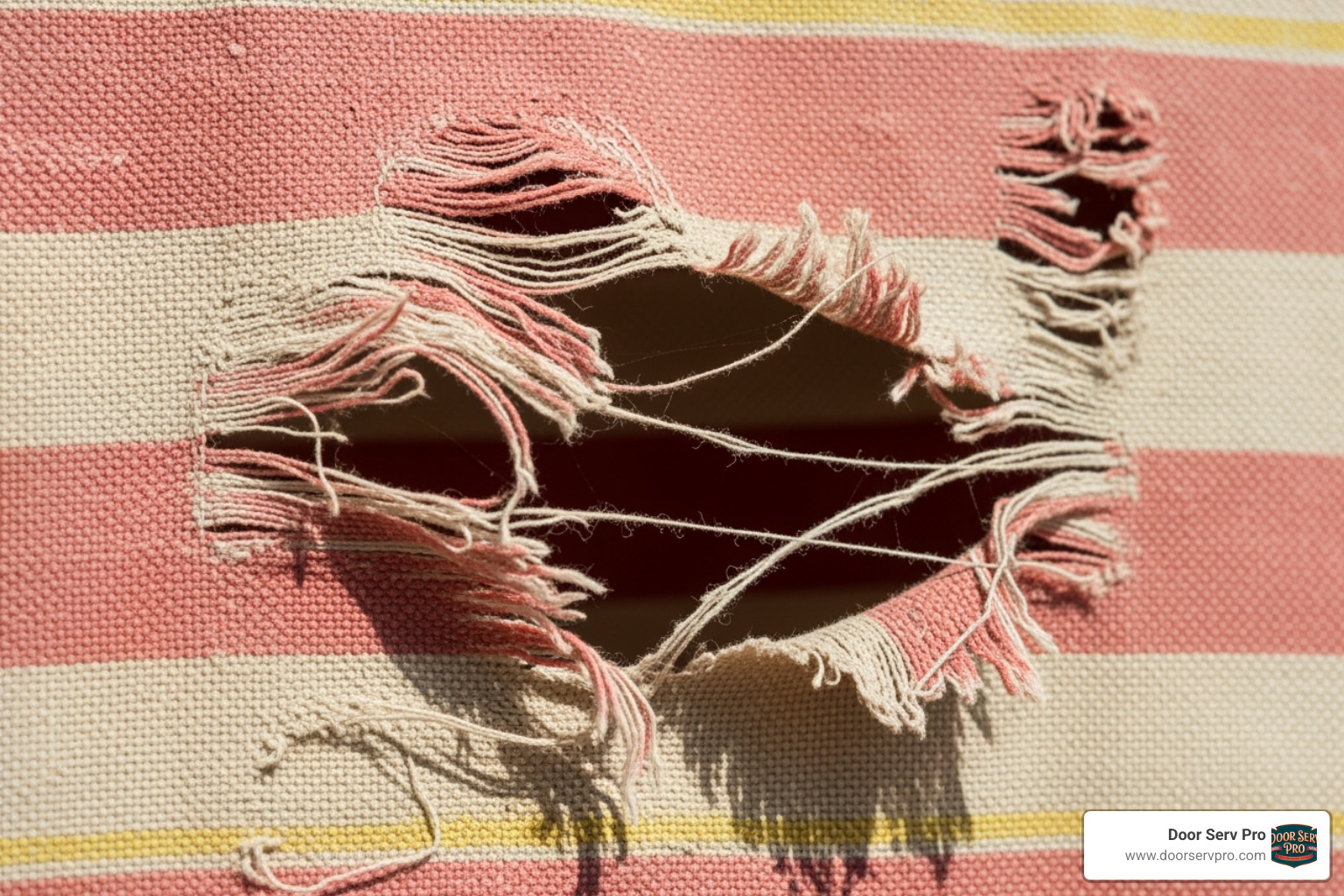
Visible Fabric and Frame Damage
The fabric and frame of your awning take the brunt of weather exposure, so they're often the first places you'll notice problems. Fraying edges might start small, but they're like a loose thread on your favorite sweater – ignore them, and they'll quickly become bigger tears.
Holes in your awning fabric range from tiny punctures (maybe from a wayward branch) to larger rips that let rain pour through. Either way, they compromise your awning's main job of protecting your outdoor space.
Discoloration goes beyond simple fading. When you see uneven color changes or strange spotting, it often means your awning has been exposed to chemicals or is experiencing serious material breakdown.
The frame deserves attention too. Rust on the frame isn't just ugly – it weakens the entire structure and can leave unsightly stains on your home's exterior. Dented components from storm damage or falling debris affect both the awning's appearance and its ability to operate smoothly.
Loose fittings might seem minor, but they're actually quite serious. When bolts and screws work loose, parts start to wobble and sag, creating stress on other components. Peeling paint on metal frames does more than hurt curb appeal – it exposes the metal underneath to rust and corrosion.
Operational Failures
When your awning stops working properly, it's usually trying to tell you something important. Motor not responding in a motorized awning often points to electrical problems or a motor that's reached the end of its life.
If your awning retracts slowly, it might be dealing with a tired motor, worn gears, or increased friction in the support arms. Uneven rolling is particularly problematic because it can damage the fabric and create permanent creases or stretching.
Modern awnings often come with sensors, but sensor malfunctions can cause your awning to extend during windstorms or refuse to retract when it should. These smart features are great when they work, but they need professional attention when they don't.
If you're curious about the convenience that motorized systems can offer when they're working properly, check out our guide on Investing in Comfort: The Benefits of Motorized Awnings.
When any of these operational issues arise, don't wait for them to get worse. A professional awning repair service can diagnose exactly what's wrong and get your outdoor space back to working perfectly.
Common Awning Problems and What Can Be Repaired
No matter what type of awning graces your outdoor space, problems can arise over time. The good news? Most issues are totally fixable with the right awning repair service. Whether you're dealing with retractable awnings, fixed awnings, metal awnings, fabric awnings, motorized awnings, or manual awnings, understanding what can be repaired helps you make smart decisions about your outdoor investment.
Think of awning repair like fixing a favorite jacket - sometimes you need a simple patch, other times a complete re-lining, but rarely do you need to throw the whole thing away. The same principle applies to your awning, where the frame often outlasts multiple fabric covers and mechanical components can be refreshed or replaced.
Fabric Issues: Tears, Fading, and Sagging
Your awning fabric takes a beating from Mother Nature year-round. Sun, rain, wind, and temperature swings all leave their mark, but fabric problems don't automatically mean you need a whole new awning.
Patching small tears is often the first line of defense. A skilled technician can seamlessly repair minor rips or holes, stopping them from turning into major headaches. It's like getting a small cut stitched up before it becomes a bigger problem.
When seams start coming apart, re-stitching can work wonders. Over time, the threads holding your awning together naturally deteriorate, but reinforcing these connections extends your fabric's life significantly.
For more extensive damage - think major fading, widespread tears, or fabric that's stretched beyond repair - fabric replacement becomes the smart choice. This is especially true when your frame remains solid and functional. You can Improve Awning with Fabric Replacement while keeping your existing structure. Choosing the right replacement material matters too, and our guide on Best Awning Fabric Choices Hagerstown can help you select something that'll last.
Sometimes sagging fabric just needs tension restoration. Adjusting the tension mechanisms can transform a droopy, sad-looking awning back into a taut, professional appearance that makes your outdoor space shine.
Structural and Frame Damage
Your awning's frame is like the skeleton - it needs to be strong and properly aligned for everything else to work correctly. Frame damage might look scary, but many issues are surprisingly repairable.
Bent support arms happen more often than you'd think. Heavy snow loads or strong winds can twist these components, but experienced technicians can often straighten or replace them, bringing your awning back to full strength.
Rust replacement is crucial for metal components. When rust starts eating away at bolts, brackets, or other hardware, replacing these parts prevents further deterioration and keeps your awning safe and secure.
Mounting bracket issues develop over time as fasteners work loose from weather exposure and normal use. Re-securing these connection points ensures your awning stays firmly attached to your home where it belongs.
Even valance straightening makes a difference. That decorative front edge can get bent or warped, but fixing it dramatically improves your awning's overall appearance and your home's curb appeal.
Mechanical and Motor Malfunctions
Modern awnings rely on sophisticated mechanical systems, especially motorized models. When these components fail, your convenient shade solution can become a frustrating eyesore. Fortunately, most mechanical problems have straightforward solutions.
Motor repair addresses the heart of motorized systems. Whether your awning won't extend, retracts sluggishly, or stops working entirely, motor issues often involve repairable components rather than complete replacement needs.
Sensor replacement keeps your automated features working properly. Wind sensors, sun sensors, and rain sensors protect your awning by automatically retracting it during harsh conditions. When these fail, your awning loses its self-protection capabilities.
Gear adjustments solve many operational hiccups. Internal gears can wear down or slip out of alignment, causing jerky movement or complete failure. Proper adjustment or replacement restores smooth, reliable operation.
For manual systems, crank repair ensures easy operation. A stiff, broken, or missing crank makes your awning practically unusable, but these mechanisms are typically straightforward to fix or replace.
| Awning Issue | Repair or Replace? | Typical Solution |
|---|---|---|
| Small fabric tears | Repair | Professional patching |
| Extensive fabric damage | Repair (fabric only) | Complete fabric replacement |
| Bent support arms | Repair | Straightening or arm replacement |
| Motor failure | Repair | Motor rebuild or replacement |
| Rusted hardware | Repair | Component replacement |
| Sensor malfunction | Repair | Sensor replacement |
| Frame damage | Depends on severity | Individual component repair |
Need Help?
Contact us today to discuss your needs. Our team is ready to help.
About the author
Door Serv Pro
More articles
View all postsKeep reading
Related articles
Ready to Get Started?
Whether you need a repair, maintenance, or a new installation, our expert team is here to help.