Blog
The Ultimate Guide to Garage Door Maintenance and Tune-Ups
Door Serv Pro
Reviewed by the Door Serv Pro service team · Trained, professional garage door technicians
Last updated June 24, 2026
Why Your Garage Door Needs Regular Tune-Ups
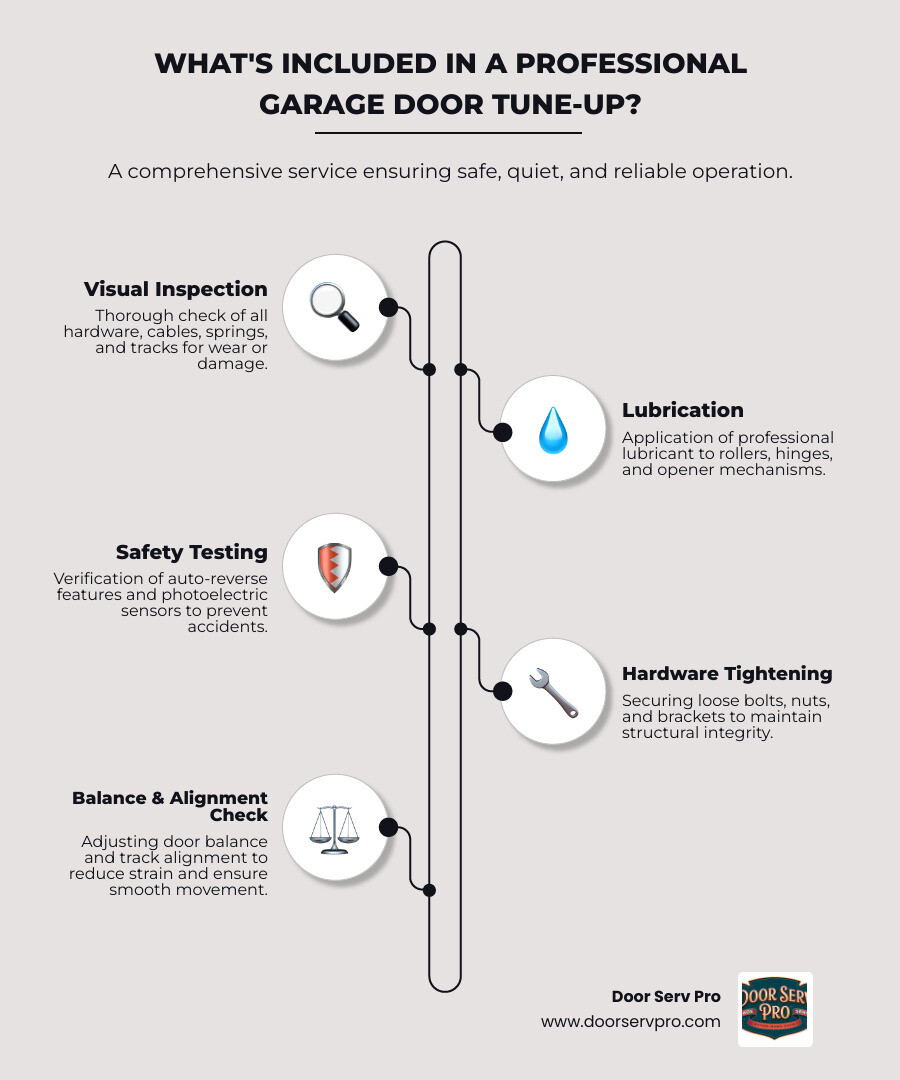
A garage door tune-up is a comprehensive maintenance service that inspects, adjusts, and lubricates all critical components of your garage door system to ensure safe, quiet, and reliable operation.
What's included in a garage door tune-up:
- Visual inspection of all hardware, cables, springs, and tracks
- Lubrication of moving parts like rollers, hinges, and opener mechanisms
- Safety testing of auto-reverse features and photoelectric sensors
- Hardware tightening of loose bolts, nuts, and brackets
- Balance and alignment checks to reduce strain on the opener
Your garage door is the largest moving piece of equipment in your home, and it works harder than you might think. The average garage door goes up and down more than a thousand times per year - that's a lot of wear and tear on springs, cables, rollers, and tracks.
Regular maintenance isn't just about convenience. It's about safety. A neglected garage door can become dangerously unpredictable, with heavy components under extreme tension that could cause serious injury if they fail unexpectedly.
Professional tune-ups catch small problems before they turn into expensive repairs or safety hazards. They keep your door operating smoothly, extend the life of expensive components like springs and openers, and give you peace of mind that your family is protected.
Common garage door tune-up vocab:
Why Regular Maintenance is Crucial for Your Garage Door
Your garage door quietly does its job day after day, but like any hardworking piece of equipment, it eventually starts sending you signals when it needs attention. The key is learning to recognize these warning signs before a minor issue becomes a major headache.
Listen to what your door is telling you. If you're hearing loud noises, grinding sounds, or persistent squeaking during operation, your door is practically shouting for help. These aren't just annoying sounds you should learn to live with - they're your first clue that something needs attention.
Watch how your door moves, too. Does it seem to jerk or hesitate as it opens and closes? Has it become noticeably slower than it used to be? These symptoms often indicate that your door is struggling with balance issues, worn components, or alignment problems that will only get worse with time.
The beauty of professional garage door tune-ups lies in their preventive power. Regular maintenance prevents those unexpected breakdowns that always seem to happen at the worst possible moment - like when you're rushing to work on a rainy morning or coming home late at night.
A well-maintained garage door system can extend the lifespan of expensive components like springs, cables, and openers by years. When everything is properly lubricated, aligned, and adjusted, your door operates smoothly and quietly, ensuring safe operation for your family while improving overall efficiency.
Think of it this way: would you rather spend a little on regular maintenance or a lot on emergency repairs? Neglecting your garage door leads to a domino effect of problems. Component damage spreads from one part to another - a worn roller can damage your track, a frayed cable can snap unexpectedly, or loose hardware can throw your entire system out of alignment.
More importantly, a neglected garage door creates real safety hazards. Springs under extreme tension can break without warning, doors can come crashing down, or safety features can fail when you need them most.
How Often Should Maintenance Be Performed?
Most garage doors thrive on an annual professional tune-up. Once a year gives us the chance to catch small issues before they become big problems and keeps all your components running smoothly.
If your garage door gets a workout - opening and closing multiple times throughout the day - consider semi-annual maintenance. High-usage doors simply need more attention to stay in peak condition.
Between professional visits, simple seasonal checks can make a big difference. A quick visual inspection when the seasons change helps you spot any obvious issues early. This proactive approach gives you something invaluable: peace of mind knowing your garage door is safe, reliable, and ready to serve your family for years to come.
Your Complete Garage Door Tune-Up Checklist
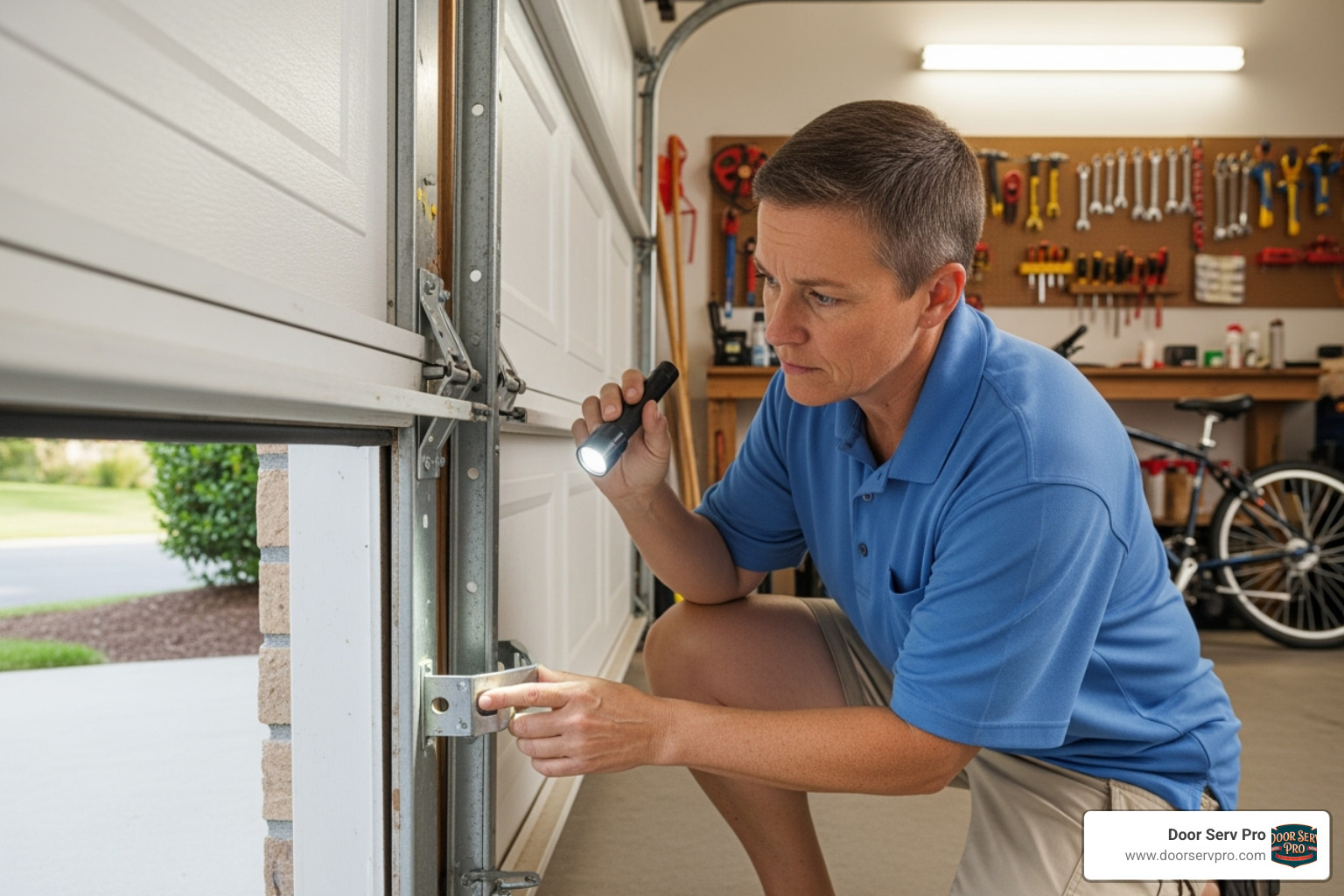
While some homeowners feel comfortable performing basic maintenance tasks, a comprehensive garage door tune-up involves several critical steps that require careful attention to safety and detail. Let's walk through the complete process, from initial safety preparations to final testing of your door's life-saving features.
Think of this checklist as your roadmap to a smoother, quieter, and safer garage door. Each step builds on the previous one, creating a thorough maintenance routine that can catch problems early and keep your door running like new.
Step 1: Safety Precautions and Essential Tools
Before we even think about touching a single bolt, safety absolutely must come first. Your garage door system contains springs under tremendous tension – we're talking about enough force to seriously injure someone if handled improperly. This isn't meant to scare you, but rather to emphasize the importance of taking the right precautions.
Always unplug your garage door opener from its power source before starting any maintenance work. This prevents the door from accidentally activating while you're working on it. If you need to secure the door in the open position, use C-clamps or locking pliers on the track just below one of the rollers. This simple step prevents the door from unexpectedly sliding down.
Now, let's gather the right tools for the job:
- Wrench set and socket set for tightening various fasteners
- Clean rags for wiping away old grease and debris
- Sturdy ladder to safely reach higher components
- Safety glasses to protect your eyes from debris or lubricant spray
- Garage door specific lubricant (silicone-based or white lithium grease works best)
Having quality tools makes all the difference. You don't need a professional workshop, but using the right lubricant – one that won't attract dirt and grime – will keep your door running smoothly for months to come.
Step 2: Inspect, Clean, and Tighten Hardware
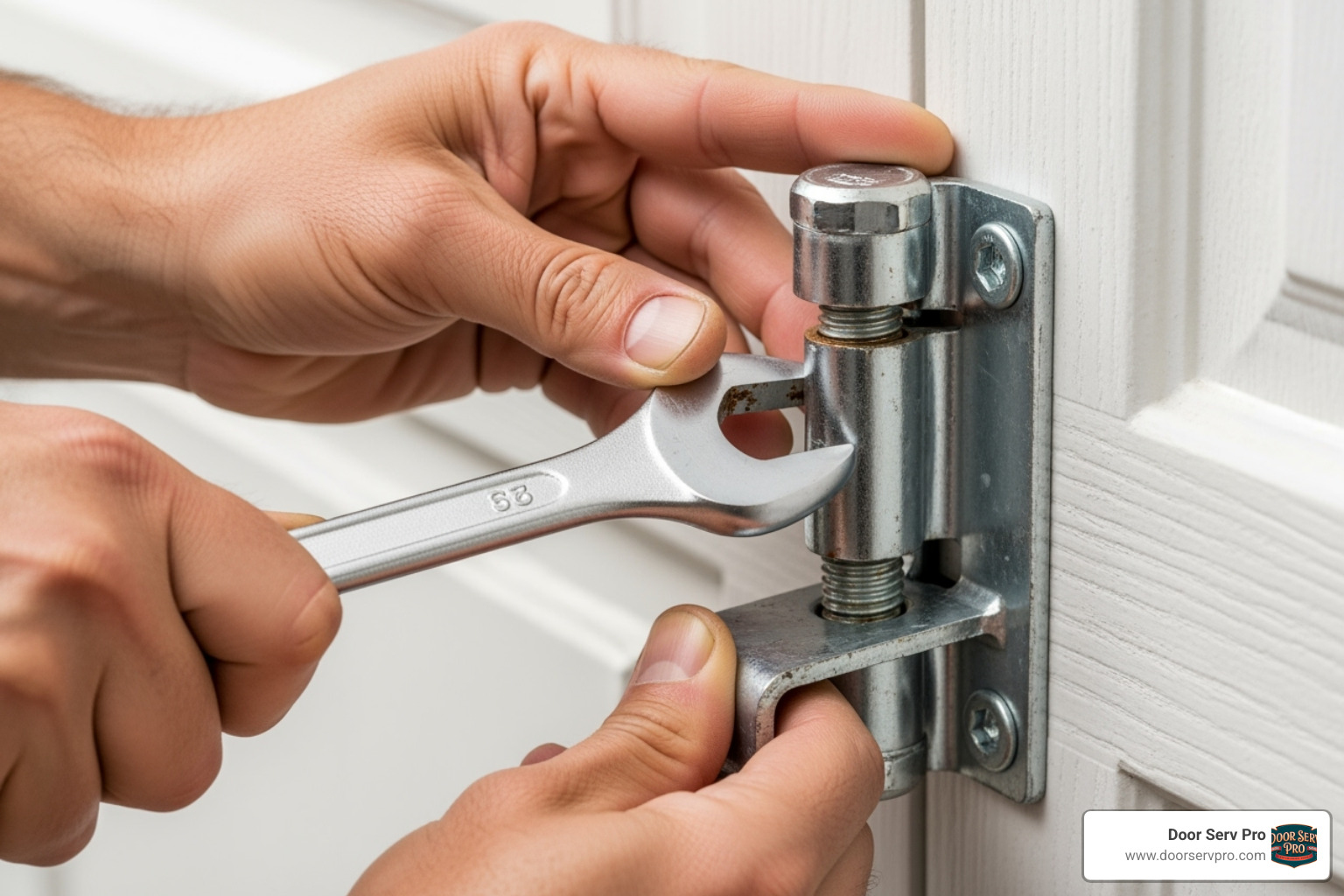
This is where we become garage door detectives, looking for clues that tell us how well your system is holding up. Start by inspecting your rollers for wear. These small but crucial components guide your door along its tracks, and they take a beating over time. Look for worn bearings, cracks, chips, or flat spots, especially on nylon rollers. Steel rollers should roll smoothly rather than slide or drag.
Next, check your cables carefully for any signs of fraying. These lift cables work under significant tension and are absolutely critical for balancing your door safely. Pay special attention to where they attach to the bottom roller bracket – this is where problems often start. If you spot any rust, deterioration, or broken strands, stop your maintenance routine and call a professional immediately. Frayed cables are not a DIY repair.
Examine your tracks for proper alignment by looking for any bends, crimps, or obvious misalignments. The tracks should be perfectly vertical and parallel to each other. Even a slight bend can cause your door to bind or, worse, come completely off its tracks. While you're at it, make sure the track brackets are securely fastened to the wall.
The constant vibration from daily use gradually loosens nuts, bolts, and screws throughout your garage door system. Go over all the fasteners on hinges, track brackets, and door panels with your wrench set, tightening them snugly but not over-tightening. This simple step prevents excessive wear and keeps everything stable.
Finally, clean your tracks and photoelectric sensors thoroughly. Dirt, dust, and debris love to accumulate in the tracks, creating obstacles for your rollers. Those small photoelectric sensors near the bottom of your tracks are vital for your door's auto-reverse safety feature, so keep them spotless and free of obstructions.
Step 3: Lubricate Moving Parts for Quiet Operation
Here's where the magic happens – proper lubrication can transform a noisy, grinding garage door into a whisper-quiet system. The key is using a high-quality, garage door-specific lubricant that won't attract every speck of dust in your neighborhood.
Focus on your rollers first, applying lubricant to the bearings inside them and where the roller wheel meets the track. Here's an important tip: avoid lubricating the track itself, as this can actually cause your rollers to slip and create more problems.
Your hinges need attention too – lubricate all the pivot points where metal meets metal. These hardworking components keep your door panels moving in harmony, and a little lubrication goes a long way toward reducing wear.
Spring lubrication requires a gentle touch. Whether you have overhead torsion springs or extension springs, coat them lightly with lubricant to prevent corrosion and allow the coils to move freely. This helps them maintain their tension properly and extends their lifespan.
Don't forget your opener's chain or screw mechanism. Chain-drive openers benefit from a light coat of white lithium grease on the chain itself. If you have a screw-drive opener, check your owner's manual for specific recommendations – some require particular lubricants, while others work best with none at all.
Proper lubrication can eliminate most common garage door noises like rattling, grinding, and squeaking. However, if you're still hearing straining sounds or loud banging after lubrication, these noises often indicate more serious issues that need professional diagnosis.
Step 4: Test Critical Safety Features
Now comes the most critical part of your garage door tune-up – testing the safety features that protect your family. These tests might seem simple, but they could literally save lives.
Start with the balance test. Close your door completely, then pull the emergency release cord to disengage the opener. Manually lift the door to about the halfway point and let go. A properly balanced door should stay put without drifting up or down. If it moves on its own, your springs are out of balance and need professional adjustment – this isn't something to tackle yourself.
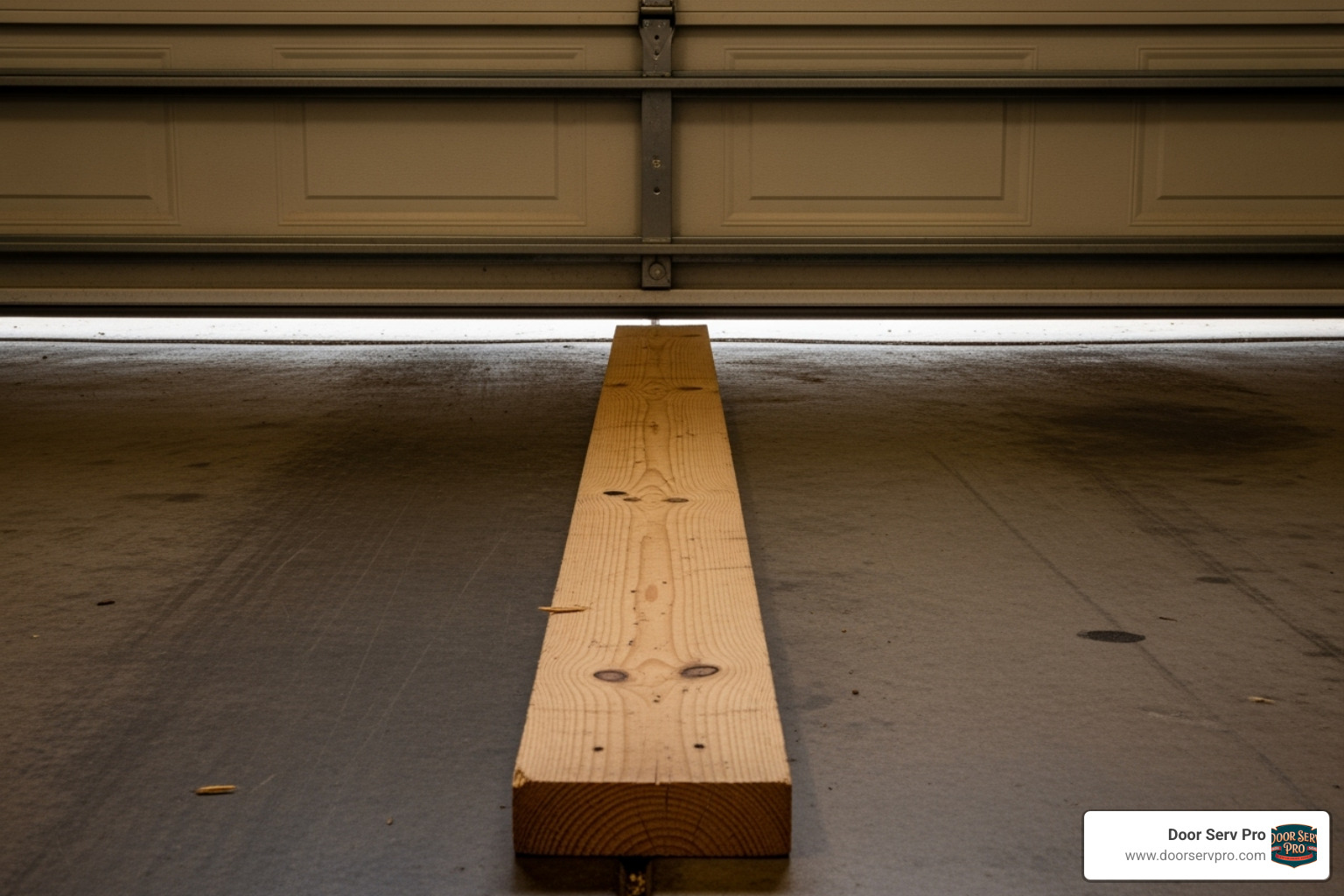
The auto-reverse test is straightforward but essential. Place a 2x4 board flat on the floor directly in the path of your closing door. When the door contacts the board, it should immediately stop and reverse direction. If it doesn't respond properly, the opener's force settings may need adjustment, or there could be a mechanical problem with the reversal mechanism.
Test your photoelectric sensors by waving your hand or foot through the invisible beam while the door is closing. The door should stop immediately and reverse direction. These sensors work as a team, so make sure both are properly aligned and completely free of dirt, cobwebs, or any other obstructions.
Finally, check your emergency release cord – that red cord hanging from your opener. This feature allows you to manually operate your door during power outages. Make sure it's easily accessible and that pulling it effectively disconnects the door from the opener. Just remember: avoid using this feature when your door is open unless absolutely necessary, as the door might slam shut unexpectedly.
If any of these safety tests fail, don't attempt repairs yourself. These systems are designed to protect you and your family, and they need to work perfectly every time.
Knowing Your Limits: When to Call a Professional
Let's be honest – there's something satisfying about fixing things yourself. But when it comes to garage doors, there's a fine line between being handy and being in harm's way. While we absolutely encourage homeowners to handle basic maintenance like cleaning tracks and applying lubricant, some repairs require professional expertise that goes far beyond what any weekend warrior should attempt.
Think of it this way: your garage door weighs hundreds of pounds and operates under forces that could easily crush a car. The springs alone store enough energy to lift that massive door effortlessly – and that same energy can cause devastating injuries if released unexpectedly. Our team at Door Serv Pro has over 25 years of experience handling these powerful systems safely, and we've seen what can go wrong when well-meaning homeowners tackle repairs beyond their skill level.
Professional technicians bring more than just experience to the job. We have specialized tools designed specifically for garage door work, safety equipment that protects both us and your property, and the training to recognize problems that might not be obvious to the untrained eye. When you call us for a garage door tune-up, you're not just getting a repair – you're getting peace of mind that the job is done right the first time.
The Dangers of DIY Spring and Cable Repair
Here's where we need to have a serious conversation about safety. High-tension springs – whether they're the torsion springs mounted above your door or the extension springs on the sides – are essentially coiled steel loaded with incredible force. When these springs are properly installed and maintained, they're perfectly safe. But when they break or when someone without proper training tries to adjust them, they become dangerous projectiles.
We've responded to emergency calls where homeowners attempted spring repairs and ended up with broken bones, severe lacerations, or worse. The force released by a failing spring can knock out teeth, break fingers, or cause life-threatening injuries. It's not worth the risk, especially when professional spring replacement is both affordable and comes with safety guarantees.
Frayed cables present their own unique dangers. These steel cables work in partnership with your springs to lift and lower your door smoothly. When a cable starts to fray or snaps completely, your door can become wildly unbalanced. We've seen doors crash down unexpectedly, damaging cars, injuring people, and destroying the door itself.
The bottom line is simple: torsion springs, extension springs, and lift cables should only be serviced by trained professionals. Our NATE-certified team has the specialized tools and safety training to handle these components without putting anyone at risk.
Signs You Need a Professional Garage Door Tune-Up
Sometimes your garage door will practically shout that it needs professional attention. Other times, the signs are more subtle. Here's how to tell when it's time to put down the wrench and pick up the phone.
If your door fails any safety tests – whether it won't reverse when it hits an obstacle, doesn't respond to the photoelectric sensors, or fails the balance test – stop using it immediately and call us. These safety features aren't suggestions; they're literally life-saving mechanisms that must work properly.
Broken springs or cables are obvious emergencies. You'll usually hear a loud bang when a spring breaks, and the door will become extremely heavy or impossible to lift. Don't try to force it open or closed – you could make the damage much worse or hurt yourself in the process.
When your door comes off its tracks, it's often because of bent rails, worn rollers, or an unbalanced system. This might look like a simple fix, but forcing a door back onto its tracks without addressing the underlying problem usually causes more damage.
Significant panel damage isn't just cosmetic. Dented, cracked, or warped panels can throw off your door's entire balance, putting extra strain on the opener and other components. Sometimes we can replace individual sections, but severe damage might mean it's time for a complete door replacement.
An unbalanced door that won't stay in place during the manual test is telling you that the springs need professional adjustment. This puts tremendous strain on your opener and can cause premature failure of expensive components.
Finally, persistent loud noises that don't go away after basic lubrication usually indicate deeper mechanical problems. Grinding, rattling, or banging sounds often point to worn parts, misalignment, or other issues that require professional diagnosis.
When in doubt, give us a call. We'd rather take a quick look and tell you everything's fine than have you deal with an emergency repair later. That's what being neighbors is all about.
Frequently Asked Questions about Garage Door Tune-Ups
As a family-owned company with over 25 years of experience, we've heard just about every garage door question imaginable. Homeowners are naturally curious about what keeps their doors running smoothly, and we're always happy to share our expertise. Here are the most common questions we receive about garage door tune-ups and maintenance.
What are the essential components of a garage door that require regular maintenance?
Your garage door is like a well-orchestrated symphony – every component plays its part to create smooth, reliable operation. Understanding these key players helps you appreciate why professional maintenance is so thorough.
The rollers are your door's workhorses, guiding it along the tracks dozens of times each week. They need regular inspection for wear and proper lubrication to keep rolling smoothly. The springs – whether torsion or extension style – are the muscle of your system, counterbalancing the door's weight. These require professional inspection because they're under tremendous tension and are critical for safe operation.
Your cables work hand-in-hand with the springs to lift the door, and they need careful examination for fraying, rust, or damage. The tracks provide the pathway for your rollers, so they must stay clean, properly aligned, and free of dents or obstructions. The hinges connect your door panels and allow them to pivot gracefully – they benefit from both tightening and lubrication.
Don't overlook the weather seals along the bottom and sides of your door. These rubber or vinyl strips keep out drafts, moisture, and unwanted critters, but they can become brittle or damaged over time. Finally, your opener mechanism includes the motor, drive system, limit switches, and safety sensors – all requiring specific attention to keep your door operating safely and efficiently.
How does regular maintenance impact the lifespan of a garage door opener?
Think of your garage door opener as the conductor of that symphony we mentioned. When all the other components are in harmony, the opener can do its job effortlessly. But when things get out of tune, the opener has to work overtime – and that's when problems start.
Regular maintenance reduces strain on the motor by ensuring your door is properly balanced. When springs are correctly tensioned, your opener only needs to provide a gentle nudge to get the door moving. Without this balance, the motor works much harder, leading to overheating and premature failure.
Professional tune-ups also prevent gear stripping, a common and costly problem. Many openers have internal gears that can strip when forced to compensate for binding tracks or an unbalanced door. Proper lubrication and alignment eliminate this excessive strain, protecting these delicate internal components.
By ensuring proper alignment, regular maintenance prevents the jerky, uneven movement that puts stress on the opener's trolley and drive system. A door that moves smoothly along its tracks allows the opener to operate as designed, without fighting against misalignment or binding.
The bottom line? Regular maintenance extends operational life significantly. By keeping all components working in harmony, your opener can reliably serve your family for many additional years, avoiding the expense and inconvenience of premature replacement.
What are the differences in maintenance for various garage door materials?
While all garage doors share the same mechanical components, the door material itself requires specific care to maintain both appearance and function.
Wood doors are absolutely beautiful, but they're also the most demanding. These natural beauties need regular attention to their finish, whether painted or stained. We recommend checking for signs of water damage, rot, or insect activity during each inspection. The protective finish needs refreshing every few years to shield the wood from Frederick's changing weather conditions. Regular cleaning with appropriate wood-safe products keeps them looking their best.
Steel doors offer durability and low maintenance, but they have one weakness – rust. We pay special attention to the bottom edge and around hardware where moisture can collect. Any rust spots need immediate treatment and touch-up paint to prevent spreading. The good news? Regular washing with mild soap and water keeps steel doors looking sharp for years.
Aluminum doors are the low-maintenance champions of the garage door world. They resist rust naturally and mainly need regular cleaning to remove environmental pollutants that can dull their finish. However, aluminum can dent more easily than steel, so we check for impact damage during inspections.
Regardless of material, every door benefits from the same mechanical maintenance – lubrication, hardware tightening, and safety testing. The material mainly affects surface care, not the essential moving parts that keep your door operating safely and smoothly.
Conclusion
Taking care of your garage door doesn't have to be complicated, but it absolutely shouldn't be ignored. Throughout this guide, we've walked through everything from recognizing the warning signs of a struggling door to performing essential garage door tune-up tasks that keep your system running smoothly.
The benefits are clear: regular maintenance prevents those dreaded emergency breakdowns, extends the life of expensive components, and most importantly, keeps your family safe. A well-maintained garage door operates quietly, efficiently, and reliably - giving you one less thing to worry about in your busy life.
While you can handle basic visual inspections and lubrication tasks, there's a clear line between DIY maintenance and professional work. Springs and cables are under extreme tension and should never be adjusted or repaired by anyone without proper training and specialized tools. Your safety is worth far more than any money you might save attempting these repairs yourself.
Proactive maintenance is always smarter than reactive repairs. A small investment in regular tune-ups prevents the inconvenience and expense of major breakdowns. Plus, there's real peace of mind in knowing your garage door's safety features are working properly and your family is protected.
At Door Serv Pro, we've been helping families throughout WV, VA, PA, and MD keep their garage doors in perfect working order for over 25 years. Our founder Paul Wiese built this company on the belief that quality craftsmanship and genuine care make all the difference. When you work with our NATE-certified team, you're getting technical expertise combined with the personal touch that only a family-owned business can provide.
Don't wait until that strange noise becomes a complete breakdown or until a safety feature fails when you need it most. Your garage door works hard for you every single day - it deserves the same attention you give to your car or heating system.
Need Help?
Contact us today to discuss your needs. Our team is ready to help.
About the author
Door Serv Pro
More articles
View all postsKeep reading
Related articles
Ready to Get Started?
Whether you need a repair, maintenance, or a new installation, our expert team is here to help.