Blog
Unlock Your Garage: Troubleshooting When the Door Stays Shut
Door Serv Pro
Reviewed by the Door Serv Pro service team · Trained, professional garage door technicians
Last updated June 24, 2026
Why Your Garage Door Won't Budge: Understanding the Problem
When your garage door not opening becomes an unexpected roadblock, you're not alone. As one research source puts it: "Have you ever returned home only to find yourself out of luck because your garage door is stuck?" This frustrating scenario affects thousands of homeowners daily, turning simple routines into major inconveniences.
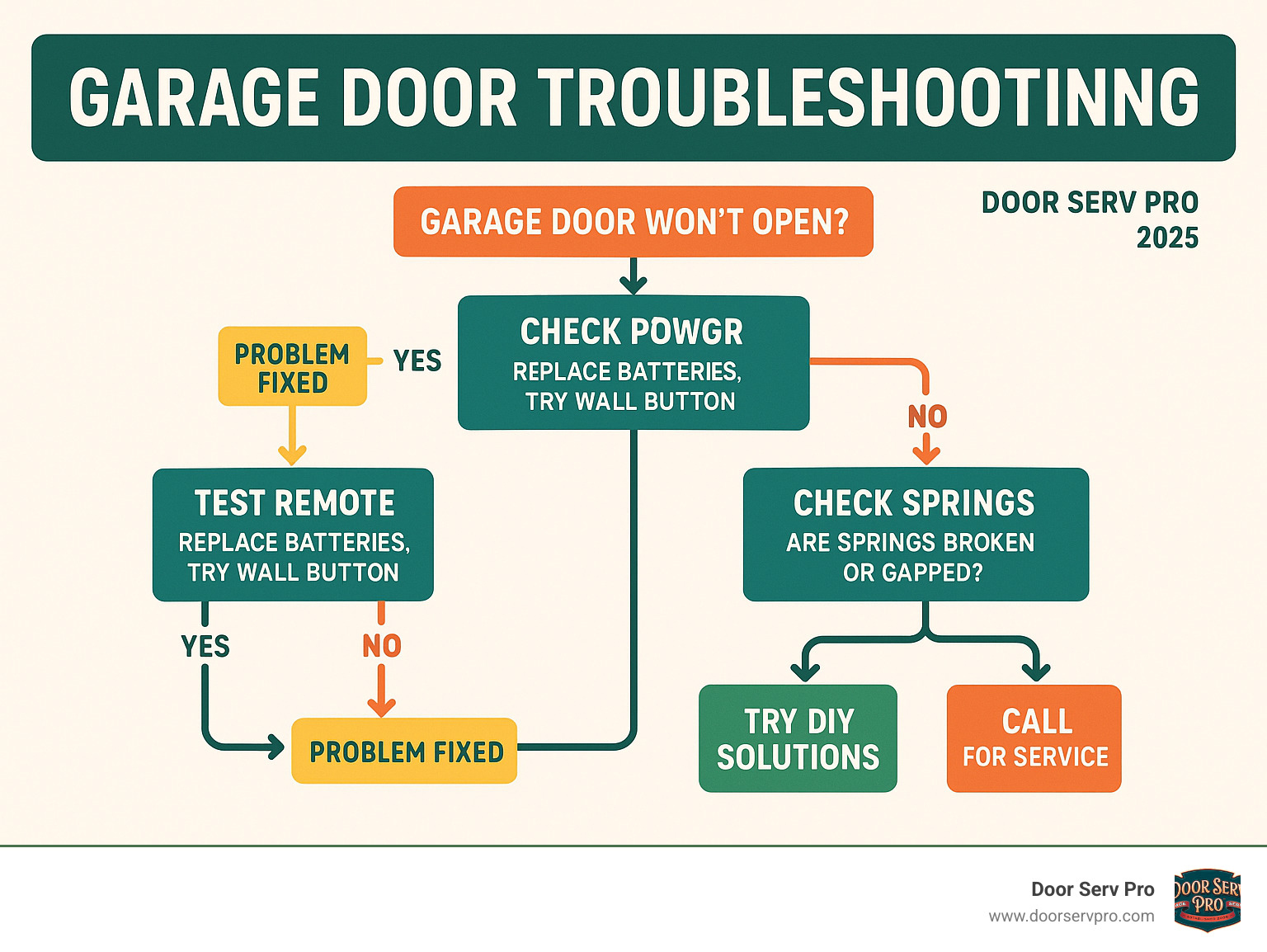
Quick Troubleshooting for a Garage Door That Won't Open:
- Check Power - Ensure the opener is plugged in and circuit breaker hasn't tripped
- Test Remote - Replace batteries or try the wall button instead
- Look for Obstructions - Clear anything blocking the door's path or safety sensors
- Check Manual Locks - Ensure no sliding bar locks or lock mode is engaged
- Inspect Springs - Look for visible gaps in torsion springs (don't touch!)
- Use Emergency Release - Pull the red cord to operate the door manually
Most garage door failures stem from a handful of common culprits: power issues, remote malfunctions, safety sensor problems, broken springs, or mechanical failures in the opener itself. The good news? Many of these issues have simple solutions you can try before calling a professional.
Safety comes first when dealing with garage doors. These systems involve high-tension springs and heavy doors that can cause serious injury if handled improperly. While some troubleshooting steps are safe for homeowners, others - particularly anything involving springs or cables - require professional expertise.
This guide walks you through systematic troubleshooting steps, starting with the simplest checks and progressing to more complex issues. We'll help you identify what's wrong and determine when it's time to call Door Serv Pro for professional assistance.
Start with Simple Checks: Power, Remotes, and Manual Overrides
Before diving into complex diagnostics, let's tackle the low-hanging fruit first. You'd be amazed how often a garage door not opening turns out to be something surprisingly simple. These initial checks don't require any tools or technical expertise – just a few minutes of your time.
Is the Opener Receiving Power?
Here's a little secret from our 25+ years in the business: about half the "broken" garage doors we're called to fix simply need to be plugged back in. It happens to the best of us!
Start by checking if your garage door opener's power cord is firmly seated in the outlet. Sometimes vibration from normal operation can work the plug loose over time. If it looks secure, grab a small appliance like your phone charger and test the outlet itself – you want to make sure it's actually delivering power.
No power to the outlet? Time for a quick trip to your electrical panel. Look for a circuit breaker that's flipped to the "off" position or sitting awkwardly in the middle. Flip it completely off, then back on to reset it. Many garages also have GFCI outlets (those outlets with the little "test" and "reset" buttons). If the reset button is popped out, press it back in.
If you're dealing with a broader power outage, you'll need to operate your door manually until power returns. Don't worry – we'll show you exactly how to do this safely in the emergency release section below. For more guidance on managing without power, check out this helpful resource: How Do I Operate My Garage Without Power?.
Troubleshooting a garage door not opening due to remote issues
Got power but your remote isn't cooperating? Remote controls live a tough life – bouncing around in cars, getting dropped, and slowly draining their batteries. Let's get yours back in action.
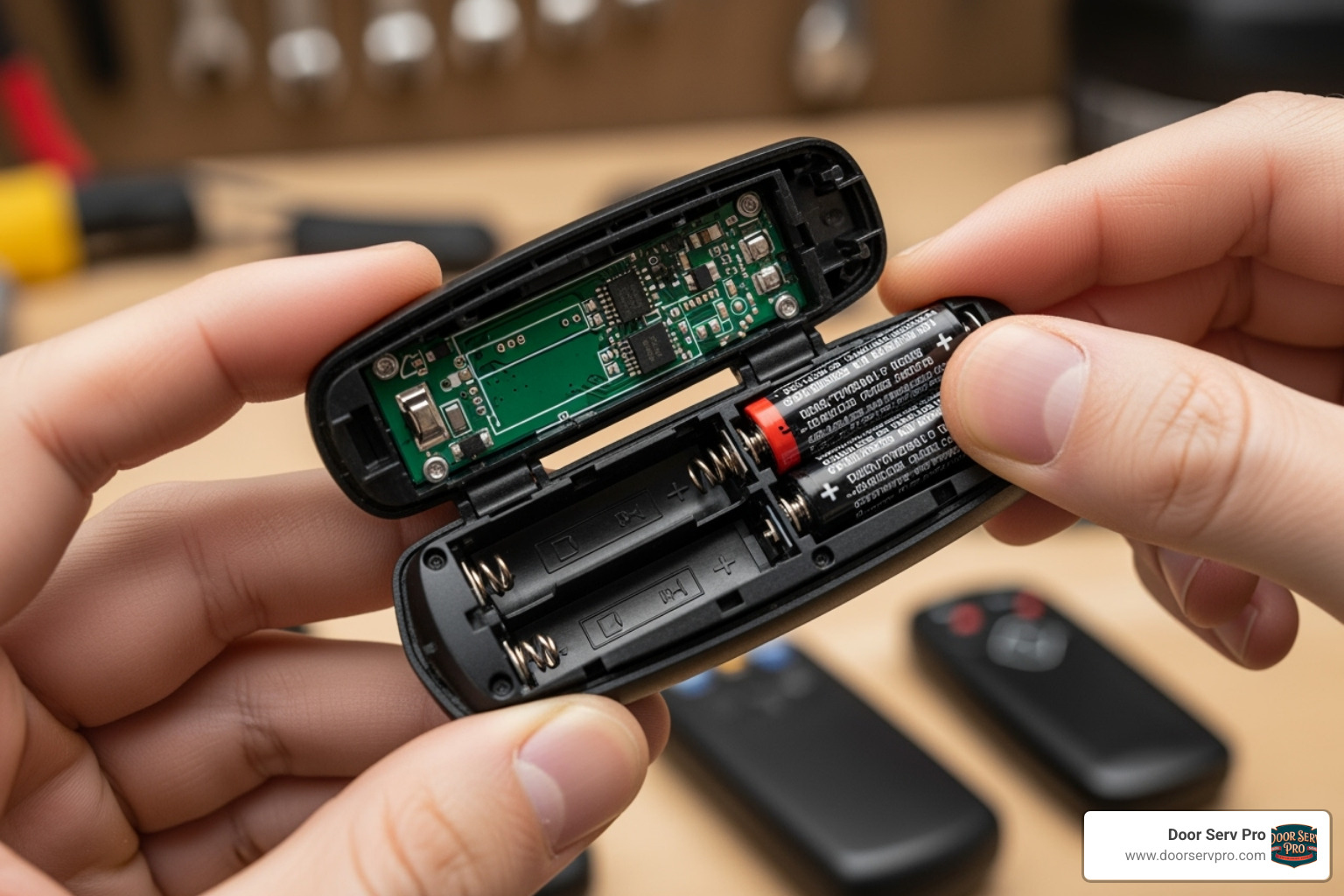
Replace those remote batteries first. Even if they're not completely dead, weak batteries can cause your remote to work sporadically or only when you're practically touching the garage door. If you have multiple remotes, test them all – if only one is acting up, you've found your culprit.
Now try your wall switch inside the garage. If it works perfectly while your remotes don't, you're definitely dealing with a remote issue rather than an opener problem. The same goes for your keypad outside – it might need fresh batteries or a quick reprogramming.
Speaking of reprogramming, sometimes remotes just "forget" how to talk to your opener. The process varies by manufacturer, but it usually involves pressing a "Learn" button on the opener unit, then pressing your remote button within about 30 seconds. Check your owner's manual for the exact steps.
Don't forget about your opener's antenna – that small wire hanging from the motor unit. Make sure it's not damaged, bent, or tucked up somewhere it can't receive signals properly. Also, newer wireless devices in your home (security systems, baby monitors, even some LED lights) can sometimes interfere with your garage door signal. If you suspect interference, try temporarily unplugging other wireless devices to see if that solves the problem.
Checking for Manual Locks and Lock Mode
Sometimes the simplest answer is the right one – your garage door might actually be locked! Many doors have manual sliding bar locks on the inside that can be accidentally engaged. Take a quick look for any handles or bars that might be in the locked position.
Modern openers also feature a lock mode that disables all remote and keypad commands for security. If you see a blinking light on your wall control panel or an illuminated "lock" button, your opener is probably in lock mode. Simply press and hold the lock button for a few seconds until the light turns off. Each manufacturer does this slightly differently, so when in doubt, check your manual.
Using the Emergency Release Cord
Every garage door opener has a lifeline – the emergency release cord. This red cord with a handle lets you disconnect your door from the opener so you can operate it manually when needed.
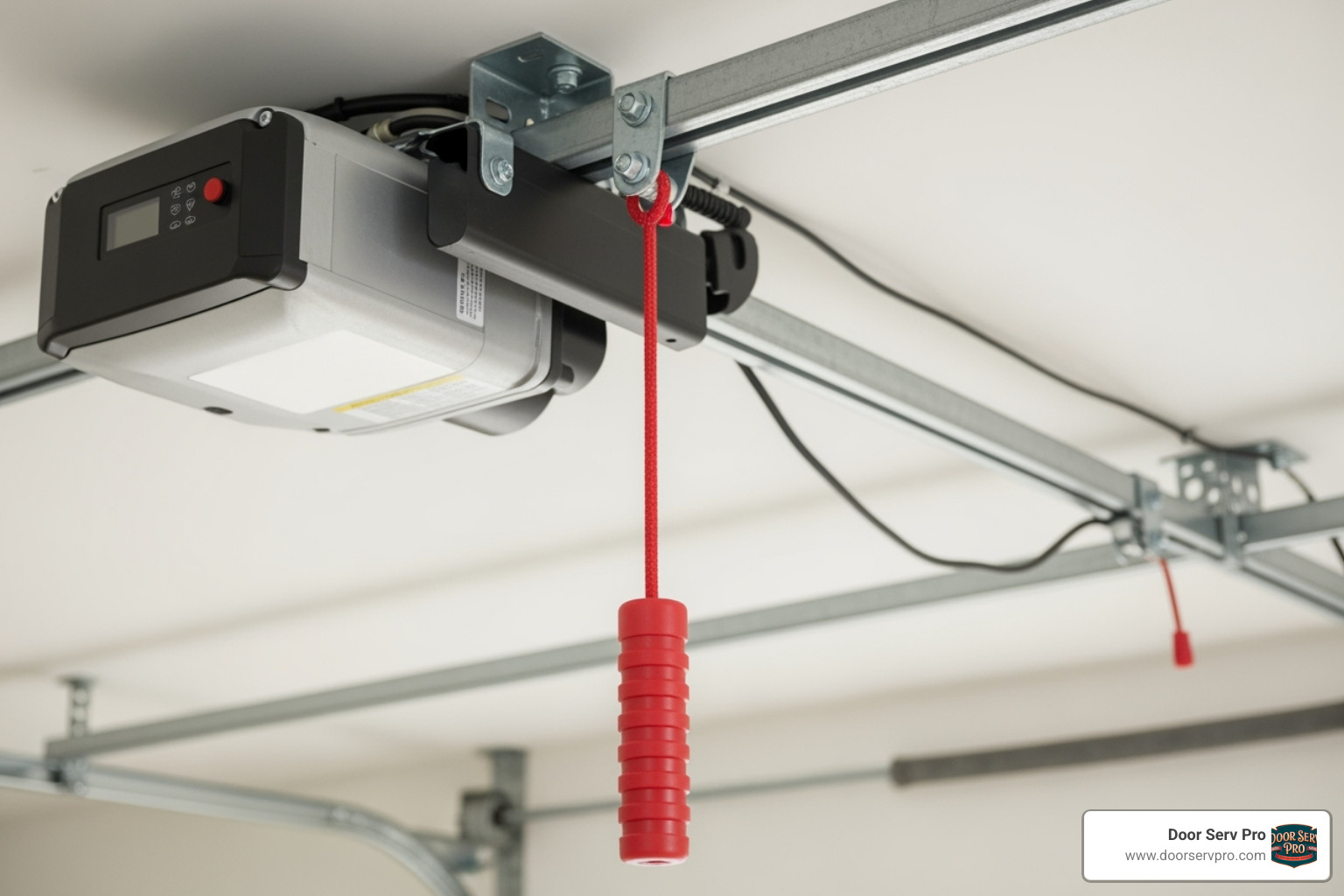
Here's how to use it safely: Make sure your door is completely closed first. Pull the red cord straight down and slightly toward the door until you hear a click. This disconnects the trolley mechanism from the drive system, allowing you to lift and lower the door by hand.
If the door feels incredibly heavy or won't budge even after releasing it, stop immediately. This could indicate broken springs – a dangerous situation that requires professional attention.
Re-engaging the opener is just as important. Once your power issue is resolved, close the door fully and pull the red cord toward the door again until the trolley clicks back into place. Test your opener with the remote or wall button to make sure everything's reconnected properly.
A word of caution: never pull the emergency release when your door is open unless absolutely necessary. The door could come crashing down, potentially causing serious injury or damage.
Why Is My Garage Door Not Opening? Common Component Failures
If the basic checks for power, remotes, and locks haven't solved your garage door not opening problem, it's time to look deeper. The issue likely lies with a specific component within your garage door system. Don't worry – many of these problems have straightforward solutions, though some will require professional help.
The Role of Safety Sensors
Those little electronic eyes near the bottom of your garage door tracks might look insignificant, but they're actually one of the most common culprits when doors refuse to cooperate. These photo-eye sensors are your garage door's safety guardians, projecting an invisible infrared beam across the opening to prevent the door from closing on anything (or anyone) in its path.
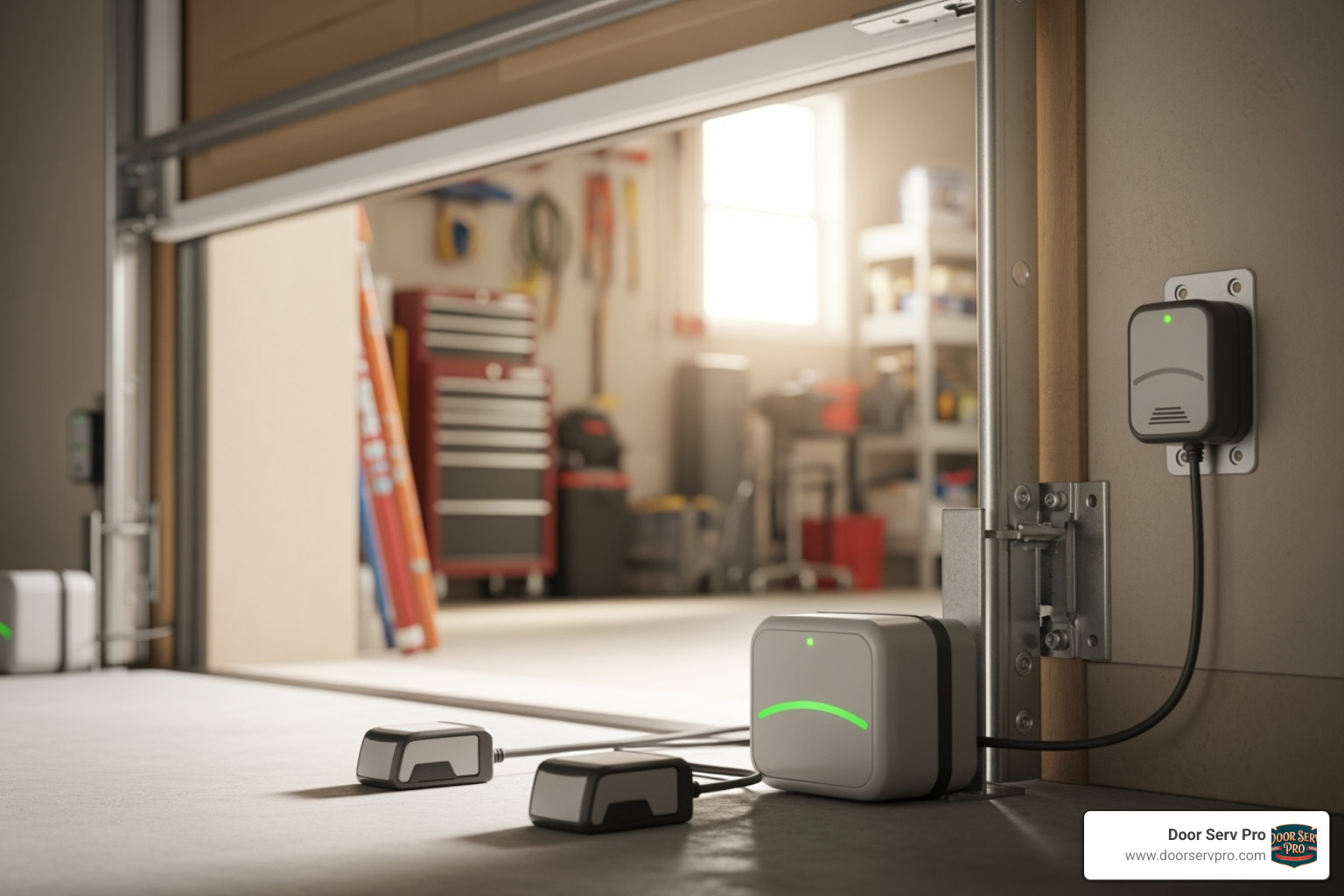
Here's the thing about safety sensors – they're incredibly sensitive, which is great for safety but frustrating when they malfunction. Sensor alignment is usually the first thing to check. Both sensors need to point directly at each other, typically about 4 to 6 inches off the ground on each side of your tracks. Most sensors have LED indicator lights that glow steadily when properly aligned and flash or turn off when something's wrong.
Cleaning sensors is often all it takes to get things working again. Even the tiniest spiderweb, leaf, or smudge of dirt can block the beam and confuse your door into thinking there's an obstruction. Gently wipe the sensor lenses with a soft, dry cloth – you'd be amazed how often this simple step solves the problem.
Sometimes obstructions aren't obvious. A garden hose lying too close to the sensors, a small toy, or even strong direct sunlight can interfere with the beam. Take a careful look at the entire path between the sensors and clear anything that might be blocking their line of sight.
If your garage door closes partially and then immediately reverses back up, you can bet your safety sensors are trying to tell you something. The LED indicator lights on each sensor will usually give you clues – solid lights mean they're communicating properly, while blinking lights signal trouble.
What to do when your garage door is not opening because of the tracks
Your garage door tracks are like the highway system for your door – when they're in good shape, everything runs smoothly. When they're not, you'll know it immediately from grinding noises, jerky movements, or a door that simply won't budge.
Track alignment issues develop gradually as your garage door vibrates through thousands of open-and-close cycles. Over time, mounting brackets can loosen, causing tracks to shift out of position. You can often spot misalignment just by looking – the tracks should run parallel to each other and appear straight from floor to ceiling.
Bent tracks are usually the result of someone accidentally backing into the door or hitting it with a ladder or tool. Minor bends might not stop your door completely, but they'll create resistance and unusual noises. Severe damage will definitely prevent proper operation and needs professional attention.
Don't overlook your damaged rollers – these are the wheels that actually ride in the tracks. After years of use, rollers can crack, wear down, or develop flat spots that cause bumpy, noisy operation. Lubrication helps extend their life, but worn rollers eventually need replacement.
The good news is that many track problems respond well to basic maintenance. Keep your tracks clean and free from debris, check that all mounting bolts are snug, and apply silicone-based lubricant annually to reduce friction and prevent rust. Your door will thank you with years of smooth, quiet operation.
Mechanical Failures in the Opener
Your garage door opener is essentially a small but powerful motor system, and like any mechanical device, its internal components can wear out or fail. When this happens, you might hear the motor running but see no door movement – a frustrating situation that usually points to specific mechanical problems.
The most common culprit is a stripped gear inside the opener unit. This plastic gear connects your motor to the chain or belt system that actually moves your door. When it strips (usually from years of normal wear or strain from an unbalanced door), the motor will run and you'll hear that familiar humming motor sound, but the door won't budge. It's like having a car engine that revs but can't engage the transmission.
Limit switch adjustment problems can make your door behave erratically – stopping partway through its travel, reversing unexpectedly, or refusing to close completely. These switches tell your opener exactly how far to move the door in each direction. When they're out of adjustment, your door essentially loses its sense of direction.
A faulty capacitor can also cause motor humming without movement. This component helps your motor start up with enough power to lift your heavy door. When it fails, the motor struggles to get going, often making noise but lacking the strength to actually operate.
Finally, if your opener is getting up there in years (over 15 years old), you might be dealing with a worn-out motor that simply can't generate enough power anymore. This is especially common if your door is particularly heavy or if the opener has been working harder due to other mechanical issues.
At Door Serv Pro, we've seen all these mechanical failures countless times over our 25 years in business. While some adjustments are manageable for handy homeowners, most opener repairs require professional diagnosis and repair to ensure safe, reliable operation.
The Critical Failure: Broken Springs and Cables
This is arguably the most common and, without a doubt, the most dangerous reason your garage door not opening. Garage door springs counterbalance the immense weight of the door, making it feel light enough for the opener to lift. When a spring breaks, the door becomes incredibly heavy, and the opener cannot lift it.
WARNING: Do not attempt to repair or replace garage door springs or cables yourself. These components are under extreme tension and can cause severe injury or even death if handled improperly. Always call a professional.
Signs of a Broken Spring or Cable
It's crucial to identify a broken spring or cable immediately. Here are the tell-tale signs:
- Loud Bang: Many homeowners report hearing a loud "firecracker" or "gunshot"-like sound coming from the garage. This is often the sound of a torsion spring snapping.
- Visible Gap in Spring: For torsion springs (located horizontally above the door), you'll often see a clear gap of an inch or two in the coiled spring. Extension springs (located on either side of the door along the tracks) will appear stretched out or disconnected.
- Heavy Door: If you try to lift the door manually after disengaging the opener, it will feel incredibly heavy, almost impossible to lift, because the counterbalance is gone.
- Crooked Door: If your door is hanging crookedly, or one side is higher than the other, it often indicates a broken cable on one side or an issue with one of the extension springs.
- Snapped Cables: You might visually spot frayed or snapped cables. These cables work with the springs to lift and lower the door. If a cable breaks, the door can drop suddenly or get stuck unevenly.
Garage door springs are rated for a certain number of cycles (one cycle is one full open and close). Standard springs last about 10,000 cycles. A busy household using the door multiple times a day might wear out springs in 5-7 years, while less frequent use could see them last 14 years or more.
Why Spring and Cable Repair is Dangerous
We cannot stress this enough: garage door springs store an incredible amount of kinetic energy. They are under immense tension, literally holding up hundreds of pounds of door weight. Attempting to repair or replace them without proper training, specialized tools, and safety precautions can lead to:
- Sudden Release of Tension: The spring could snap violently, sending metal pieces flying.
- Uncontrolled Door Fall: The heavy door could come crashing down, causing severe injury or damage to property.
- Crushing Injuries: Hands or limbs could get caught in moving parts.
Our NATE-certified technicians at Door Serv Pro are highly trained to safely handle these dangerous components. We have the expertise and the right tools to replace your springs and cables efficiently and safely, ensuring your garage door operates smoothly and reliably once again.
Frequently Asked Questions about a Stuck Garage Door
After 25 years in the garage door business, we've heard just about every question imaginable from frustrated homeowners. Here are the most common ones that come up when dealing with a garage door not opening, along with our tried-and-true answers:
Why does my garage door motor run, but the door doesn't move?
This is probably the most puzzling scenario for homeowners – you press the button, hear the motor humming away, but the door just sits there like it's taking a coffee break.
The most common culprit is a stripped gear inside the opener. This little plastic gear works incredibly hard, and over time it can wear down to the point where it can't grip the chain or belt anymore. The motor spins happily, but nothing actually moves. It's like trying to pedal a bike with a broken chain – lots of effort, zero results.
Before assuming it's a stripped gear though, check if someone accidentally pulled the emergency release cord (that red rope hanging from the opener). When this happens, the trolley disconnects from the drive system, so the motor runs but has nothing to move. If the cord is hanging loose, simply pull it toward the door until you hear it click back into place.
If the emergency release isn't the issue and you're still hearing that telltale humming with no movement, you're likely looking at a stripped gear situation. This isn't a DIY fix – it requires taking apart the opener unit and replacing internal components, which is definitely a job for our professional team.
Can cold weather stop my garage door from opening?
Oh, absolutely! Winter can be particularly rough on garage doors, and we see a spike in service calls every time the temperature drops below freezing.
Cold weather affects your garage door in several sneaky ways. Metal components like springs and tracks actually contract when it gets cold, making everything stiffer and harder to move. It's like trying to bend a frozen garden hose – everything just becomes more rigid.
The lubricants on your opener's moving parts don't escape winter's wrath either. They can thicken up like cold honey, creating more friction and making your poor motor work overtime. Regular lubrication with cold-weather appropriate products can help prevent this.
One of the most frustrating cold-weather issues is when your door literally freezes to the ground. Moisture can collect under your door's bottom seal and turn into ice, essentially gluing your door shut. If this happens, don't force it – you might damage the opener or the door itself. A gentle push from inside sometimes breaks the seal, or you can carefully use a hair dryer to melt the ice.
Why does my garage door open a little and then stop?
This "stop and start" behavior can drive anyone crazy, especially when you're running late and your door decides to be dramatic.
The most likely explanation involves your opener's travel limit settings. These are basically the opener's instructions for how far to move the door. If the "up" limit is set too conservatively, your door will stop partway up, thinking it's done its job. It's like having a GPS that tells you to stop three blocks before your actual destination.
Track and roller issues can also cause this frustrating behavior. Even minor obstructions, dirt buildup, or worn rollers can create enough resistance that your opener's safety system thinks something's wrong and stops the door. The opener is actually trying to protect itself and your door from damage.
Sometimes an aging or failing motor simply runs out of steam partway through the job. If your opener is getting up there in years (we're talking 15+ years), it might struggle to lift a heavy or slightly unbalanced door all the way up. The motor gives it its best shot but eventually throws in the towel.
If your door opens a bit and then reverses completely, that's usually a different story – most likely your safety sensors are detecting an obstruction or need realignment, which we covered earlier in this guide.
Conclusion: When to Call a Professional for Your Garage Door Repair
Throughout this guide, we've walked you through the most common reasons why your garage door not opening becomes a daily headache. From simple power checks and remote battery swaps to inspecting safety sensors and checking for track alignment, many issues have straightforward solutions that don't require a service call.
The beauty of starting with these basic troubleshooting steps is that they're safe, cost-effective, and often get you back up and running in minutes. There's real satisfaction in finding that a dead remote battery was the culprit behind your morning frustration!
However, we can't stress enough that certain garage door problems are absolutely not DIY territory. High-tension springs and cables top this list – these components store incredible amounts of energy and can cause serious injury or even death if mishandled. Similarly, complex electrical repairs, significant mechanical failures within the opener unit, and major track damage require professional expertise and specialized tools.
Think of it this way: if you've methodically worked through our troubleshooting checklist and your garage door still won't budge, or if you spot obvious signs like broken springs or damaged cables, it's time to call in the experts. Attempting these repairs yourself risks not only further damage to your expensive garage door system but, more importantly, your personal safety.
At Door Serv Pro, we've been helping families across WV, VA, PA, and MD solve their garage door challenges for over 25 years. Founded by industry veteran Paul Wiese, our family-owned company understands that a malfunctioning garage door isn't just an inconvenience – it disrupts your entire routine and can compromise your home's security.
Our NATE-certified technicians bring both technical excellence and a personal touch to every service call. We've seen everything from mysterious humming motors to doors frozen to the ground, and we approach each situation with the right combination of expertise, proper tools, and safety protocols. Whether it's a stripped gear that needs replacement or a complete spring system overhaul, we handle repairs with the precision and care your home deserves.
What sets us apart is our commitment to round-the-clock service and our 100% satisfaction guarantee. We know garage door emergencies don't follow business hours, and we're here when you need us most. Our goal isn't just to fix the immediate problem – we want to ensure your garage door system operates smoothly and safely for years to come.
If you've exhausted our troubleshooting steps and your garage door remains stubbornly closed, don't let frustration turn into a safety risk. For expert garage door services in Hagerstown, MD, contact us today! We'll provide professional diagnosis, reliable repairs, and the peace of mind that comes with knowing the job was done right the first time.
Need Help?
Contact us today to discuss your needs. Our team is ready to help.
About the author
Door Serv Pro
More articles
View all postsKeep reading
Related articles
Ready to Get Started?
Whether you need a repair, maintenance, or a new installation, our expert team is here to help.