Blog
Affordable & Expert Garage Door Opener Programming in Martinsburg, WV: A Local's Guide
Door Serv Pro
Reviewed by the Door Serv Pro service team · Trained, professional garage door technicians
Last updated June 24, 2026
Why Garage Door Opener Programming Matters for Martinsburg Homeowners
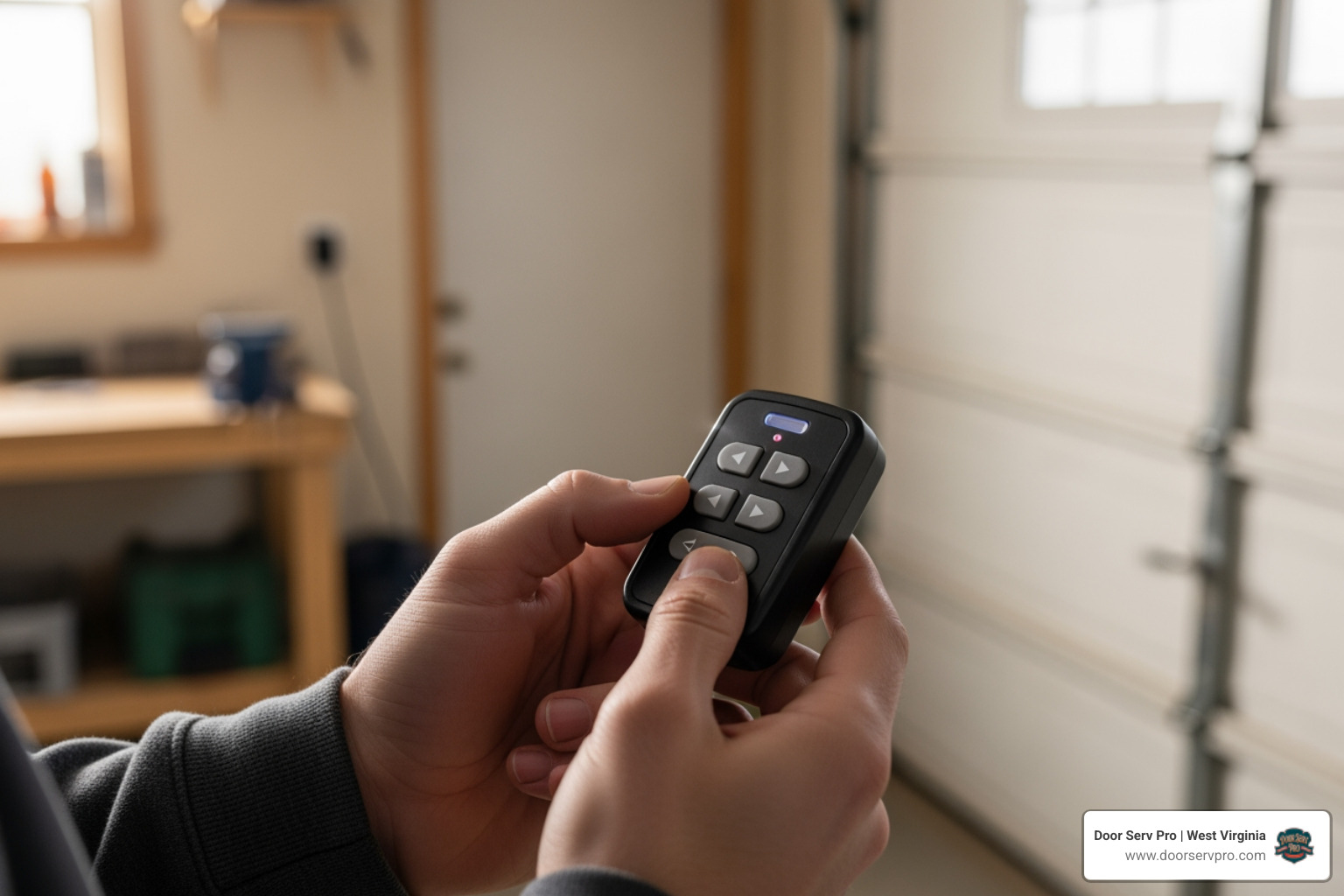
When you need garage door opener programming in Martinsburg, WV, whether it is for a new remote, a replacement keypad, or integrating your vehicle's built-in garage control system, understanding the process can save you time and frustration. This guide explains the common programming methods, walks you through step-by-step instructions for different opener styles, and helps you decide when to tackle it yourself versus calling a professional.
Quick Answer: How to Program Your Garage Door Opener
- Identify your opener type - Locate the motor unit and look for a "Learn" button (yellow, purple, orange, or green) or DIP switches
- For Learn Button openers - Press the Learn button, then press your remote button within 30 seconds
- For DIP Switch openers - Match the switch positions on your remote to those in the motor unit
- For keypads - Enter your desired PIN, press the program button on the motor unit, then re-enter the PIN
- Test the system - Ensure the door opens and closes smoothly and that safety features work properly
If you are experiencing issues with your opener or need expert help, you can explore our comprehensive garage door services or schedule professional garage door opener programming in Martinsburg, WV.
Many Martinsburg homeowners face the same challenge: a garage door remote stops working after a battery change, a keypad needs reprogramming after a power outage, or a new home purchase means learning an unfamiliar system. You might stand in your driveway, pressing buttons repeatedly, wondering if you need to call someone or if there is a simple fix. The good news is that most garage door opener programming is straightforward once you understand your specific system type. Modern openers use different technologies, from older DIP switches to newer rolling code "Learn" buttons to smart Wi-Fi systems, and each requires a slightly different approach. While many programming tasks are DIY-friendly, some situations benefit from professional expertise, especially when dealing with safety features or complex smart home integration.
Understanding Your Garage Door Opener Technology

Before we dive into the "how-to," understand the "what." Garage door openers, regardless of brand, generally fall into a few technological categories when it comes to programming. Knowing which type you have is the first and most crucial step in successfully programming your remote, keypad, or even your car's built-in system.
In Martinsburg, WV, you will encounter a mix of garage door opener technologies. These range from units relying on physical DIP switches to smart openers with Wi-Fi connectivity and app-based control. Door Serv Pro technicians work with various opener technologies. Understanding these differences will empower you to tackle basic programming tasks or know when it is time to call in the pros for garage door opener installation Martinsburg WV or complex programming.
Common Programming Methods Explained
Let us break down the primary ways garage door openers communicate with their accessories:
DIP Switches (Dual In-line Package Switches): These are the traditional workhorses. If your opener or remote has a series of small, numbered switches that can be flipped into "on," "off," or sometimes a middle position, you have a DIP switch system. This method uses a fixed code, meaning the sequence of the switches on your remote must exactly match the sequence on your opener's motor unit. While simple, this fixed code system offers less security than newer technologies.
Learn Buttons (Rolling Code Technology): This is the most common programming method for modern garage door openers. Instead of matching physical switches, you press a "Learn" button on your motor unit and then activate your remote. The opener "learns" the remote's unique, ever-changing code. This "rolling code" technology is a significant security upgrade, as the code transmitted by your remote changes every time you use it.
Smart/Wi-Fi App-Based Setup: Many newer garage door openers come equipped with built-in or add-on Wi-Fi connectivity. This allows you to control and monitor your garage door from almost anywhere using a smartphone app. Programming often involves connecting the opener to your home's Wi-Fi network and then pairing accessories directly through the app interface. This method offers convenient features such as remote monitoring, activity alerts, and the ability to grant access when you are away from home.
Identifying Your Opener's Programming Type
So, how do you figure out which system your garage door opener uses? It is usually quite simple:
- Locating the Motor Unit: Your garage door opener's motor unit is the large box typically mounted to the ceiling in the center of your garage, directly above the garage door.
- Finding the 'Learn' Button: Once you have located the motor unit, look for a small, usually colored, button labeled "Learn," "Program," or "Smart." This button is often on the back or side of the motor unit, near the antenna wire or the light bulb. Pay attention to the color of this button, as it can be important for compatibility with universal remotes.
- Checking for DIP Switches: If you do not see a "Learn" button, or if your opener is an older model, look for a small panel or cover on the motor unit (or sometimes inside the battery compartment of your remote). Behind this cover, you might find a row of tiny switches. These are your DIP switches.
- Consulting the Manual: When in doubt, the owner's manual for your specific garage door opener model is your best friend. It will clearly outline the programming method, specific steps, and any unique features or troubleshooting tips. Do not worry if you have misplaced it; many manufacturers provide digital copies on their websites. We always recommend keeping your manual handy!
A Step-by-Step Guide to Programming Your Remote or Keypad
Now that you know your opener type, let us get down to business. Programming your garage door opener remote or keypad might seem daunting, but by following these steps carefully, you will be opening and closing your garage with ease in no time. Safety first. Always ensure the garage door area is clear of people and obstructions before testing.
Before you begin, we always advise starting with the garage door closed. Keep all remote controls out of reach of children, and never permit anyone to cross the path of a moving garage door. If you are looking for more general guidance, our Garage Door Opener Programming Guide offers additional tips.
How to Program a "Learn Button" Opener
This is the most common programming scenario for residents in Martinsburg, WV. Here is how it generally works for many modern openers:
- Locate the Learn Button: As discussed, find this colored button on your garage door opener's motor unit.
- Press and Release the Learn Button: Press and immediately release the "Learn" button. The LED indicator light on the motor unit will usually turn on, often staying lit for about 30 seconds. This indicates the opener is in "programming mode."
- Press the Remote Button: Within that 30-second window, press and hold the button on your remote control that you wish to program.
- Confirm with Light Flash: The garage door opener's lights will typically flash once or twice, or you might hear a click. This signifies that the remote has been successfully programmed.
- Test Operation: Press the newly programmed button on your remote. The garage door should activate. If not, repeat the steps.
Pro Tip: The color of your "Learn" button (for example, yellow, purple, orange, or green) might affect the exact timing or number of flashes, so if you have your manual, a quick check can be helpful.
How to Program a "DIP Switch" Opener
If you have an older model with DIP switches, the process is a bit more hands-on but still straightforward:
- Locate DIP Switches on Motor Unit: Find the access panel on your opener's motor unit to reveal the row of small switches. Note their exact positions (on, off, or middle).
- Match Remote Switches: Open your remote control (often by sliding a cover or removing a battery compartment) to expose its own set of DIP switches. Carefully adjust the switches on your remote to exactly match the sequence you observed on the motor unit.
- Test Functionality: Once matched, close up your remote and test it. The garage door should respond.
Security Considerations: Since DIP switch systems use fixed codes, it is wise to change the switch sequence periodically, especially if you lose a remote or if you are concerned about security. Just remember to change both the opener's switches and all your remotes to the new, matching sequence.
A Guide to Keypad and Car2U/HomeLink Programming
Keypads offer convenient access without a remote, and vehicle integration systems like built-in car buttons can seamlessly connect your car to your garage.
Programming a Wireless Keypad:
Programming a wireless keypad usually involves creating a personal identification number (PIN) and then syncing it with your opener:
- Enter a New PIN: On the keypad, enter your chosen 3- to 8-digit PIN, based on the instructions for your specific keypad.
- Initiate Programming on Keypad: Depending on the model, you will typically press a "program" or "learn" button on the keypad, or a specific sequence of numbers.
- Sync with the Motor Unit: Just like with a remote, you will then press the "Learn" button on your garage door opener's motor unit.
- Complete Keypad Programming: Go back to the keypad and re-enter your PIN, then press the "Enter" button. The opener's light should flash, indicating successful programming.
- Test Operation: Enter your PIN and press "Enter." The door should operate.
Keypads are fantastic for temporary access (for example, for a pet sitter) as many allow you to program temporary PINs that expire after a certain number of uses or a set time. For more specific issues, our blog on Wireless Keypad Issues in Stephens City might offer solutions.
Programming Car2U/HomeLink-Style Systems:
Integrating your vehicle's built-in remote system is a popular choice for Martinsburg drivers. The process varies slightly by vehicle make and model, but here is a general approach:
- Clear Existing Codes (if necessary): Many vehicles require you to clear any pre-existing programming from the in-car buttons. This often involves holding down the two outer buttons until the indicator light flashes rapidly.
- Train the Vehicle Button: Hold your existing garage door remote near the vehicle button you want to program. Simultaneously press and hold both the remote's button and the vehicle's button until the indicator light changes (for example, from slow flash to rapid flash, then solid).
- Sync with the Motor Unit: For rolling code openers, you will then need to activate the "Learn" button on your garage door opener's motor unit.
- Activate Vehicle Button: Within the programming window (usually 30 seconds), quickly press and release the newly programmed vehicle button. You might need to do this a couple of times.
- Confirm and Test: The garage door opener's lights should flash, or you will hear a click, indicating success. Test the button to ensure it operates the door.
For detailed instructions specific to your vehicle, consult your car's owner's manual or the in-vehicle system documentation.
Troubleshooting and Professional Garage Door Opener Programming in Martinsburg WV
Even with the best intentions and clear instructions, sometimes things do not go as planned. If your garage door opener is not responding after programming, do not despair. Many common issues have simple solutions. However, there are also times when professional help for garage door opener programming in Martinsburg, WV is the smartest choice.
When you encounter problems, it is easy to get frustrated. But there is usually a path forward. Sometimes, a quick DIY fix is all you need. Other times, an expert diagnosis can save you time, prevent further damage, and ensure your system is operating safely. For broader issues, our Garage Door Opener Repair Martinsburg WV page has more information.
Common Programming Problems and Solutions
Here are some frequent hiccups homeowners face and how to address them:
- Remote Battery Replacement: This is often the culprit. If your remote is working inconsistently, only works when you are very close to the opener, or its LED light is dim or flickering, it is time for new batteries. Common types include 9V, A23, 12A, and 27A. Replacing remote batteries every 1 to 2 years as a preventative measure is a simple fix that can prevent a lot of confusion.
- Signal Interference: Some modern LED light bulbs can emit interference that limits the range of your garage door remote. If you have recently changed your garage opener's light bulb and suddenly your remote is not working well, consider switching to a bulb that is labeled as compatible with garage door openers or trying another type recommended in your opener manual.
- Safety Sensor Misalignment: Garage door openers manufactured after 1993 are legally required to have photo-eye safety sensors. These are the small units located on either side of your garage door track, near the bottom. If they are misaligned, obstructed, or dirty, your garage door will not close, or it will reverse immediately upon attempting to close. Ensure they are clean, properly aligned (the indicator lights on them should be solid), and free of obstructions.
- Exceeded Remote Memory: Your garage door opener has a limited memory for how many remotes or keypads it can "learn." If you have programmed many accessories over the years, you might have reached this limit. The solution is often to clear all programmed remotes from the opener's memory (check your manual for specific steps, which often involve holding down the "Learn" button for an extended period until the LED goes out), and then reprogram only the remotes and keypads you currently use.
- Reprogramming Steps Not Followed Precisely: Garage door openers can be finicky. The timing of button presses (for example, releasing the "Learn" button too soon or not pressing the remote button within the specified 30-second window) is critical. If your opener is not working, repeat the programming steps carefully, paying close attention to the sequence and timing. Checking the LED indicator lights on your motor unit can also provide diagnostic clues, as explained in many opener manuals.
The Benefits of Professional Garage Door Opener Programming in Martinsburg WV
While many programming tasks are DIY-friendly, there are compelling reasons to call in the experts, especially for local Martinsburg homeowners:
- Safety Assurance: Garage doors are the largest moving objects in your home and can pose significant safety risks if not properly maintained and programmed. Professionals ensure all safety features, like photo-eyes and auto-reverse mechanisms, are functioning correctly before and after programming. Door Serv Pro adheres to all federal safety regulations, including UL 325 standards.
- Correct Tool Usage: For complex systems or older models, specialized tools or diagnostic equipment might be needed. A trained technician has the right tools for the job, helping ensure accurate programming without damaging your equipment.
- Time Savings: Your time is valuable. Instead of spending hours poring over manuals and troubleshooting, a professional can often resolve programming issues quickly and efficiently.
- Expert Diagnosis: Sometimes, a programming issue is not just a programming issue. It might be a symptom of a larger underlying problem with the opener's circuit board, wiring, or other components. Experienced technicians can diagnose these root causes, saving you from future headaches.
- Handling Complex Systems: If you are integrating a new smart home system, dealing with multiple remotes across different opener styles, or have a particularly old or unusual unit, professional assistance can be invaluable. Door Serv Pro teams work with a wide variety of opener technologies and can help you get everything working together smoothly.
The Role of Safety and Maintenance in Opener Programming
Programming your garage door opener is not just about convenience; it is also about ensuring safety. A properly programmed opener works in harmony with its built-in safety features, protecting your family, pets, and property. Regular maintenance also plays a critical role in the longevity and reliable operation of your entire garage door system.
In Martinsburg, WV, where weather conditions can fluctuate, ensuring your garage door system is in top shape is crucial. Door Serv Pro can help you maintain your system and address any issues. For comprehensive care, consider our full range of garage door services Martinsburg WV.
Why Safety Features are Crucial for Programming
Garage door openers are equipped with vital safety mechanisms designed to prevent accidents. These are not optional; they are federally mandated for units manufactured after 1993, adhering to UL 325 standards.
- Photo-Eye Alignment Check: These small sensors, located near the bottom of your garage door tracks, emit an invisible beam. If anything breaks that beam while the door is closing, the door should immediately stop and reverse. Before and after any programming, it is important to check that these photo-eyes are correctly aligned, clean, and functioning. If they are not, your door will not close or will reverse, rendering any programming useless until the issue is fixed.
- Contact Reverse Test: This is a critical safety test you should perform monthly. With the garage door open, place a 2x4 board (or a similar 1-1/2 inch high object) flat on the floor in the center of the doorway. Close the door using your wall control. The door must stop and reverse direction within two seconds upon contact with the board. If it does not, your opener's force settings or travel limits might be off, or there is a more serious issue that needs immediate professional attention. Never adjust force settings to compensate for a damaged or unbalanced door.
- Ensuring Functionality Before Programming: A garage door opener's safety features are interconnected with its operational programming. If the photo-eyes are blocked or the auto-reverse is not working, the opener will often refuse to close the door completely or will reverse unexpectedly. Ensuring these features are fully operational before attempting any programming helps ensure that your newly programmed remote or keypad will function safely and effectively.
Maintenance Tips for Your Opener System
Consistent maintenance can significantly extend the lifespan of your garage door and opener, which typically last between 15 to 30 years. It also helps prevent unexpected programming headaches.
- Battery Replacement Schedule: Beyond your remote, consider the batteries in your wireless keypad. Replace them when the keypad light becomes dim or does not light up at all. Proactive replacement every 1 to 2 years for remotes and keypads is a good habit.
- Lubricating Moving Parts: Twice a year, lubricate your garage door's rollers, hinges, and springs with a silicone-based lubricant. This reduces friction and wear, making it easier for your opener to do its job. Keeping tracks clear of dirt and debris is also crucial.
- Checking Door Balance: A properly balanced garage door is essential for your opener's longevity. To test this, disconnect your opener (pull the red emergency release cord) and manually lift the door about halfway. If the door stays put, it is balanced. If it springs up or falls down, the springs need adjustment, which is a job for a professional due to the extreme tension involved. An unbalanced door puts excessive strain on your opener, leading to premature wear and potential malfunction.
- When to Seek Service: Pay attention to any unusual sounds or movements from your garage door. Squeaks, grinding noises, or jerky movements are all signs that something might be amiss. Addressing these issues promptly can prevent more extensive and costly repairs down the line. Our insights on Understanding the Mechanics Behind Garage Door Opener Repair can offer more context.
Your Local Experts for Garage Door Solutions in Martinsburg
Whether you are facing persistent programming challenges, looking to integrate your garage door with smart home technology, or simply concerned about the safety of your system, reliable and expert assistance is paramount. Navigating the different types of garage door opener technology, from DIP switches to rolling codes to Wi-Fi-enabled systems, can be complex. Ensuring every remote, keypad, and vehicle integration is perfectly synced requires attention to detail and an understanding of each system's specific protocols.
Door Serv Pro is a family-owned business deeply rooted in the Martinsburg, WV community, providing top-rated garage door repair, installation, and maintenance services. With over 30 years of proven craftsmanship, the team brings extensive experience to every job. Technicians work on everything from long-serving fixed-code openers to the newest smart systems, and are dedicated to providing exceptional service and dependable results to neighbors in Martinsburg, Berkeley Springs, Charles Town, Falling Waters, Gerrardstown, Great Cacapon, Harpers Ferry, Hedgesville, Inwood, Paw Paw, Ranson, and Shepherdstown. A strong commitment to customer excellence is reflected in an average homeowner rating of 4.92 based on verified reviews.
Door Serv Pro is not just about fixing doors; the company focuses on building lasting relationships and contributing positively to the community, including through philanthropic campaigns supporting veterans and cancer charities. When it comes to your garage door opener programming in Martinsburg, WV, you can count on a trusted local team to provide not just a solution, but peace of mind.
For reliable and expert assistance with your garage door needs, contact Door Serv Pro for Garage Door Opener Programming Martinsburg WV.
Need Help?
Contact us today to discuss your needs. Our team is ready to help.
About the author
Door Serv Pro
More articles
View all postsKeep reading
Related articles
Ready to Get Started?
Whether you need a repair, maintenance, or a new installation, our expert team is here to help.