Blog
The Lean Mean Machine: Dealing with an Uneven Garage Door
Door Serv Pro
Reviewed by the Door Serv Pro service team · Trained, professional garage door technicians
Last updated June 24, 2026
Is Your Garage Door Sagging or Uneven? Here's What to Check First
Sagging or uneven garage door what to check — here's a quick overview before we dive in:
- Springs - Look for visible gaps in torsion spring coils or uneven lifting on one side
- Cables - Inspect visually for fraying, stretching, or rust (do not touch)
- Tracks - Check for bends, gaps, or loose mounting bolts along both sides
- Rollers - Look for cracked, seized, or worn rollers causing uneven movement
- Hinges and brackets - Check for loose or missing bolts on door panels
- Floor and foundation - Measure the gap between the bottom seal and the concrete on both sides
- Balance test - Disconnect the opener, lift the door halfway manually, and see if it stays in place
Your garage door is one of the heaviest moving parts in your entire home — most doors weigh between 150 and 300 pounds. When it starts to sag on one side, close unevenly, or gap at the floor, it is not just an eyesore. It is a warning sign that something in the system is off balance, and ignoring it can put your home, your car, and your family at risk.
Over 30,000 people are injured by garage doors each year in the United States, many of those injuries tied directly to spring failures and unbalanced doors. A door that tilts or drags is already under extra stress — on the springs, the cables, the opener motor, and the tracks. Left unchecked, that stress compounds fast.
Whether your door is drooping in the middle, sitting higher on one side, or scraping the floor when it closes, there are clear things you can look for — some safely on your own, and some that need a trained technician.
Common Signs Your Garage Door is Out of Alignment
Identifying a problem early can be the difference between a simple adjustment and a full system failure. Often, a door won't just stop working overnight; it will give you "the silent treatment" (or more accurately, the very loud treatment) first.
Visible Slanting and Gaps
The most obvious sign is a visible slant. When the door is closed, do you see light peeking through one corner at the bottom while the other side is tight against the concrete? This "limbo" pose usually means one side of the door is physically higher than the other. Even a small gap of half an inch can allow pests, water, and debris into your Virginia home.
Jerky Movement and Loud Grinding
A healthy garage door should move relatively quietly and smoothly. If your door looks like it's doing a "strange dance" on its way up — shaking, vibrating, or moving in fits and starts — it’s likely out of alignment. Listen for grinding, squeaking, or banging noises. These are often the sounds of metal-on-metal friction as the door tries to force its way through a misaligned track.
Slow Response and Motor Strain
Does your opener sound like it’s "carrying the weight of the world"? If the motor groans or takes longer than usual to lift the door, the balance is likely off. When a door is uneven, the opener has to work twice as hard to pull the heavy side, which can lead to premature motor burnout. You can find more details on these symptoms in our guide on Most Common Garage Door Problems.
| Symptom | Normal Operation | Uneven/Sagging Door |
|---|---|---|
| Sound | Quiet, consistent hum | Grinding, banging, or squeaking |
| Movement | Smooth, steady glide | Jerky, shaking, or "walking" up tracks |
| Alignment | Level with the floor | Visible gap on one side or drooping middle |
| Opener Effort | Effortless lift | Motor groans or struggles to finish cycle |
Sagging or Uneven Garage Door: What to Check for Homeowners
Before you assume the worst, there are several visual inspections you can perform safely from the ground. Knowing sagging or uneven garage door what to check helps you provide our technicians with the right information when you call for service in areas like Front Royal or Stephens City.
Visual Gaps and Obstructions
Start by checking the tracks for any obvious obstructions. A stray pebble, a piece of mulch, or even a buildup of hardened grease can cause one side of the door to hang up. Use a flashlight to look into the "U" of the track on both sides.
Floor Settling and Foundation Shifts
Sometimes, the door isn't the problem — the ground is. In Virginia, soil movement can cause garage floors to settle or crack. If your door panels are perfectly straight but there is a gap at the bottom, your foundation might have shifted. You can check this by placing a level on the door panels themselves. If the panels are level but the floor is not, the issue is structural to the house.
Checking for Loose Hardware
Over time, the vibration from daily use can loosen the bolts that hold your tracks and hinges together. If a hinge is loose, a specific section of the door might sag or "droop" while the rest remains straight. For a deeper look at local repair needs, see our Garage Door Repair Guide Front Royal VA.
How to Safely Perform a Sagging or Uneven Garage Door What to Check Balance Test
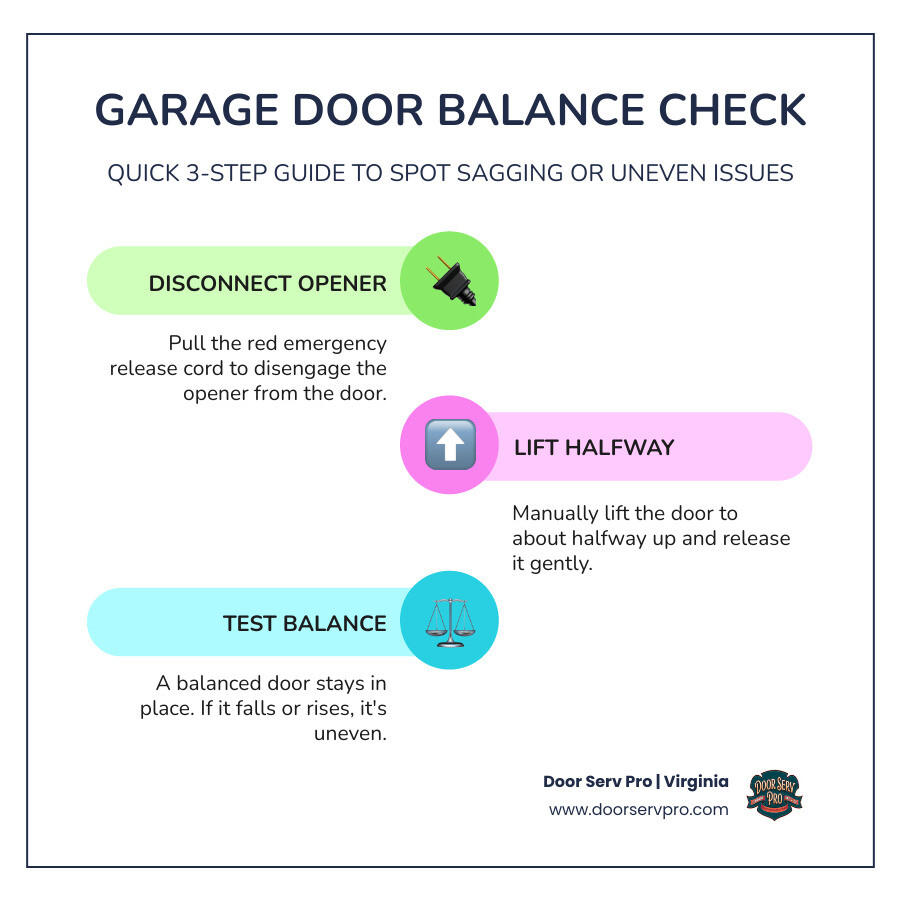
The "Balance Test" is the gold standard for checking door health. Here is how to do it safely:
- Close the door completely.
- Disconnect the opener by pulling the red emergency release cord.
- Manually lift the door halfway up by hand.
- Let go. A perfectly balanced door should stay in place or move only a few inches. If it slams shut or shoots upward, your spring tension is dangerously off.
If you find the door is hard to lift manually, it’s a sign that the springs are no longer doing their job. You can learn more about managing your system settings in our post on Garage Door Opener Programming.
Simple DIY Fixes After a Sagging or Uneven Garage Door What to Check Inspection
If your inspection reveals minor issues, you can often handle them with basic tools:
- Tightening Hinges: Use a socket wrench to tighten any loose bolts on the hinges connecting your door panels.
- Track Alignment: If a track is slightly out of vertical alignment, you can loosen the mounting bolts, use a level to straighten it, and retighten.
- Roller Lubrication: Applying a silicone-based lubricant to the rollers can stop "jerky" movement. Avoid WD-40, as it attracts dirt.
- Clear Obstructions: Clean the tracks with a damp cloth to remove old, hardened grease.
For more seasonal advice, check out our Seasonal Garage Door Maintenance Tips.
Understanding the Mechanics: Springs, Cables, and Tracks
To understand why a door sags, you have to understand the "Big Three": Springs, Cables, and Tracks.
The Role of Springs
Springs are the "muscles" of the door. Torsion springs (located on a bar above the door) and extension springs (located along the upper tracks) counterbalance the weight. If one spring is weaker than the other — perhaps due to sun exposure or age — that side of the door will lag behind, causing a tilt. We provide deeper expertise on this in our Garage Door Spring Repair Insights.
Cables and Drums
Cables work with the springs to lift the door. If a cable becomes frayed or slips off the drum, the door will immediately lose support on that side. This is a common cause of a door "limbing" or hanging at a sharp angle. Watch for these Garage Door Cable Warning Signs to catch issues before they snap.
The Danger of High-Tension Components
This is where we have to be very serious: Never attempt to adjust torsion springs or cables yourself. These components are under enough tension to cause fatal injuries. Torsion springs typically last 15,000 to 20,000 cycles, and when they reach the end of their life, they can snap with the force of a gunshot.
Over 10,000 people are injured specifically by garage door springs every year. Professional technicians use specialized steel winding bars and locking pliers to safely manage this energy. If you see a gap in your spring coils or a frayed cable, stay back and call a pro. Our Snapped Garage Door Cable Guide explains why these repairs are high-risk.
When to Call a Professional for Structural Repairs
While tightening a hinge is a great Saturday afternoon project, some issues require the "Lean Mean Machine" expertise of a Door Serv Pro technician.
Bent Tracks and Broken Springs
If your tracks are physically bent or "mushroomed," they cannot be hammered back into place safely. They must be replaced to ensure the door doesn't derail. Similarly, if a spring is broken, the door is essentially a dead weight that can crash down at any moment.
Motor and Opener Struggles
If your door is balanced but the opener still struggles, the issue might be internal to the motor or the drive chain. A sagging chain can often be tightened, but if the opener is reversing for no reason, it may need a professional diagnostic. We offer specialized Garage Door Opener Repair to get your electronics back in sync.
Professional Leveling
When we level a door, we don't just "guess." We use precision levels, adjust the cable drums to the millimeter, and ensure the spring tension is perfectly equalized. This precision can add 30-50% to your spring’s lifespan.
Long-Term Maintenance to Prevent Sagging
Prevention is always better (and more affordable) than a midnight emergency call. We recommend a thorough check-up every six months.
- Tighten Hardware: Every six months, check every bolt on the door and tracks.
- Lubricate Moving Parts: Use silicone spray on hinges, rollers, and springs. This reduces friction and prevents the "creaks" that signal wear.
- Upgrade to Nylon Rollers: If you still have metal rollers, consider upgrading to nylon. They are quieter, don't require as much lubrication, and are less likely to seize and cause alignment issues.
- Check Weatherstripping: A brittle bottom seal can allow water to pool under the door, leading to rust on the tracks or cables.
By following these Seasonal Garage Door Maintenance Tips, you can keep your door running smoothly for 15 to 20 years.
Frequently Asked Questions about Uneven Garage Doors
Why is one side of my garage door higher than the other?
This is usually caused by uneven spring tension or a cable that has stretched or slipped off its drum. It can also happen if your garage floor has settled unevenly or if a track has been bumped by a car or lawnmower, moving it out of alignment.
Can I adjust my garage door springs myself?
We strongly advise against it. Garage door springs store a massive amount of potential energy. Without the proper training and tools (like winding bars), the spring can release that energy instantly, causing severe injury or property damage. It is one of the few home repairs that is truly life-threatening for a DIYer.
How often should I check my garage door balance?
You should perform the manual balance test at least twice a year, ideally when the seasons change. Regular checks and maintenance can reduce the risk of sudden failure by 60% and help you catch sagging issues before they require a full door replacement.
Conclusion
A sagging or uneven garage door is more than a nuisance; it’s a cry for help from your home's largest machine. Whether it’s a simple case of a loose hinge or a dangerous broken spring, addressing the issue promptly ensures your home remains secure and your family stays safe.
At Door Serv Pro, we bring over 30 years of craftsmanship to every driveway in Virginia. As a family-owned business, we understand the importance of reliability and community. From Winchester to Ashburn, and Leesburg to Reston, our technicians are ready to get your door back on track with the precision and care your home deserves.
If your door is doing the "limbo" or groaning under the pressure, don't wait for a total breakdown. Contact us today for professional garage door repair and let us handle the heavy lifting.
Need Help?
Contact us today to discuss your needs. Our team is ready to help.
About the author
Door Serv Pro
More articles
View all postsKeep reading
Related articles
Ready to Get Started?
Whether you need a repair, maintenance, or a new installation, our expert team is here to help.