Blog
The Shaky Truth About Garage Door Vibrations
Door Serv Pro
Reviewed by the Door Serv Pro service team · Trained, professional garage door technicians
Last updated June 24, 2026
What a Grinding Garage Door Noise Is Really Telling You
Garage door making grinding noise what it means is something every homeowner should understand — because that rough, scraping sound is rarely just an annoyance. It's a warning signal from your garage door system that something is wearing out, rubbing incorrectly, or on the verge of failing.
Here's a quick breakdown of the most common causes:
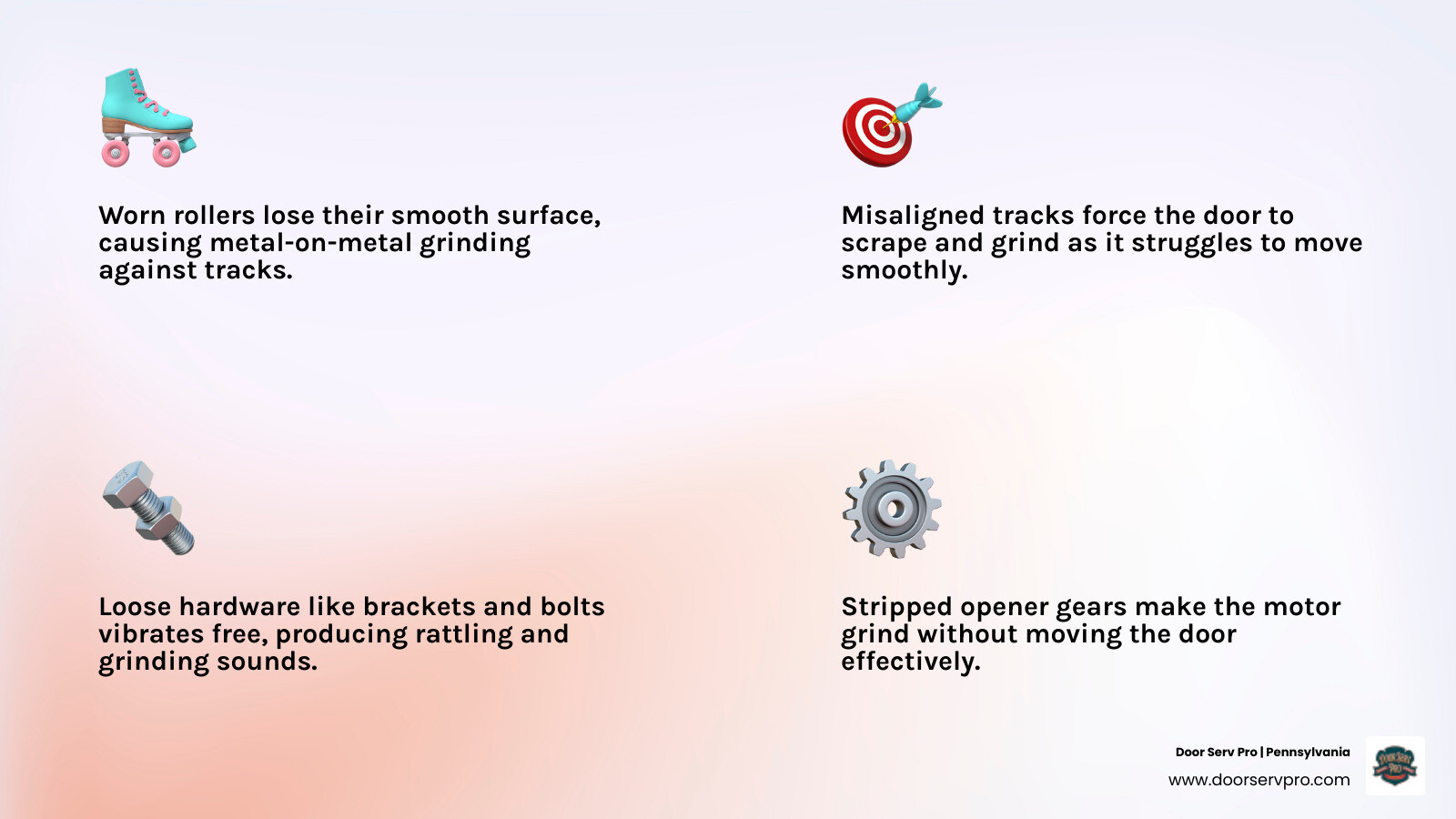
- Worn or damaged rollers - Metal rollers grind against the track as they lose their smooth surface
- Misaligned tracks - The door struggles to travel a bent or shifted track, creating metal-on-metal friction
- Loose hardware - Brackets, bolts, and hinges that have vibrated loose cause rattling and grinding
- Lack of lubrication - Dry moving parts create friction and a grinding or scraping sound
- Opener gear failure - Stripped internal nylon gears cause the motor to run while the door doesn't move
- Debris in the tracks - Dirt and grime block smooth roller movement, forcing the door to grind through
One day your door is quiet, and the next it sounds like something is tearing itself apart. That change matters. As the research from multiple garage door professionals confirms, ignoring grinding noises allows small, fixable problems to become expensive repairs — or complete system failures that leave your home unsecured.
Your garage door is one of the largest moving parts in your home. It opens and closes multiple times every day, putting constant stress on rollers, springs, tracks, and the opener motor. In Pennsylvania, seasonal temperature swings add extra stress — metal expands and contracts, lubricants dry out faster, and hardware loosens over time.
The good news? Most grinding noises have identifiable causes and clear solutions. This guide walks you through exactly what to look for, what you can safely handle yourself, and when it's time to call a professional.
Identifying the Source: Garage Door Making Grinding Noise What It Means
When you hear that unsettling sound echoing through your garage in Chambersburg or Waynesboro, the first step is isolation. We often think of the garage door as one single machine, but it’s actually two distinct systems working in tandem: the door’s mechanical hardware (tracks, rollers, springs) and the motorized opener.
To figure out garage door making grinding noise what it means for your specific setup, you need to perform a simple "isolation test." With the door fully closed, pull the red emergency release cord. This disconnects the door from the opener. Now, try to lift the door manually.
If the door glides up smoothly and silently, the problem is likely inside your opener motor or the drive chain/belt. However, if the door feels heavy, jerks, or continues to grind as you lift it by hand, the issue lies within the mechanical components like the tracks or rollers. This diagnostic step is crucial because it prevents you from replacing a perfectly good opener when the real culprit is a $10 roller or a handful of loose screws.
A visual inspection is your next best friend. Look for shiny scrape marks on the inside of the tracks—this is a "smoking gun" for metal-on-metal contact. In our April 2026 service updates, we’ve noted that many Pennsylvania homeowners see increased grinding after a long winter because road salt and grit can hitch a ride on car tires and end up inside the tracks. For a deeper dive into local issues, you can see how we Solve Garage Door Grinding Berryville.
Common Culprits Behind the Grinding Sound
Grinding is the "check engine light" of your garage. Unlike a high-pitched squeak, which usually just means a part is thirsty for oil, a grind indicates that material is actually being worn away.
Worn Rollers and Hardware Fatigue
Rollers are the "tires" of your garage door. Over years of use, the bearings inside these rollers can seize up. When a roller stops rolling and starts sliding, it grinds against the track. Similarly, loose hardware is a major contributor. Every time your door moves, it vibrates. Over hundreds of cycles, the lag screws holding your tracks to the wall can back out just enough to allow the track to shift. This misalignment causes the door to "hunt" for its path, leading to a rhythmic grinding or thumping sound.
Debris and Vibration
Sometimes the fix is as simple as a broom. Dirt, dried leaves, or even small pebbles stuck in the track can cause the rollers to "trip," creating a grinding sensation. If you’re tired of the racket every time you come home, check out our guide on how to Quiet Your Noisy Garage Door Smithsburg.
Is the garage door making grinding noise what it means for your rollers?
If the grinding sounds like a low-frequency rumble that follows the door as it moves, your rollers are likely the stars of the show.
- Steel Rollers: Most older homes in Greencastle and Waynesboro were built with unsealed steel rollers. These are notorious for rusting and becoming incredibly loud as the metal bearings degrade.
- Nylon Upgrades: We almost always recommend switching to high-quality nylon rollers with sealed ball bearings. Nylon is naturally quieter, and the sealed bearings prevent Pennsylvania’s humidity from causing internal rust.
- Flat Spots: If a roller gets stuck, the constant sliding will wear a flat spot into the wheel. This creates a "clack-grind-clack" sound as the door moves.
Regular maintenance can catch these issues before they lead to a door jumping off its tracks. Understanding The Importance Of Lubrication In Regular Garage Door Maintenance is the best way to extend the life of these small but vital parts.
When the garage door making grinding noise what it means for the opener motor
If the grinding noise is coming from the motor unit hanging from your ceiling—especially if the motor is running but the door isn't moving—you're likely dealing with stripped gears.
Most modern openers (like LiftMaster or Chamberlain) use a "sacrificial" internal gear made of high-strength nylon. Manufacturers design it this way on purpose: if the door hits an obstruction or becomes too heavy due to a broken spring, the nylon gear will strip its teeth rather than allowing the expensive motor to burn out or the door to crush something.
Signs of Opener Gear Failure:
- The "Snow" Effect: You might see white or black plastic shavings (looking like plastic "snow") inside the motor housing or on the floor beneath it.
- The Motor Whir: You hear the motor spinning rapidly, but the chain or belt isn't moving.
- The Burning Smell: As the metal drive worm spins against the stripped plastic gear, the friction can create a distinct "warm plastic" odor.
When this happens, you don't necessarily need a whole new opener. A gear and sprocket kit can often restore the unit. See how How Garage Door Opener Repair Fixes Noisy And Unresponsive Doors can save you from a full replacement.
DIY Troubleshooting and Safety Precautions
We love a proactive homeowner, but garage doors are under immense tension. Before you grab your toolbox, the springs and cables carry enough force to cause serious injury.
The DIY vs. Professional Breakdown
| Task | DIY Safety Level | What You'll Need |
|---|---|---|
| Cleaning Tracks | High (Safe) | Damp cloth, mild soap |
| Lubrication | High (Safe) | Silicone or Lithium spray |
| Tightening Hinges | Medium (Be careful) | Socket wrench |
| Track Realignment | Low (Use caution) | Level, rubber mallet |
| Spring Adjustment | DANGEROUS | Call a Professional |
| Cable Replacement | DANGEROUS | Call a Professional |
Safety First: April 2026 Protocols
Always disconnect the power before inspecting the motor. If you are working on the tracks, ensure the door is in the fully closed position. Never attempt to loosen the "red-headed" bolts or any hardware attached to the bottom brackets, as these are connected to the high-tension cables.
Proper Lubrication
One of the biggest mistakes we see in Chambersburg is the use of WD-40. While it’s great for a squeaky door hinge inside the house, it is a solvent, not a long-term lubricant. It will actually strip away the factory grease from your bearings and attract dust, making the grinding worse over time. Instead, use a dedicated silicone-based garage door spray or white lithium grease. For more tips, check our Garage Door Troubleshooting Guide.
When to Call a Professional in Pennsylvania
While tightening a few bolts is a great Saturday afternoon project, some grinding noises indicate structural failures that require expert calibration.
You should call us immediately if:
- The door is "cockeyed": If one side of the door is higher than the other, your cables may be frayed or off the drum. Continuing to use the door will cause the rollers to grind into the tracks and could lead to the door falling.
- The Grinding is accompanied by a "Bang": A loud snap followed by grinding usually means a torsion spring has broken. The opener is now trying to lift 150+ pounds of dead weight on its own, which will quickly destroy the motor gears.
- The Tracks are Visibly Bent: If a car bumped the track or the house has shifted, the track needs professional realignment to ensure the door stays safely in its channel.
Professional technicians don't just fix the noise; we look for the root cause. Is the door grinding because it's unbalanced? Is the opener straining because the wrong springs were installed? Regular check-ups are the best insurance against a 2:00 AM emergency. Learn How Routine Maintenance Prevents Emergency Door Repairs.
Frequently Asked Questions about Garage Door Noises
Can I use WD-40 to stop the grinding?
No! We can't stress this enough. WD-40 is a "Water Displacement" formula. It’s a cleaner and a solvent. It will provide a few days of silence, but it eventually dries out and leaves the metal components more vulnerable to friction than before. Always use a high-quality silicone spray or lithium grease designed for garage doors.
Why is there plastic "snow" under my opener?
That "snow" is actually the ground-up remains of your opener's drive gear. It means the gear teeth have been stripped away. This usually happens because the door is too heavy (unbalanced) or the travel limits were set incorrectly, forcing the motor to keep pushing after the door was already closed. In April 2026, many newer openers have sensors to prevent this, but older models are still very susceptible.
Is a grinding noise dangerous?
It can be. While the noise itself isn't dangerous, what it represents often is. Grinding is a sign of mechanical resistance. If that resistance is caused by a frayed cable or a failing bracket, the door could potentially fall or become stuck halfway, leaving your home vulnerable. It is always better to inspect a noisy door sooner rather than later.
Conclusion
At Door Serv Pro, we’ve spent over 30 years mastering the "shaky truth" behind garage door vibrations. We know that a garage door making grinding noise what it means is often a plea for help from your home’s hardest-working entrance. Whether you’re in Chambersburg, Waynesboro, or Greencastle, our family-owned team is here to provide the craftsmanship and reliability you deserve.
We don't just fix doors; we support our community—from veteran charities to local cancer support—because we believe a strong business is built on more than just springs and tracks. Don't let a small grind turn into a major headache. Schedule Professional Garage Door Maintenance with us today and keep your home running smoothly and quietly.
Need Help?
Contact us today to discuss your needs. Our team is ready to help.
About the author
Door Serv Pro
More articles
View all postsKeep reading
Related articles
Ready to Get Started?
Whether you need a repair, maintenance, or a new installation, our expert team is here to help.