Blog
5 Signs Your Awning Needs Replacement
Door Serv Pro
Reviewed by the Door Serv Pro service team · Trained, professional garage door technicians
Last updated June 24, 2026
Understanding Awning Fabric Options and When to Replace
Awning fabric options and when to replace them are two things every homeowner should understand before their awning starts failing them. Whether your fabric is sagging after a rainstorm, showing stubborn mildew stains, or simply looking worn out, knowing what to look for — and what your replacement options are — can save you time, money, and frustration.
Here's a quick overview of the most common signs it's time to replace your awning fabric, and the best fabric types available:
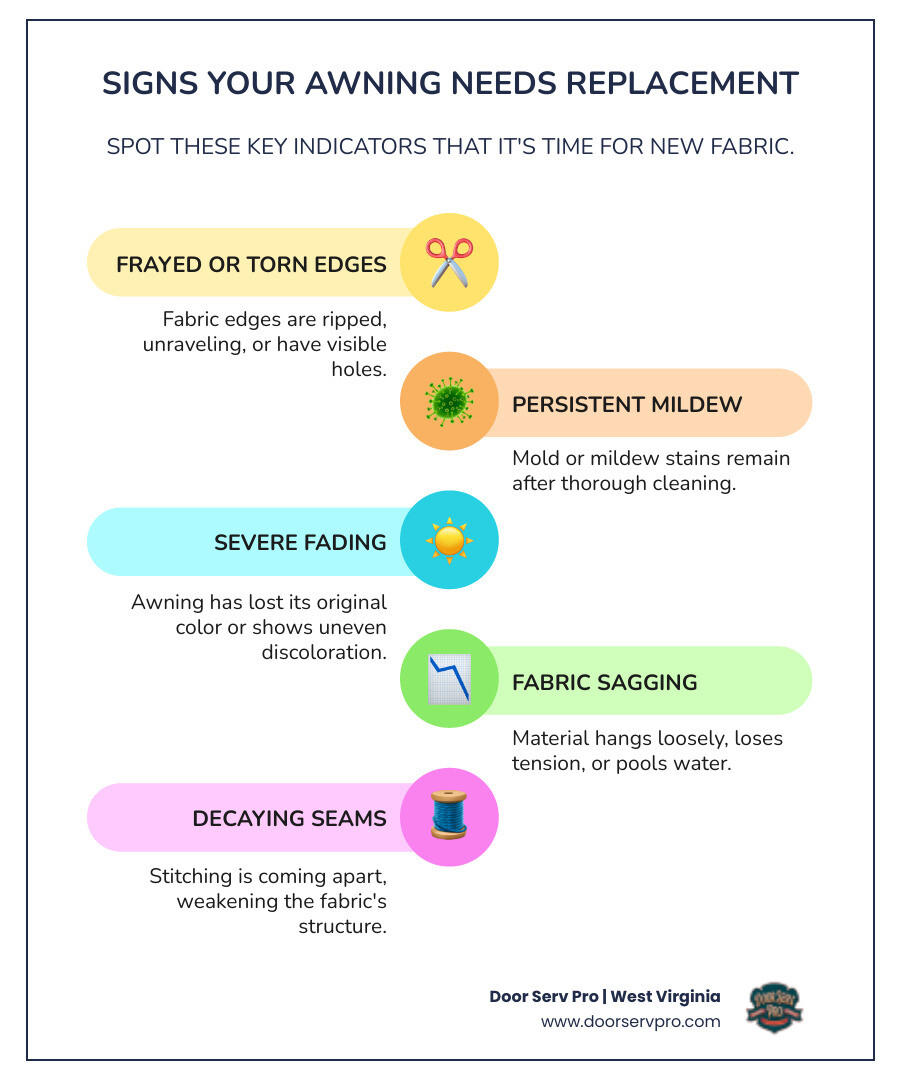
Signs You Need to Replace Your Awning Fabric:
- Fraying or torn edges that won't patch cleanly
- Persistent mold or mildew that cleaning can't remove
- Severe fading or uneven color loss
- Sagging or loss of tension in the fabric
- Decaying seams or stitching pulling apart
Common Awning Fabric Options:
| Fabric Type | Lifespan | Best For |
|---|---|---|
| Solution-dyed acrylic | 10-15 years | Sun, UV protection, all-around use |
| Vinyl-coated polyester | 5-8 years | Wet, humid, or coastal climates |
| Standard polyester | 4-6 years | Budget-friendly, short-term use |
| Cotton canvas | 5-7 years | Traditional look, low sun exposure |
| Acrylic (standard) | 8-12 years | Moderate climates, daily use |
Awning frames can last anywhere from 20 to 30 years — but the fabric takes the brunt of sun, rain, wind, and temperature changes every single day. That means the fabric almost always needs attention long before the frame does. Choosing the right material from the start, and knowing when it's past its prime, is what separates an awning that performs for over a decade from one that starts failing within a few seasons.
5 Signs Your Awning Needs Replacement
As we move through April 2026, many of us in West Virginia are starting to think about spending more time outdoors. Whether you are in Martinsburg, Charles Town, or Shepherdstown, your awning is likely your best friend during those bright, sunny afternoons. However, even the toughest fabrics eventually succumb to the elements.
Knowing the awning fabric options and when to replace them starts with a thorough inspection. Here are the five most critical signs that your fabric has reached the end of its journey:
- Fraying Edges and Thinning Spots: If you look up at your awning and see "transparent" areas where the sun peaks through the weave, the fibers are breaking down. Fraying along the edges or near the valance is a clear indicator that the structural integrity of the material is compromised.
- Persistent Mildew and Mold: While a little surface dirt can be washed away, deep-seated mold that has "rooted" into the fibers is a different story. If you’ve scrubbed and treated the fabric but the black or green spots remain, it’s a health hazard and an eyesore that necessitates replacement.
- Severe Fading and Sun Splotches: In high-sun areas like Hedgesville or Falling Waters, UV rays can bleach the color right out of lower-quality fabrics. When the vibrant stripes or solid colors become dull and uneven, the fabric has lost its UV-protective capabilities.
- Fabric Sagging and Water Pooling: High-quality fabric should remain taut. If your awning now sags in the middle, it can trap rainwater. This extra weight puts immense stress on the arms and motor, risking a much more expensive frame repair.
- Decaying Seams: Sometimes the fabric itself looks okay, but the thread used to sew the panels together is rotting. If you see seams pulling apart or "grinning" (where the thread is visible and loose), the whole cover could blow off in the next spring breeze.
If you recognize these signs, it may be time to consult a professional. You can find more info about awning replacement services to see how we can help refresh your outdoor space.
Comparing the Best Awning Fabric Options
When it comes to picking a new cover, not all materials are created equal. In our 30+ years of craftsmanship at Door Serv Pro, we’ve seen how different fabrics react to the unique climate of the Shenandoah Valley and the Eastern Panhandle.
| Feature | Solution-Dyed Acrylic | Vinyl-Coated Polyester | Standard Polyester |
|---|---|---|---|
| Durability | High (10-15 years) | Moderate (5-8 years) | Low (4-6 years) |
| Water Resistance | Excellent (Repellent) | Superior (Waterproof) | Moderate |
| Breathability | High | Low | Moderate |
| Fade Resistance | Best | Good | Fair |
| UV Protection | UPF 50+ | Excellent | Varies |
Choosing the right material ensures your investment lasts. For those looking to upgrade their entire home exterior, explore our full range of home services, including garage door solutions that complement your new awning.
Best Awning Fabric Options and When to Replace for Durability
If longevity is your primary goal, solution-dyed acrylic is the gold standard. Brands like Sunbrella and Solar Pro are industry leaders for a reason. Unlike traditional fabrics where the color is printed on top, the solution-dyeing process adds the pigment while the fiber is still in a liquid state. This means the color goes all the way through—like a carrot rather than a radish.
These premium fabrics typically offer a 10-year warranty against fading, rot, and mildew. They are engineered to block at least 90% of harmful UV rays, providing a safe haven for your family and protecting your indoor furniture from sun damage. Their high tensile strength means they won't stretch or sag easily, even after years of being extended and retracted.
Choosing Between Vinyl and Acrylic Awning Fabric Options and When to Replace
The choice often comes down to your specific environment.
- Acrylic is breathable. It allows hot air to escape, keeping the area under the awning significantly cooler. It’s perfect for the hot, humid summers in Ranson or Inwood. Because it’s a woven fabric, it feels more like traditional cloth and offers great aesthetic versatility with hundreds of patterns.
- Vinyl-Coated Polyester is the heavyweight champion of waterproofing. If you live in a particularly rainy pocket of West Virginia or near the water in Harpers Ferry, vinyl is a strong contender. It is easy to wipe clean and resists mold exceptionally well. However, it does trap heat more than acrylic, which can make the space underneath feel a bit "stuffy" on a July afternoon.
Maintenance Practices for Longevity
You’ve invested in the best awning fabric options and when to replace them is hopefully a decade or more away. To ensure you get every year of value out of your fabric, follow these simple maintenance steps:
- Monthly Rinsing: Use a garden hose to rinse off dust, pollen, and bird droppings. This prevents organic matter from breaking down the fabric's protective coating.
- Gentle Cleaning: Twice a year, use a soft-bristle brush and a bucket of lukewarm water mixed with mild dish soap. Never use a pressure washer, as the high force can strip the water-repellent finish or tear the seams.
- Air-Drying is Vital: Never roll up your awning while it is wet. This is the number one cause of mildew growth. If you have to retract it during a sudden storm, extend it as soon as the sun comes out so it can dry completely.
- Tension Adjustments: Periodically check that the fabric is tight. If you notice ripples or bunching, it may need a professional tension adjustment to prevent premature wear.
- Off-Season Protection: If you have a non-cassette awning, consider using a protective winter cover during the snowy months in Berkeley Springs or Great Cacapon to keep the fabric safe from ice and debris.
We take pride in our community and our work. To see how we’ve helped your neighbors maintain their homes, you can read our customer reviews.
Frequently Asked Questions about Awning Fabrics
Can I replace just the fabric without the frame?
Absolutely! In fact, this is the most common way to "refresh" an awning. Since high-quality aluminum frames can last 20 to 30 years, there is often no need to replace the entire system. Replacing just the fabric is a cost-effective way to update the look of your home or upgrade to a more durable material like Sunbrella. During a fabric-only replacement, we also inspect the hardware, springs, and motor to ensure everything is in top shape. If you're wondering if your frame is a candidate for a new "skin," contact us for more information.
Is professional installation better than DIY?
While DIY kits exist, replacing awning fabric involves working with high-tension springs that can be dangerous if mishandled. Professional installers ensure a custom, "drum-tight" fit that prevents sagging and ensures the fabric rolls perfectly onto the tube every time. We also have the technical expertise to handle motorized units without damaging the electronics.
How long does high-quality awning fabric last?
As of April 2026, the data shows that premium solution-dyed acrylics last between 10 and 15 years with proper care. Lower-end polyesters typically need replacement every 4 to 6 years. Your local environment plays a huge role; an awning in a shaded, protected area will naturally outlast one that faces constant, direct Southern sun and heavy wind.
Conclusion
Your home’s exterior is an investment in your comfort and your property value. Understanding your awning fabric options and when to replace them ensures that your outdoor living space remains a beautiful, functional retreat for years to come.
At Door Serv Pro, we are more than just a service provider; we are a family-owned business with over 30 years of craftsmanship. We are deeply committed to our West Virginia community, from Gerrardstown to Paw Paw, and we bring that same level of care to every job we do. Whether you need a simple fabric refresh or a brand-new installation, we are here to help.
Ready to give your patio the makeover it deserves? Schedule your awning replacement today and let us help you find the perfect fabric for your home.
Need Help?
Contact us today to discuss your needs. Our team is ready to help.
About the author
Door Serv Pro
More articles
View all postsKeep reading
Related articles
Ready to Get Started?
Whether you need a repair, maintenance, or a new installation, our expert team is here to help.