Blog
The Ultimate Guide to Awning Fabric Maintenance and Cleaning
Door Serv Pro
Reviewed by the Door Serv Pro service team · Trained, professional garage door technicians
Last updated June 24, 2026
Why Proper Awning Fabric Care and Maintenance Tips Matter for Your Virginia Home
Awning fabric care and maintenance tips are something every Virginia homeowner with a patio or deck awning needs in their back pocket — especially heading into the warmer months of 2026, when your awning works hardest against sun, rain, pollen, and humidity.
Here's a quick overview of the essential steps to keep your awning fabric in great shape:
Quick-Reference Awning Fabric Care Checklist:
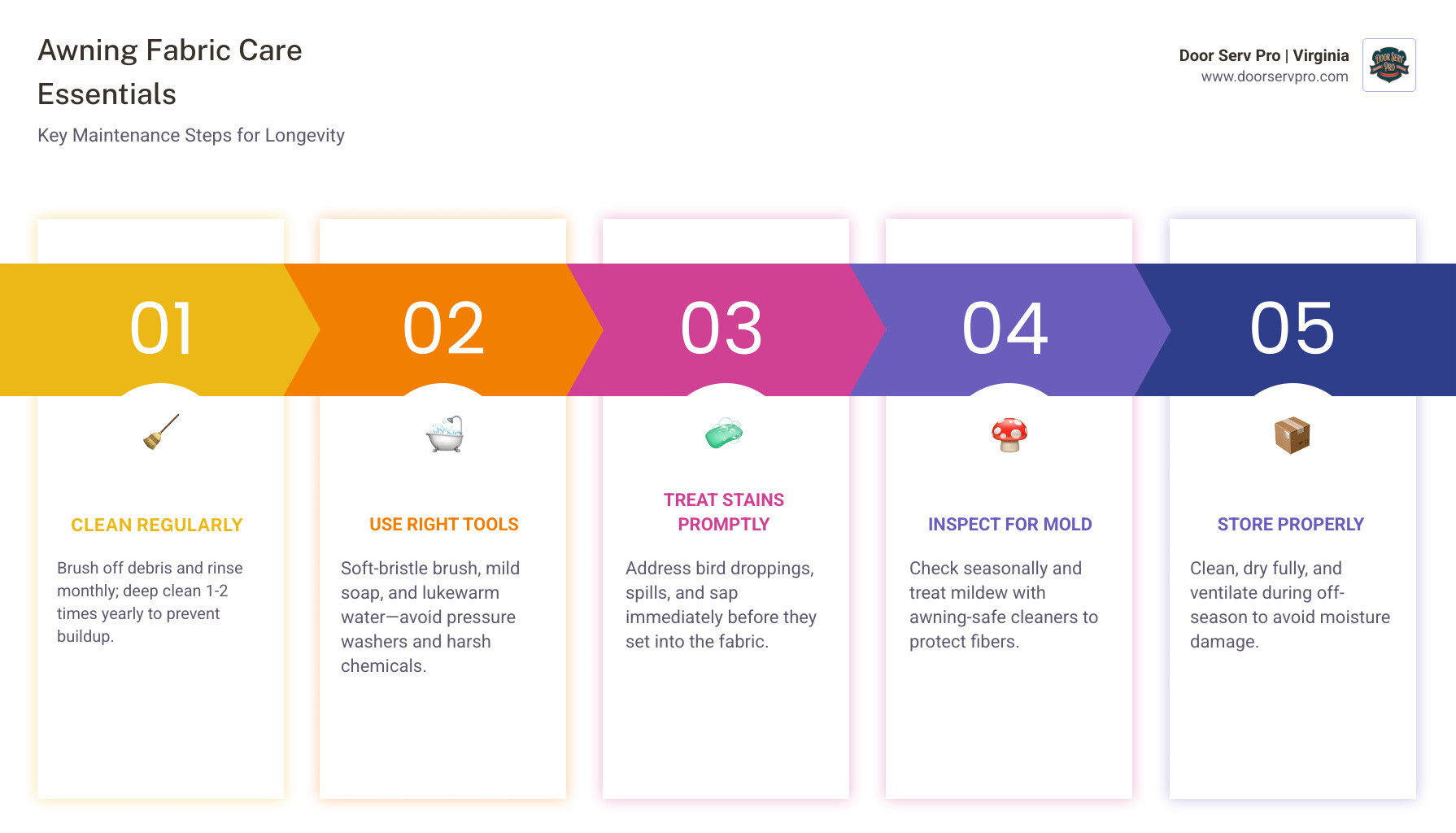
- Clean regularly — brush off loose debris and rinse with clean water monthly; deep clean 1-2 times per year
- Use the right tools — soft-bristle brush, mild soap, and lukewarm water only
- Treat stains promptly — address spills and bird droppings before they set
- Fight mold and mildew — inspect fabric seasonally and treat with an awning-safe cleaner
- Maintain the hardware — tighten bolts, inspect the frame, and lubricate moving parts with silicone spray
- Protect from severe weather — retract your awning during heavy wind, rain, or snow
- Store properly off-season — clean, dry fully, and store in a well-ventilated space to prevent mold
- Re-waterproof as needed — reapply a fabric treatment product after deep cleaning to restore water resistance
- Know when to replace — heavily stained, torn, or faded fabric may need professional replacement
Awnings are built tough. Most are made from specialty materials — acrylic, vinyl, polyester, or PVC-coated mesh — that are engineered to resist mildew, UV rays, and tearing. But even the most durable fabric won't last without some basic upkeep. Neglecting routine care allows dirt, mold, and environmental buildup to shorten the life of your awning — and dull the curb appeal of your home.
The good news? Keeping your awning fabric looking and performing its best doesn't require a lot of time or expensive equipment. It just takes the right approach.
Essential Awning Fabric Care and Maintenance Tips for Virginia Homeowners
Living in Virginia, our awnings face a unique set of challenges. From the heavy pollen counts in the Shenandoah Valley to the humid summers in Ashburn and Reston, environmental factors can quickly take a toll. To keep your outdoor space looking sharp, we recommend following a consistent Spring Awning Maintenance and Cleaning Guide.
Routine cleaning is the cornerstone of longevity. We suggest a light "hose-down" at least once a month during the active season. This prevents dust, bird droppings, and tree sap from becoming deeply embedded in the fibers. For a more thorough deep clean, aim for a schedule of one to two times per year—typically once in the spring to prep for summer, and once in the fall before winter storage.
A critical part of your routine should be a fabric inspection. As of April 2026, maintenance standards emphasize checking for small "pinholes" or thinning areas that could turn into large tears during a Virginia thunderstorm. Catching these issues early can save you from a full Awning Fabric Replacement later on.
Identifying Fabric Types for Better Awning Fabric Care and Maintenance Tips
Not all awning fabrics are created equal, and knowing what you have is the first step toward proper care. Most modern awnings use one of the following specialty materials:
- Solution-Dyed Acrylic: This is the gold standard for many residential awnings. Because the color is added while the fiber is in a liquid state, the hue goes all the way through the fabric. It’s highly breathable and UV-resistant.
- Sunbrella: A specific brand of high-performance acrylic known for being water, stain, and mildew resistant. It’s a favorite for its "Color to the Core" technology.
- Vinyl-Coated Polyester: Often used for fixed awnings, this material is highly waterproof and easy to wipe down, though it lacks the breathability of acrylic.
- PVC-Coated Mesh: Frequently seen in sunshades, this allows for airflow while blocking heat. It’s incredibly tear-resistant and fire-retardant.
- Composite Fabrics: These are high-tech "sandwiches" of different materials designed to provide maximum durability and weatherproofing.
Using the wrong cleaning method on the wrong fabric can lead to disaster. For instance, scrubbing a vinyl awning with a stiff brush might scratch the protective coating, while using harsh detergents on acrylic can strip away its water-repellent finish.
Safe Cleaning Solutions and Tools
When it comes to awning fabric care and maintenance tips, "less is more" regarding chemicals. You don't need a chemistry set to get a clean awning; in fact, most manufacturers warn against it.
The "Safe List" of Supplies:
- Mild Detergent: Think of gentle soaps like Dawn or Woolite. Avoid anything with "degreasers" or "bleach alternatives" unless specifically instructed.
- Lukewarm Water: Never use boiling water, as it can shrink certain synthetic fibers.
- Soft-Bristle Brush: A telescoping soft brush (like those used for washing cars) is perfect for reaching high spots without abrading the fabric.
- White Vinegar: A 1:1 mixture of vinegar and water is a fantastic, eco-friendly way to tackle light organic stains or odors.
The "Danger Zone" (What to Avoid):
- High-Pressure Washers: This is the most common mistake we see. A pressure washer can easily blast holes through aged fabric or strip the waterproof coating right off. Always use a standard garden hose with a gentle spray nozzle.
- Harsh Chemicals: Avoid ammonia, acetone, or abrasive "scouring" powders. These can cause permanent discoloration and weaken the structural integrity of the weave.
Step-by-Step Cleaning and Stain Removal

Ready to get to work? Follow these Tips for Maintaining Your Sunsetter Awning for Longevity to ensure a streak-free, professional finish.
- Debris Removal: Before getting the fabric wet, use a broom or a dry soft brush to sweep away loose leaves, cobwebs, and dried bird droppings. If you skip this, you’ll just be turning dust into mud once you add water.
- Pre-Wetting: Thoroughly soak the fabric with a garden hose. This helps "open up" the dirt and makes your cleaning solution more effective.
- Application and Soaking: Apply your soapy water mixture. Don't just scrub and rinse immediately—let the solution soak for about 15 to 20 minutes. This gives the soap time to break down stubborn grime.
- Gentle Scrubbing: Use your soft-bristle brush to work in circular motions. Focus on the areas where water tends to pool or where the fabric overlaps the frame.
- Thorough Rinsing: This is the most important step. Rinse until every trace of soap suds is gone. Leftover soap residue acts like a magnet for new dirt and can actually promote mildew growth.
- Air Drying: Never retract your awning while it is still damp. Fully extend the arms and let the Virginia sun do its work.
Addressing Stubborn Stains and Mildew
Sometimes, a simple soap-and-water wash isn't enough. If you’re dealing with an older unit in New Market, MD, you might encounter deep-set mildew or tree sap.
- Mildew Treatment: While most awning fabrics are treated to resist mildew, organic debris (like pollen) sitting on the fabric can grow mold. Use a solution of 1 cup bleach and 1/4 cup mild soap per gallon of water. Important: Only use bleach on solution-dyed acrylics (like Sunbrella) and always spot-test in an inconspicuous corner first. Soak for 15 minutes and rinse until the bleach smell is gone.
- Tree Sap and Bird Droppings: For sticky sap, try a small amount of isopropyl alcohol on a cotton ball to dissolve the resin, then wash with soap. For bird droppings, it’s best to let them dry, scrape off the bulk, and then treat the remaining stain with a vinegar-water solution.
- Re-Waterproofing: After a deep cleaning—especially one involving bleach—your awning may lose some of its water-shedding ability. Once the fabric is bone dry, apply a specialized fabric guard (like 303 Fabric Guard) to restore that "beading" effect. This simple step can add years to the life of the material.
Hardware Maintenance and Seasonal Protection
While the fabric is the "star" of the show, the frame is the "skeleton" that keeps it all together. Neglecting the hardware is a fast track to a mechanical failure. If you are near St James, MD, the humidity can lead to oxidation if you aren't careful.
- Lubrication: Use a silicone-based lubricant on all moving parts, hinges, and pulleys. Avoid WD-40 or petroleum-based oils, as these can attract dust and eventually gum up the works. A quick spray once a season keeps the operation smooth and quiet.
- Tightening Bolts: Wind causes constant vibration. Check the brackets and mounting bolts annually to ensure everything is snug. A loose bolt can lead to a bent arm or, worse, the awning pulling away from the house.
- Rust Inspection: If you have a steel frame, look for signs of rust or chipped paint. Lightly sand any rust spots and touch them up with a rust-inhibiting outdoor paint to prevent the spread.
Seasonal Awning Fabric Care and Maintenance Tips for Severe Weather
Virginia weather can be unpredictable. From sudden summer gusts in Hedgesville, WV to winter snow loads, your awning needs protection.
- Wind Retraction: Retractable awnings are "sunshades," not "umbrellas." Most manufacturers recommend retracting the awning if winds exceed 20-25 mph. If you wouldn't feel comfortable holding an open umbrella in the wind, your awning shouldn't be out either.
- Heavy Rain Precautions: If your awning doesn't have a sufficient pitch (angle), heavy rain can "pool" in the center. This weight can stretch the fabric permanently or snap the support arms. Ensure your awning is adjusted to a steep enough angle for water to run off freely.
- Off-Season Storage: For non-permanent awnings, the best practice is to clean and dry them thoroughly at the end of autumn. If you use a winter cover, ensure it is breathable to prevent moisture from being trapped inside, which is a recipe for mold.
Frequently Asked Questions about Awning Maintenance
How often should I clean my awning fabric?
We recommend a light rinsing once a month during the spring and summer to remove pollen and dust. A deep, soapy cleaning should be performed at least once a year, ideally in late spring. If your home is surrounded by trees or near a busy road, you may need to deep clean twice a year.
Can I use a pressure washer on my awning?
No! We strongly advise against using pressure washers. Even on a low setting, the concentrated stream of water can damage the fibers, strip away UV protection, and ruin the waterproofing. A standard garden hose is all you need.
When should I consider professional fabric replacement?
If your fabric has large tears (over 6 inches), significant "dry rot" where the fibers crumble when touched, or permanent staining that covers more than 30% of the surface, it’s time to look into Awning Fabric Replacement. Often, the frame is still in great shape, and replacing just the fabric is a cost-effective way to get a "brand new" look.
Conclusion
Taking care of your awning doesn't have to be a chore. By following these awning fabric care and maintenance tips, you’re protecting your investment and ensuring that your patio remains the perfect spot for weekend BBQs and quiet morning coffees.
At Door Serv Pro, we’ve spent over 30 years perfecting our craft. As a family-owned business based in Winchester, VA, we take immense pride in serving our neighbors across Virginia and West Virginia. Whether you need a simple tune-up, a hardware repair, or a full Awning Fabric Replacement, our team is here to help with 24/7 emergency support and a commitment to excellence that only three decades of experience can provide.
Ready to refresh your outdoor space? Give us a call today! We serve a wide range of locations, including:
- Ashburn, VA
- Leesburg, VA
- McLean, VA
- Reston, VA
- Stephens City, VA
- Vienna, VA
- And many more!
Let us help you keep your home protected and beautiful for years to come.
Need Help?
Contact us today to discuss your needs. Our team is ready to help.
About the author
Door Serv Pro
More articles
View all postsKeep reading
Related articles
Ready to Get Started?
Whether you need a repair, maintenance, or a new installation, our expert team is here to help.