Blog
Everything You Need to Know About Garage Door Spring Repair
Door Serv Pro
Reviewed by the Door Serv Pro service team · Trained, professional garage door technicians
Last updated June 24, 2026
What Homeowners Should Know About Garage Door Spring Repair
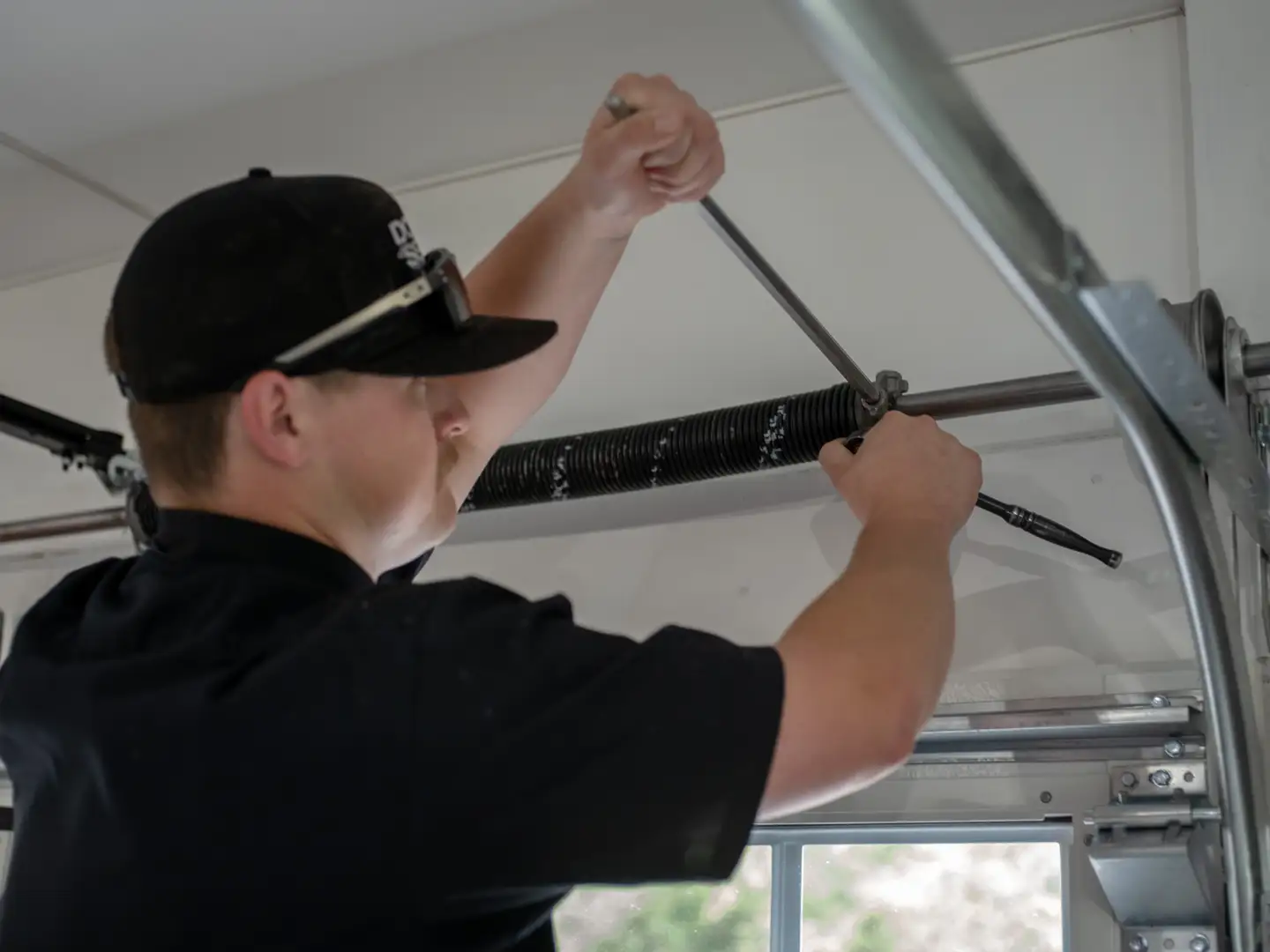
Garage door spring repair what homeowners should know comes down to a few key points: springs are dangerous, failure is common, and DIY attempts can cause serious injury. Here is a quick summary before we dive deeper:
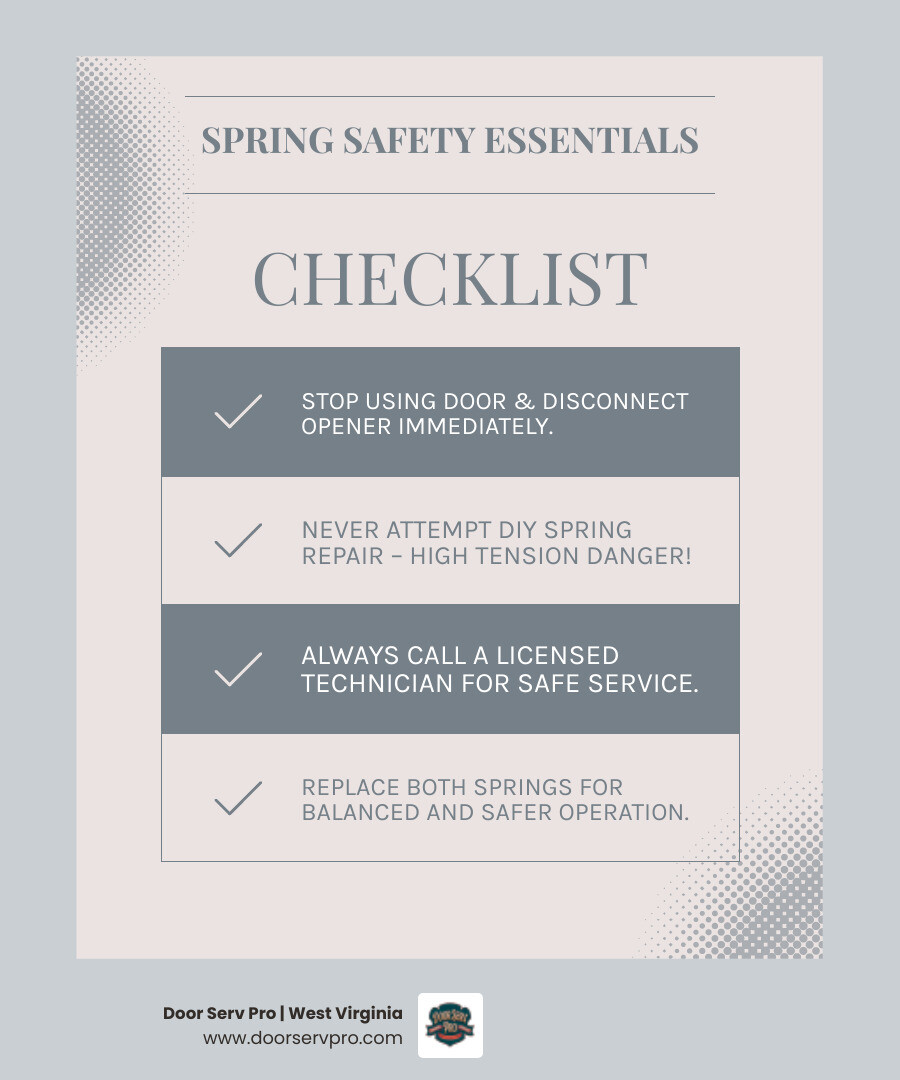
- Never ignore a broken spring. A failed spring makes your door unsafe to use.
- Stop using the door immediately if you suspect a spring has broken.
- Disconnect the opener so no one accidentally activates it.
- Do not attempt to repair or replace springs yourself. They are under hundreds of pounds of tension.
- Call a licensed technician to inspect, replace, and balance the system.
- Replace both springs at the same time, even if only one has broken.
- Springs last about 10,000 cycles, which equals roughly seven years of average use.
Your garage door is one of the heaviest moving parts in your home. Most doors weigh between 150 and 300 pounds, and the only thing making them feel light is the spring system working behind the scenes. Those springs store an enormous amount of mechanical energy every single time the door moves. When one fails — and it usually happens without warning — it can leave your door stuck, unbalanced, or worse, dangerous to anyone nearby.
For homeowners in West Virginia, where humidity and temperature swings are part of everyday life, spring wear can happen faster than you might expect. Door Serv Pro has seen how a single broken spring can disrupt a household and create real safety risks if not handled correctly.
This guide walks you through everything you need to know: what springs do, how to spot a failing one, what to do when one breaks, and why professional repair is the only safe path forward.
Understanding Garage Door Spring Repair: What Homeowners Should Know
When we talk about garage door spring repair what homeowners should know, we have to start with the mechanics. Most people think the garage door opener does all the heavy lifting. In reality, the opener is just the "brain" that guides the door; the springs are the "muscles." They provide the counterbalance necessary to move a door that can weigh as much as a small refrigerator.
There are two primary types of spring systems used in residential homes across West Virginia: torsion springs and extension springs.
Torsion Springs
Torsion springs are the modern standard for most homes. They are mounted horizontally on a metal shaft directly above the door opening. When the door closes, cables attached to the bottom corners pull on the brackets, winding the spring and storing energy through torque. When you open the door, that stored torque unwinds, helping lift the weight. Because they are contained on a shaft, they are generally considered safer and more durable, often lasting up to 15,000 cycles in high-quality models.
Extension Springs
You’ll typically find extension springs on older doors or in garages with very low headroom. These springs run parallel to the horizontal tracks on either side of the door. They store energy by stretching (extending) as the door closes. Because these springs can act like a giant rubber band if they snap, they must always be installed with safety cables running through the center to contain them if they break.
Lifespan Comparison Table
| Feature | Torsion Springs | Extension Springs |
|---|---|---|
| Location | Above the door header | Along the side tracks |
| Mechanism | Torque (twisting) | Tension (stretching) |
| Standard Lifespan | 10,000 – 15,000 cycles | 7,000 – 10,000 cycles |
| Smoothness | Very smooth/balanced | Can be jerky |
| Safety | High (contained on shaft) | Moderate (requires safety cables) |
Understanding which system you have is the first step in Garage Door Services Common Spring Repair And Replacement.
Identifying Your Spring System
If you aren't sure which system you have, take a quick look at your door while it is closed. If you see one or two large springs coiled around a bar directly above the door, you have a torsion system. You might see "winding cones" at the ends of these springs, which are used by professionals to add tension.
If you see long, thin springs hanging above the horizontal tracks on the left and right sides, those are extension springs. Knowing this helps when you call for Garage Door Spring Repair Martinsburg WV, as our technicians can arrive prepared with the right parts for your specific setup.
How Springs Support Your Door
The math behind a garage door is impressive. A standard double-car garage door can weigh over 200 pounds. Without springs, your electric opener would burn out its motor in a matter of days trying to lift that dead weight. Springs are rated by "cycles" — one cycle is a single opening and closing of the door.
The industry standard is 10,000 cycles. If you use your door four times a day, that’s about 1,460 cycles a year, meaning your springs should last roughly seven years. However, factors like the weight of the door (insulated doors are much heavier) and the quality of the steel can change this. For more details on these mechanics, check out our Garage Door Spring Repair Waynesboro PA Guide.
Common Signs of a Broken or Failing Spring
Springs rarely "wear out" gradually in a way that’s easy to see; usually, they just snap. However, there are warning signs that tension is failing.
- A Loud Bang: Many homeowners report hearing a sound like a gunshot or a heavy metal object hitting the floor coming from the garage. This is the sound of the steel coils snapping under hundreds of pounds of pressure.
- Visible Gaps: If you have torsion springs, a break will result in a visible 2-inch gap in the coils.
- The Door Won’t Open: If your opener struggles and then stops, or if the door only moves a few inches before reversing, a broken spring is the likely culprit.
- Crooked Movement: On doors with two springs, if one breaks, the door will often pull to one side, looking crooked in the tracks.
- Heavy Operation: If you pull the manual release cord and can barely budge the door, the springs are no longer doing their job.
If you notice any of these, you are likely dealing with a Broken Garage Door Spring and need immediate assistance.
Safety Risks and Garage Door Spring Repair What Homeowners Should Know
We cannot stress this enough: a broken spring is a safety emergency. When a spring snaps, the door becomes a "dead weight." If the door is open when the spring breaks, it can come crashing down with enough force to crush anything — or anyone — beneath it.
Furthermore, frayed cables often accompany spring failure. Because the spring provides the tension that keeps the cables tight on the drums, a break causes the cables to go slack and potentially tangle, increasing the risk of the door falling out of the tracks. For urgent situations, read our guide on Emergency Garage Door Spring Repair What You Need To Know.
Immediate Steps to Take When a Spring Breaks
If you hear that tell-tale "snap" or find your door stuck, follow these steps immediately:
- Stop Using the Door: Do not try to force it open with the remote. This can burn out the opener motor or snap the lifting cables.
- Disconnect the Opener: Pull the red emergency release cord to prevent anyone from accidentally trying to operate the door.
- Keep the Door Closed: If the door is already down, leave it there. If it’s partially open, stay away from it and call us.
- Do Not Touch the Springs: Those coils still hold residual tension and can cause severe injury.
Addressing Garage Door Spring Issues Stephens City quickly prevents further damage to your tracks and opener.
Why Professional Service Outperforms DIY Attempts
In an era of YouTube tutorials, it’s tempting to think you can handle this yourself. However, garage door spring repair what homeowners should know is that this is one of the few home repairs that is genuinely life-threatening for an amateur.
Professionals use specialized tools called winding bars to adjust torsion springs. Using a screwdriver or a pair of pliers in place of a winding bar is a recipe for disaster. If the tool slips, the spring will unwind instantly with enough force to break bones or cause fatal injuries.
Beyond safety, a professional ensures the door is perfectly balanced. An unbalanced door puts uneven stress on the rollers and tracks, leading to expensive repairs down the road. Plus, our work comes with warranty protection that DIY work simply cannot offer. This is Why Professional Garage Door Spring Repair Is Essential.
The Dangers of DIY Garage Door Spring Repair What Homeowners Should Know
The "recoil force" of a spring is immense. We’ve seen DIY attempts result in property damage, such as holes in garage walls or shattered windshields, when a spring or tool flies loose. Additionally, homeowners often buy the wrong size spring. Springs are calibrated based on the exact weight and height of the door. Even a slight mismatch can leave your door too heavy or dangerously "hot" (meaning it wants to fly open). For residents near the Maryland border, we provide expert Garage Door Spring Repair Frederick MD to avoid these risks.
What Happens During a Professional Replacement
When we arrive at your home in Berkeley Springs or Charles Town, we don't just swap the spring. We perform a full system inspection.
- Calibration: We ensure the new springs are the correct wire size and length for your door's weight.
- Balance Testing: We check that the door stays in place when opened halfway.
- Lubrication: We treat the new springs and all moving parts to ensure quiet operation.
- Safety Testing: We test the auto-reverse and sensor features of your opener.
This comprehensive approach is part of The Importance Of Regular Inspections For Garage Door Spring Repair.
Maintenance and Lifespan Optimization
While you shouldn't repair springs yourself, you can help them last longer. The biggest enemy of garage door springs is rust. Rust increases friction between the coils, which weakens the steel over time.
We recommend using a high-quality silicone-based lubricant or white lithium grease on your springs at least twice a year. Avoid using standard WD-40, as it is a degreaser, not a long-term lubricant. Proper lubrication can extend the life of your springs by preventing the corrosion that leads to premature snapping. Understanding How Garage Door Spring Repairs Can Prevent Future Door Malfunctions starts with this simple maintenance step.
Testing Balance and Garage Door Spring Repair What Homeowners Should Know
You can test your door's balance yourself in about 30 seconds:
- Close the door and disconnect the opener by pulling the red cord.
- Lift the door manually to waist height and let go.
- The Result: A well-balanced door should stay in place or move only slightly. If it slams shut or flies upward, your springs need professional adjustment.
This "waist-height check" is a staple of our Hagerstown MD Garage Spring Repair Guide.
Environmental Factors in April 2026
As we move through April 2026, West Virginia homeowners should be mindful of "spring fatigue" caused by the winter-to-spring transition. Temperature fluctuations cause metal to expand and contract. If your springs are already seven or eight years old, these shifts can be the final straw that causes them to break. In areas like Falling Waters, humidity can also accelerate rust if the springs aren't properly coated. We offer specialized Garage Door Spring Repair Falling Waters WV tailored to these local conditions.
Frequently Asked Questions
Should both springs be replaced if only one breaks?
Yes, absolutely. Most garage doors have two springs that were installed at the same time. This means they have the exact same number of cycles on them. If one has reached its breaking point, the other is usually only days or weeks away from failing. Replacing both ensures the door remains balanced and saves you from a second service call shortly after the first. This is a standard recommendation for Garage Door Spring Repair Ranson WV.
How long do garage door springs typically last?
On average, you can expect 7 to 10 years of use. However, if you have a large family and the door opens 10 times a day, that lifespan could drop to 3 or 4 years. We often recommend "high-cycle" springs for busy households, which are rated for 25,000 cycles and offer much better long-term value. Learn more about your options for Garage Door Spring Repair Williamsport MD.
Can I still open my door with a broken spring?
We strongly advise against it. While you might be able to force the door open with the help of a few neighbors, it is incredibly dangerous. Furthermore, using the electric opener with a broken spring can burn out the motor or strip the gears, turning a simple spring replacement into a much more expensive opener replacement. If you’re in Northern Virginia, we can help with Garage Door Spring Repair Sterling VA to get you back on track safely.
Conclusion
At Door Serv Pro, we’ve spent over 30 years serving the West Virginia community, from Martinsburg to Shepherdstown and beyond. Our family-owned values mean we treat your home's safety as if it were our own. Garage door spring repair what homeowners should know is that while these components are small, they carry the weight of your home's security and convenience.
To keep your system running smoothly, remember these steps:
- Lubricate your springs every six months.
- Perform a balance test twice a year.
- Visual check for gaps or rust every few months.
- Call a professional the moment you hear a strange noise or feel the door getting heavy.
Whether you need Garage Door Spring Repair Martinsburg WV or just a routine safety inspection, our team is here to provide the craftsmanship and excellence your home deserves. Don't let a broken spring keep you stuck — reach out to us today to restore your door's safety and reliability.
Need Help?
Contact us today to discuss your needs. Our team is ready to help.
About the author
Door Serv Pro
More articles
View all postsKeep reading
Related articles
Ready to Get Started?
Whether you need a repair, maintenance, or a new installation, our expert team is here to help.