Blog
To Retract or Not to Retract? The Ultimate Awning Weather Guide
Door Serv Pro
Reviewed by the Door Serv Pro service team · Trained, professional garage door technicians
Last updated June 23, 2026
Why Understanding How Wind and Rain from Mid-Atlantic Storms Damage Awnings Could Save You Thousands
How wind and rain from mid-Atlantic storms damage awnings is one of the most underestimated home maintenance problems Virginia homeowners face. A sudden Nor'easter, a fast-moving summer squall, or a tropical depression pushing up the coast can turn a perfectly installed awning into a bent, torn, or completely detached liability — sometimes within seconds.
Here is a quick summary of the most common ways storm conditions cause awning damage:
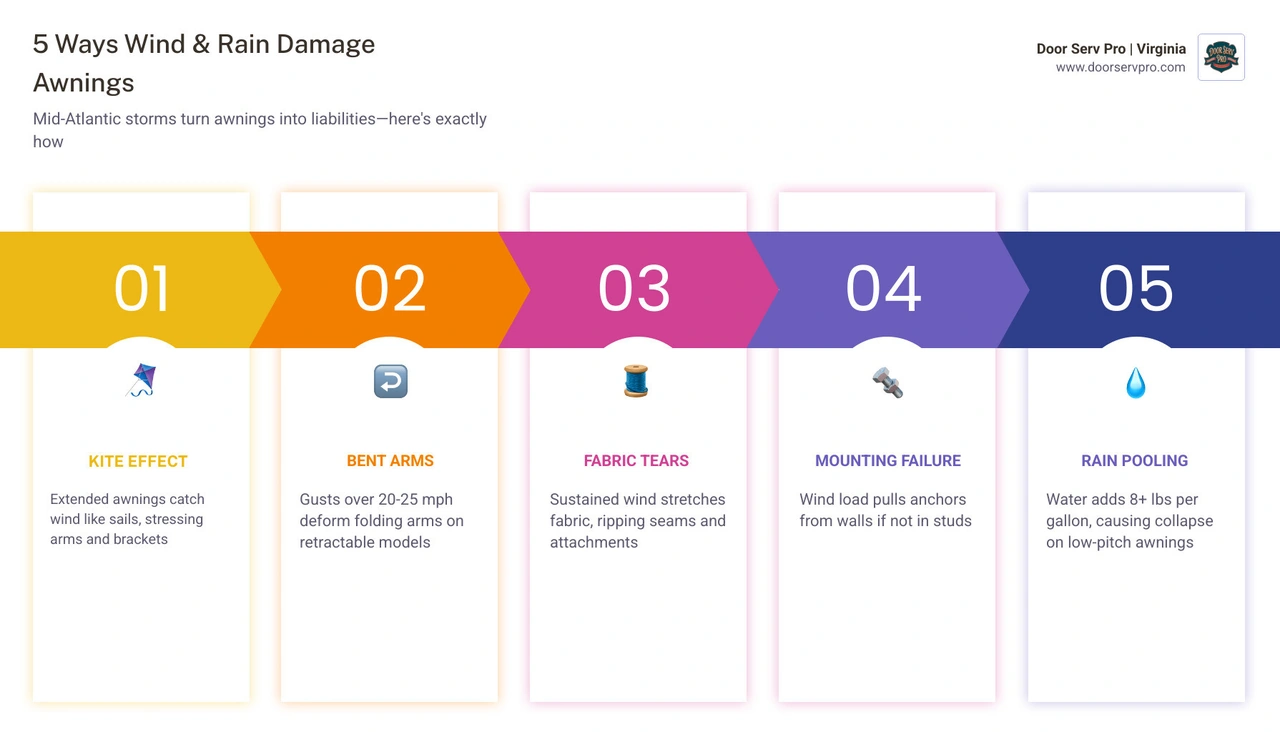
- Wind uplift (the kite effect): Extended awnings catch wind like a sail, putting enormous stress on arms and mounting brackets
- Bent or snapped lateral arms: Gusts above 20-25 mph can permanently deform the folding arms on retractable models
- Fabric tearing: Sustained wind stretches fabric past its design limits, causing rips at seams and attachment points
- Mounting failure: Wind load transfers directly to wall anchors — if those aren't set into studs or solid masonry, the whole unit can pull free
- Rain pooling and structural collapse: Water collecting on a low-pitch awning adds 8+ pounds per gallon, quickly overwhelming arm capacity
- Combined wind-and-rain stress: Wind pushes pooled water into the fabric while simultaneously lifting the frame, multiplying the damage risk
Most retractable awnings are only rated for winds up to 20-25 mph. Yet across Virginia, Maryland, and the broader Mid-Atlantic region, gusts exceeding that threshold occur on average 30-50 days per year — and that doesn't account for the sudden, violent squalls that roll in with almost no warning.
Understanding exactly where your awning is most vulnerable — and what to do before, during, and after a storm — is the difference between a long-lasting outdoor investment and an expensive repair call.
How Wind and Rain from Mid-Atlantic Storms Damage Awnings
Living in the Mid-Atlantic means dealing with a unique blend of weather patterns. From the humid summer afternoons in McLean to the crisp, windy mornings in Winchester, our region is a crossroads for atmospheric drama. Nor'easters are perhaps our most notorious guests, bringing sustained winds and heavy, driving rain that can last for days. Unlike a quick afternoon shower, these storms test the endurance of every exterior component of your home.
When we talk about Weathering the Elements: Awnings as Your Home's First Line of Defense, we are acknowledging that your awning is often the first thing hit by horizontal rain and upward wind gusts. Sudden squalls can appear out of nowhere, especially during the transition seasons. These events are particularly dangerous because they don't give homeowners time to react.
Tropical depressions moving up from the south also pose a significant threat. While the winds might not reach hurricane force by the time they hit Leesburg or Reston, the combination of high humidity and persistent rain creates a "heavy" atmosphere. This moisture-laden air exerts more physical pressure on structures than dry air does. Using an Awnings Protect Home Sun Rain Guide can help you understand the dual nature of these systems—they provide shade when it's hot, but they require active management when the clouds turn gray.
Understanding How Wind and Rain from Mid-Atlantic Storms Damage Awnings
The physics of awning damage is relatively simple but devastating. Think of your awning as a giant kite attached to your house. When wind gets underneath the fabric, it creates lift. In a retractable model, this lift puts immense pressure on the lateral arms, which are designed to support weight from above, not force from below. This "kite effect" is the primary reason for bent or snapped arms.
Once the arms are compromised, the wind load transfers directly to the mounting brackets. If the unit wasn't installed correctly—meaning it wasn't anchored into solid wall studs or masonry—the entire system can pull away from the siding. This doesn't just ruin the awning; it can cause significant structural damage to your home’s exterior. For those in newer developments, ensuring a professional Awnings Installation Inwood WV Guide was followed is critical to ensuring the hardware can handle these lateral loads.
Rain brings its own set of problems. If an awning is not pitched correctly, water begins to "pool" in the center of the fabric. A single gallon of water weighs approximately 8.3 pounds. It doesn't take much of a depression in the fabric to collect 20 or 30 gallons, suddenly adding 250+ pounds of dead weight to a frame only designed to hold a fraction of that. This weight stretches the fabric permanently and can lead to a catastrophic "drop" failure where the arms simply buckle under the load.
Warning Signs: How Wind and Rain from Mid-Atlantic Storms Damage Awnings
Your awning will often tell you when it’s in trouble before it actually breaks. Learning to "listen" to your outdoor space is a key part of maintenance.
- Noisy Flapping: If the fabric is snapping or flapping loudly, the wind speed has already exceeded the safe "comfort" zone. This flapping causes micro-tears in the fabric fibers.
- Fabric Sagging: After a rainstorm, if you notice the fabric doesn't look as taut as it used to, you likely had a pooling event. This sagging makes it easier for water to collect in the future, creating a self-reinforcing cycle of damage.
- Vibrating Brackets: If you see the mounting bar or brackets vibrating or "shuddering" during wind gusts, the anchors are being stressed. This is a sign that the wind is reaching a critical threshold.
Checking your material against an Ultimate Awning Fabric Guide Climate can help you determine if your specific fabric type (acrylic vs. polyester) is more prone to these warning signs.
Structural Limits: Wind Speeds and Rain Pooling
Different awning types have vastly different "breaking points." In the Mid-Atlantic, where we see everything from 10 mph breezes to 60 mph storm gusts, knowing these limits is non-negotiable.
| Awning Type | Safe Wind Speed | Max Gust Tolerance | Primary Failure Risk |
|---|---|---|---|
| Retractable (Standard) | 15-20 mph | 25 mph | Bent arms / Fabric lift |
| Retractable (Premium) | 25-30 mph | 35 mph | Motor strain / Anchor stress |
| Fixed Frame (Fabric) | 40-50 mph | 60 mph | Fabric tearing at seams |
| Aluminum (Clamshell) | 80-100 mph | 120+ mph | Projectile impact |
As the table shows, most retractable models are not designed for "storm" conditions. They are sunshades, not umbrellas. If the wind is strong enough that it’s uncomfortable for you to sit outside and read a book, it’s definitely too windy for the awning to be out.
The "14-Degree Rule" is another vital metric. To prevent water from pooling, an awning should have a minimum pitch of 14 degrees (roughly a 3-inch drop for every foot of projection). If your awning is too flat, rain will not run off fast enough to prevent weight accumulation. For more on balancing shade and drainage, refer to the Slugultimate Awnings Guide Sun Rain Protection.
Advanced Protection: Wind Sensors and Smart Installation
In the modern era, you don't have to be home to protect your investment. Technology has given us the "wind sensor," and for many homeowners in areas like Vienna or Ashburn, it's the single best upgrade you can make.
There are two main types of sensors:
- Anemometers: These feature small cups that spin. They measure actual wind speed and trigger the motor to retract the awning when a pre-set limit (usually 20 mph) is reached.
- Vibration/Motion Sensors: These are mounted on the front bar of the awning. Instead of measuring wind speed, they measure the physical "shaking" of the awning. If the movement becomes too violent, the awning tucks itself away.
Beyond sensors, the quality of installation is your "silent" protector. We always emphasize mounting into structural studs or using specialized masonry anchors. Using wind-rated hardware—such as stainless steel bolts that resist the corrosive "salt-air" often pushed inland during Mid-Atlantic storms—ensures the Awning Fabric Sun Protection you enjoy today doesn't become a repair bill tomorrow.
Maintenance Strategies for Virginia and Maryland Homeowners
A little bit of proactive care goes a long way. In our 30+ years of experience serving communities from Stephens City to Berryville, we've found that the most resilient awnings are the ones that are regularly inspected.
The Pre-Storm Checklist:
- Check the Forecast: If a Wind Advisory or High Wind Warning is issued, retract the awning immediately.
- Clear Debris: Ensure no branches or leaves are sitting on the fabric; wind can turn these into abrasive "sandpaper" or projectiles that puncture the material.
- Tighten Hardware: Use a wrench to ensure mounting bolts haven't vibrated loose over the season.
The Post-Storm Inspection:
- Check for Tears: Look for pinholes or seam separations. Small issues can be fixed with specialized tape before they become massive rips.
- Listen for Squeaks: Operate the awning. New grinding or squeaking sounds often mean the arms were slightly bent or need lubrication.
- Look for Mold: If the awning was retracted while wet (which is sometimes necessary during a storm), extend it as soon as the sun comes out to let it dry completely. Trapped moisture is the leading cause of mildew.
For a deeper dive into seasonal care, our Spring Garage Door Awning Maintenance Guide provides a step-by-step walkthrough. If the fabric has already seen better days, you might consider an Awning Fabric Replacement Guide Waynesboro PA to restore the structural integrity of your system.
Frequently Asked Questions about Awning Storm Damage
What wind speed is dangerous for retractable awnings?
Generally, anything above 20-25 mph is considered the danger zone for standard retractable awnings. While some high-end models can handle gusts up to 35 mph, the risk of "uplift" increases exponentially as wind speeds rise. On the Beaufort Scale, this is classified as a "Fresh Breeze"—enough to move small trees in leaf. If you see whitecaps on a nearby pond or large branches swaying, it’s time to retract. Choosing the right material is also a factor; learn How to Choose the Right Awning Fabric for Your Climate to see how different weaves handle wind resistance.
How does the 14-degree pitch prevent structural failure?
The 14-degree pitch creates a steep enough incline that gravity overcomes the surface tension of the water. This ensures constant runoff into the built-in drainage channels of the front bar. Without this angle, water "dwells" on the fabric, causing it to stretch. Once the fabric stretches, it creates a permanent pocket that will collect even more water in the next storm, eventually leading to a collapse.
Which awning designs perform best in high-wind areas?
If you live in a particularly exposed area—such as a hilltop in Middletown or a wide-open lot in Front Royal—you have three main options:
- Aluminum Clamshells: These are the gold standard for storm protection. They can be closed and locked over windows, acting as a physical barrier against wind and debris.
- Cassette Retractable Models: When retracted, the fabric and arms are completely enclosed in a metal "box," protecting them from the elements.
- Fixed Frame Awnings: Because the fabric is laced tightly to a permanent metal skeleton, these can withstand much higher sustained winds than folding-arm models.
Conclusion
At Door Serv Pro, we know that your home is your sanctuary. Whether we are performing a precision garage door repair or helping you select a new awning, our goal is to provide 30+ years of craftsmanship to the families of Virginia and beyond. From the historic streets of Berryville to the bustling neighborhoods of Reston and McLean, we understand the local climate because we live here too.
Don't let a sudden Mid-Atlantic storm turn your outdoor oasis into a headache. By understanding the limits of your equipment and staying proactive with maintenance, you can enjoy your awning for decades. If you’ve recently suffered storm damage and need an expert eye, check out our Best Awning Replacement Cresaptown MD Guide or Contact Door Serv Pro today for a professional inspection. We’re here to ensure your home stays protected, no matter what the Virginia skies throw your way.
Need Help?
Contact us today to discuss your needs. Our team is ready to help.
About the author
Door Serv Pro
More articles
View all postsKeep reading
Related articles
Ready to Get Started?
Whether you need a repair, maintenance, or a new installation, our expert team is here to help.