Blog
Preparing Your Awnings for Spring and Summer Fun
Door Serv Pro
Reviewed by the Door Serv Pro service team · Trained, professional garage door technicians
Last updated June 24, 2026
Why Preparing Your Awnings for Spring and Summer Use Matters More Than You Think
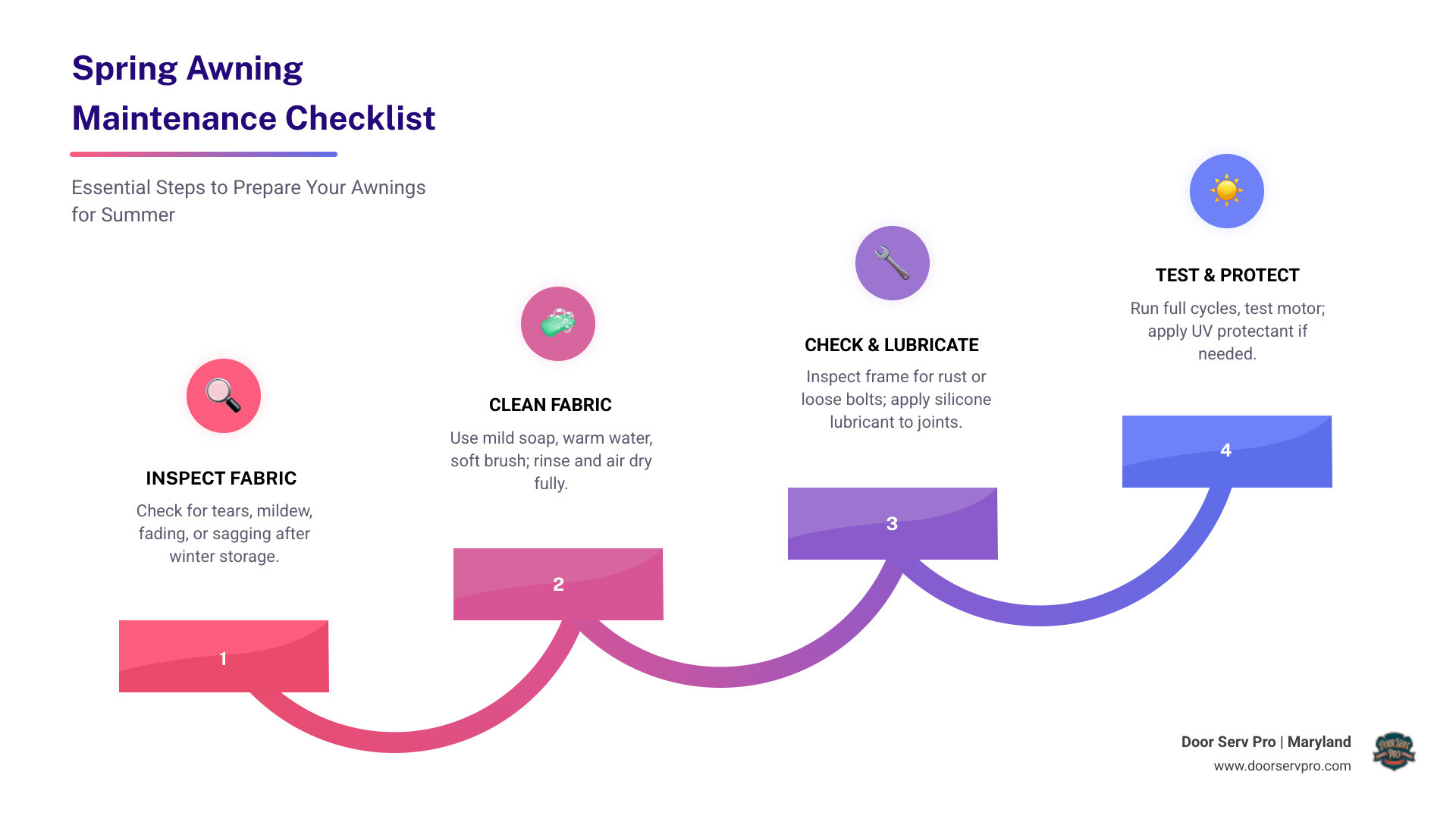
Preparing your awnings for spring and summer use is one of the most important steps you can take to protect your outdoor investment and get the most out of the warm months ahead. Here is a quick overview of what that process looks like:
- Inspect the fabric - Look for tears, mildew, fading, or sagging after winter
- Clean the fabric - Use mild soap, warm water, and a soft-bristled brush; rinse thoroughly and air dry completely
- Check the frame and hardware - Look for rust, loose bolts, and bent components
- Lubricate moving parts - Apply silicone-based spray to joints, pivot points, and roller bearings
- Test mechanical operation - Run a full extension and retraction cycle; check motor and remote batteries
- Apply protective treatments - Use UV protectant or waterproofing spray if the fabric needs it
- Know when to call a pro - Large tears, motor issues, or structural concerns need expert attention
Most homeowners pull out their awning on the first warm weekend of the year only to find mildew streaks on the fabric, stiff creaking arms, and a mechanism that barely moves. It is a frustrating situation, and one that is entirely avoidable with a little preparation each spring.
Awnings are built to take a beating from the sun, wind, and rain, but even the most durable fabrics and frames need seasonal attention. According to industry data, properly maintained awnings can last anywhere from 8 to 25 years depending on the material, while neglected ones can fail in far less time. A few hours of spring prep can mean years of extra life and performance from your awning system.
I'm Paul Wiese, founder of Door Serv Pro, and with over three decades of hands-on experience in home exterior systems and outdoor structures, I've seen how a simple seasonal routine for preparing your awnings for spring and summer use can save homeowners from costly repairs down the road. Let's walk through exactly what you need to do.
Why Seasonal Maintenance is Crucial for Your Outdoor Space
When April 2026 rolls around in Maryland, the transition from a cold, damp winter to the bright possibilities of spring is exciting. However, your awning has likely spent the last few months retracted and forgotten, or worse, exposed to ice, snow, and heavy winds. Seasonal maintenance isn't just about aesthetics; it’s about protecting the structural integrity of your home’s exterior.
The first major benefit is fabric longevity. High-quality acrylic fabrics typically last 8 to 12 years, while vinyl options can endure for 15 to 25 years if cared for correctly. Without a spring tune-up, dirt and organic matter trapped in the folds can lead to permanent staining or rot. You can learn more about these timelines in our guide on How Long Do Awnings Last? Maintenance Tips for Extended Lifespan.
Beyond durability, there is the factor of energy efficiency. A well-maintained awning can reduce cooling costs by up to 25% by blocking solar heat gain before it hits your windows. This makes Awnings as a Sustainable Design Element: Eco-Friendly Benefits a key consideration for homeowners in areas like Hagerstown and Martinsburg who want to stay green while staying cool.
Finally, we cannot overlook health and safety. The primary job of an awning is Sun Safety: How Retractable Awnings Shield Against Harmful UV Rays. If the fabric has thinned or lost its UV-resistant coating due to neglect, it won't provide the protection your family needs during a Maryland July.
Essential Steps for Preparing Your Awnings for Spring and Summer Use
Getting your shade structure ready for the "fun" seasons requires a systematic approach. We recommend starting with a thorough visual inspection. Before you even push a button or turn a crank, look at the unit while it is retracted. Are there bird nests tucked in the ends? Is there a thick layer of pollen or dust?
Once you've cleared away any obvious external debris, it’s time to extend the unit. Do this slowly. Listen for any grinding or squeaking sounds that might indicate the mechanical components are struggling after their winter hibernation. If you are unsure about the state of your unit, a professional Awning Installation expert can help verify that the mounting brackets are still secure against your home's siding.
For those in our Virginia service areas, reaching out to a local Awning Company Vienna VA can provide peace of mind if you notice the frame seems out of alignment or if the "pitch" (the angle of the awning) has shifted.
Best Practices for Preparing Your Awnings for Spring and Summer Use
Cleaning the fabric is the most labor-intensive part of the process, but it’s also the most rewarding. Here is our expert-approved method:
- Brush it dry first: Use a soft-bristled brush or a clean broom to sweep away loose dust, cobwebs, and dried leaves. Doing this while the fabric is dry prevents you from rubbing mud into the fibers later.
- The "Soap and Water" Rule: We cannot stress this enough—never use harsh chemicals or bleach unless specifically directed by the manufacturer for severe mildew. Instead, mix a mild, pH-neutral soap (like Dawn or Woolite) with lukewarm water.
- Gentle Scrubbing: Use a soft cloth or sponge to apply the solution. Avoid stiff brushes that can strip away the water-repellent finish.
- The Rinse: Use a standard garden hose. Avoid high-pressure settings, as these can tear seams or damage the fabric's "tensile strength."
- The Golden Rule of Drying: Always let the awning air dry completely while fully extended. Retracting a damp awning is the number one cause of mold and mildew growth in residential systems.
Homeowners looking for specialized care in Awning Company McLean VA or Awning Company Leesburg VA often ask about professional-grade cleaners. While retail kits exist, the mild soap method remains the safest DIY approach for most high-end fabrics.
Inspecting Hardware and Mechanical Components
While the fabric dries, turn your attention to the "bones" of the system. In cities like Hagerstown, the humidity and seasonal temperature swings can take a toll on metal parts. If you need assistance, consulting an Awning Company Hagerstown MD for a hardware check is a smart move.
Check all moving joints, lateral arm elbows, and the roller bar. Look for signs of rust or oxidation. If the arms feel stiff, apply a high-quality silicone-based lubricant. Avoid petroleum-based products like WD-40, as they tend to attract dust and grime, which eventually creates a "sludge" that can jam the mechanism.
For motorized units, now is the time to check your electronics. Plug the motor back in if it was disconnected for winter. If your remote is sluggish, replace the batteries—usually a CR2430 or CR2032 coin-style battery. Test the range of the remote to ensure you can operate the shade comfortably from your patio furniture.
Protecting Your Investment from Harsh Summer Elements
Summer in the Mid-Atlantic isn't just about sunshine; it’s about sudden afternoon thunderstorms and intense UV exposure. To keep your awning in peak condition, consider applying a fabric protectant. These sprays can help restore water repellency and add an extra layer of UV defense. Always test a small, hidden area first to ensure there is no discoloration.
If your fabric is showing significant wear, such as thinning spots or large holes that allow sun to peak through, you might not need a whole new system. Often, an Awning Fabric Replacement is a more cost-effective way to refresh your outdoor space without replacing the expensive metal frame and motor.
Wind is the "silent killer" of awnings. A standard retractable unit is generally not designed for winds exceeding 15–20 mph. If your system has a wind sensor, verify that it is clean and responsive. These sensors automatically retract the awning when they detect excessive vibration or wind speed, which is a lifesaver during those Maryland monsoons. If you are in the Frederick area and your sensor isn't triggering, an Awning Company Frederick MD technician can help recalibrate it.
When to Seek Professional Assistance for Your Awning
While most of preparing your awnings for spring and summer use can be handled by a handy homeowner, some issues require a professional touch. At Door Serv Pro, we recommend calling us if you encounter any of the following:
- Motor Failure: If you hear a humming sound but the awning won't move, or if the motor is stuttering, it may need a replacement. Motor replacements typically range between $200 and $600.
- Structural Instability: If the mounting bolts feel loose or the frame is pulling away from the wall, do not operate the unit. This is a major safety hazard.
- Large Tears: Small pinholes can often be patched with specialized adhesive, but tears longer than six inches usually require professional repair or fabric replacement.
- Alignment Issues: If one arm extends further than the other, it puts uneven stress on the roller tube and can eventually lead to a total mechanical failure.
For residents near Cumberland, an Awning Company Cumberland MD service visit can identify these issues before they ruin a summer gathering. Similarly, our team serving as an Awning Company Martinsburg WV can provide annual professional inspections, which often cost around $150 and can extend the life of your unit to 20 years or more.
Frequently Asked Questions about Preparing Your Awnings for Spring and Summer Use
How often should I clean my awning fabric?
For most homes in our service region, a thorough cleaning twice a year—once in the spring and once in the late fall—is ideal. However, you should perform a "light" cleaning once a month during the summer. This simply involves hosing off pollen and bird droppings before they have a chance to "bake" into the fabric under the intense sun.
Can I use a pressure washer on my retractable awning?
Absolutely not. While it might seem like a time-saver, a pressure washer can strip the protective coatings off the fabric and weaken the seams. It can also force water into the motor housing or electrical connections, leading to a short circuit. A standard garden hose with a spray nozzle provides plenty of pressure for a safe clean.
What is the best lubricant for awning joints?
We always recommend a dry silicone-based spray. It provides excellent lubrication without the oily residue that attracts Maryland dust and outdoor debris. Apply it to the pivot points on the lateral arms and any moving bushings. If you have a manual crank, a small amount of silicone on the handle's insertion point can make the operation much smoother.
Conclusion
At Door Serv Pro, we understand that your home is your sanctuary. With over 25 years of expertise, we’ve made it our mission to help homeowners across Maryland, West Virginia, Virginia, and Pennsylvania maintain their properties with style and reliability. Whether you are in Hagerstown, Frederick, or Martinsburg, preparing your awnings for spring and summer use is a vital part of homeownership that ensures your outdoor "oasis" stays beautiful for a decade or more.
If you find that your awning needs more than just a cleaning, or if you are looking to upgrade your outdoor space with a brand-new installation, we are here to help. Our NATE-certified team brings a personal touch to every project, ensuring your shade structures are safe, functional, and ready for whatever the summer brings.
Ready to see what's possible for your home? Check out our Awning Brochures for inspiration, or contact us today for a professional inspection. Let’s make this summer the most comfortable one yet!
Need Help?
Contact us today to discuss your needs. Our team is ready to help.
About the author
Door Serv Pro
More articles
View all postsKeep reading
Related articles
Ready to Get Started?
Whether you need a repair, maintenance, or a new installation, our expert team is here to help.