Blog
Garage Door Grinding? Here is the Fix
Door Serv Pro
Reviewed by the Door Serv Pro service team · Trained, professional garage door technicians
Last updated June 24, 2026
What a Garage Door Making Grinding Noise Means (And Why It Matters)
A garage door making grinding noise what it means for your home is simple: something inside the system is under stress, working harder than it should, or wearing out faster than expected. That sound is your garage door telling you it needs attention — and ignoring it usually leads to bigger problems.
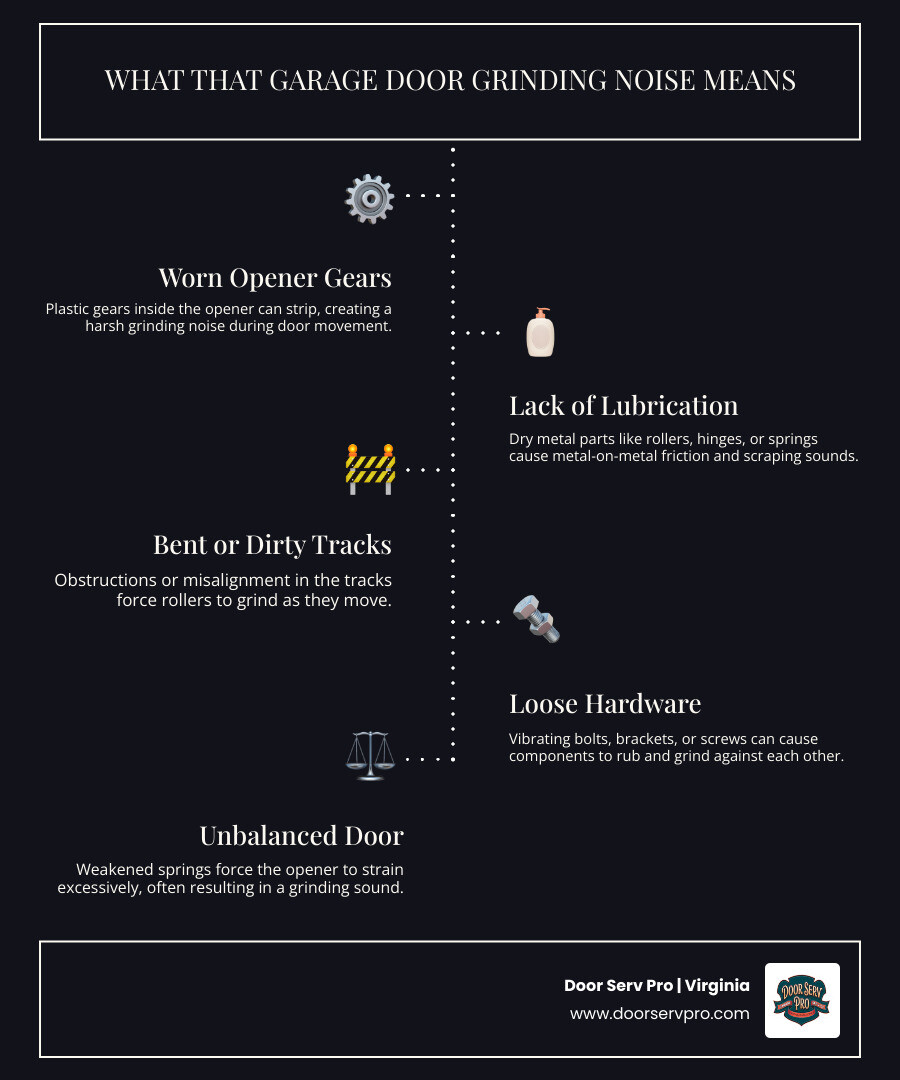
Here are the most common reasons a garage door makes a grinding noise:
- Worn or stripped drive gears in the opener — the internal plastic gear is grinding against the motor
- Loose or misaligned chain/belt drive — the drive mechanism has too much slack or has shifted off track
- Dry, unlubricated rollers, hinges, or springs — metal-on-metal friction creates a grinding or scraping sound
- Bent or debris-filled tracks — rollers are being forced through an obstructed or misaligned rail
- Loose hardware — bolts, brackets, or lag screws have vibrated loose over repeated use
- Unbalanced door — the opener is straining against a door that the springs can no longer support properly
- Aging system components — openers over 10 years old and systems over 15–20 years old are especially prone to noise and mechanical failure
The good news? Many of these issues are diagnosable at home — and some are fixable with basic tools and the right lubricant. Others, especially anything involving springs or the opener motor, need a professional.
This guide walks you through exactly what to look for, what to do, and when to call in help.
Garage door making grinding noise what it means for your home
When we hear that unmistakable sound of metal-on-metal friction, it’s rarely a "wait and see" situation. In our 30+ years of craftsmanship at Door Serv Pro, we’ve found that a garage door making grinding noise what it means for the average Virginia homeowner is usually a sign of component strain. Your garage door is likely the largest moving object in your home, and it relies on a delicate balance of tension and alignment.
As we move through 2026, modern maintenance standards emphasize that a quiet door is a healthy door. If yours is vibrating excessively or producing a rhythmic grinding sound, it’s an early warning sign that parts are wearing down. To truly Understand Overhead Garage Door Noises, you have to look at the system as a whole. Grinding isn't just an annoyance; it's a symptom of friction that can eventually lead to a snapped cable or a burnt-out motor.
Why a garage door making grinding noise what it means for the opener
If the grinding sound seems to be coming from the "box" on your ceiling, the culprit is almost certainly the garage door opener. Most modern openers use a primary drive gear made of high-strength plastic. Over time, or if the door is too heavy to lift, these gears can strip. This results in the motor spinning (often with a loud humming or grinding sound) while the door remains stationary.
When we perform Garage Door Opener Repair, we often find that a lack of chain tension has caused the drive sprocket to wear unevenly. If your opener is over 10 years old, these internal gear kits are often the first things to fail. Checking the tension of your chain or belt is a great first step; if it’s sagging more than half an inch, it’s likely slipping and causing that mechanical "gnashing" sound.
Dealing with a garage door making grinding noise what it means for the tracks
Sometimes the noise isn't in the motor at all, but in the path the door takes. Bent rails or tracks are common in busy households where a stray trash can or a bumper might have made contact with the metal. Even a small dent can cause the rollers to bind, creating a harsh scraping or grinding noise.
If you’ve recently bumped your door, check out our Quick Fix For Dented Garage Doors for immediate advice. Beyond physical damage, debris buildup — like dried grease mixed with Virginia dust and dirt — can create an abrasive paste in the tracks. This increases roller friction and forces the entire system to vibrate, leading to hardware fatigue.
Common causes of garage door friction and noise
Understanding the difference between a minor squeak and a major grind often comes down to the materials involved. Below is a quick comparison we use to help homeowners choose the right components for a quieter home:
| Feature | Steel Rollers | Nylon Rollers |
|---|---|---|
| Noise Level | High (Metal-on-metal) | Very Low (Quiet operation) |
| Durability | High, but prone to rust | High, with ball bearings |
| Maintenance | Requires frequent oiling | Low maintenance |
| Lifespan | 10,000 cycles | 15,000 - 25,000 cycles |
Worn bearings inside these rollers are a frequent cause of grinding. If the roller doesn't spin freely, it slides along the track instead of rolling, which sounds like a metal grater. If your system is approaching the 15–20 year mark, these components have likely reached the end of their service life. Furthermore, if your door is unbalanced, it puts uneven pressure on the tracks. You can find more details on this in our Garage Door Troubleshooting Guide.
Lack of lubrication and component wear
The most common (and fortunately, the easiest to fix) cause of grinding is simply dry parts. When hinges, rollers, and springs go without oil, they begin to protest. While a high-pitched squeal usually means a part is just starting to get dry, a deep grind suggests that the metal is actually wearing away.
We recommend a 6-month lubrication cycle to keep things moving. This is especially important for the torsion spring. As the coils expand and contract, they rub against each other. Without lubrication, this creates a "grating" sound that can eventually lead to the spring binding and snapping. For more on keeping your system healthy, see how to Maintain Your Garage Door Cables.
Hardware instability and vibration
Every time your garage door opens, it creates a small amount of vibration. Over hundreds of cycles, this vibration can loosen the nuts and bolts that hold your system together. Rattling bolts in the support brackets or hinges can quickly turn into a grinding sound as the door shifts out of its intended plane of motion.
Hinge fatigue is another factor. If a hinge is cracked or loose, the door sections won't pivot smoothly, causing them to bind and grind against the track header. Regularly checking your lag screws and ensuring the track supports are rigid can eliminate a surprising amount of noise.
DIY troubleshooting and maintenance steps
If you're ready to tackle the noise yourself, follow these steps. Always remember: safety first.
- Disconnect the Power: Before touching any moving parts, unplug the garage door opener to prevent accidental activation.
- Clean the Tracks: Use a damp rag to wipe out the inside of the tracks. Avoid using heavy grease here, as it actually attracts dirt and makes the grinding worse.
- Tighten Hardware: Use a wrench or socket set to snug up loose bolts on the hinges and track brackets. Be careful not to over-tighten and strip the holes.
- Lubricate Moving Parts: Apply a high-quality synthetic lubricant to the rollers (bearings only), hinges, and the length of the torsion spring.
We suggest a quick reapplication every 1–2 months for high-usage doors to keep that "new door" silence. If you find the door still won't close properly after these steps, refer to our Garage Door Not Closing Complete Guide.
Safety precautions for homeowners
Working on a garage door is not without risks. Here are our non-negotiable safety rules:
- Use a Spotter: If you’re on a ladder, have someone hold the base.
- Protect Your Hands: Wear gloves to avoid pinches and to keep the lubricant off your skin.
- Never Touch the Springs: Torsion springs are under extreme tension. Attempting to adjust or repair them yourself can result in severe injury or death.
- Electrical Hazards: If you see frayed wires coming from your opener, stop immediately and call a professional.
Frequently Asked Questions about grinding garage doors
What type of lubricant should I use for my garage door?
Always use a lithium-based grease or a silicone-spray specifically labeled for garage doors. Never use WD-40; it is a solvent, not a permanent lubricant, and it will actually strip away the protective oils your door needs. Also, avoid petroleum-based products on nylon rollers, as petroleum can degrade the plastic over time.
How often should I lubricate my garage door components?
For homeowners in areas like Winchester or Leesburg, we recommend a full lubrication every six months. However, if you use your garage as the primary entrance to your home (opening it 4+ times a day), a quick monthly check and "top-off" of lubricant on the hinges and rollers is a great preventive measure.
Why does my garage door opener hum but not move?
A humming motor that doesn't move usually points to one of three things: a seized motor, a burned-out capacitor, or a broken torsion spring that has made the door too heavy for the motor to lift. If you hear humming, disconnect the opener and try to lift the door manually. If it feels like it weighs 300 pounds, your spring is broken.
Conclusion
A garage door making grinding noise what it means is that your home’s most frequent exit point needs a little TLC. Whether it’s a simple lubrication job or a more complex gear replacement in the opener, addressing the sound early will save you from being stuck in your driveway at the worst possible time.
At Door Serv Pro, we’ve spent over 30 years perfecting our craft across Virginia. From our home base in Winchester to our neighbors in Ashburn, Stephens City, and McLean, we provide family-owned reliability and 24/7 emergency availability. We don't just fix doors; we build safety and peace of mind for our community.
If that grinding noise won't go away, don't wait for the system to fail entirely. Schedule Expert Garage Door Repair in Virginia with our team today and experience the difference that three decades of craftsmanship can make.
Need Help?
Contact us today to discuss your needs. Our team is ready to help.
About the author
Door Serv Pro
More articles
View all postsKeep reading
Related articles
Ready to Get Started?
Whether you need a repair, maintenance, or a new installation, our expert team is here to help.