Blog
Knowing When to Put Down the Wrench and Call a Garage Expert
Door Serv Pro
Reviewed by the Door Serv Pro service team · Trained, professional garage door technicians
Last updated June 24, 2026
Why Knowing When to Call a Professional for Garage Door Problems Could Save You From Serious Injury
Knowing when to call a professional for garage door problems is one of the most important safety decisions a homeowner can make. Garage doors are the largest moving parts in most homes, weighing anywhere from 100 to 400 pounds, and around 35,000 Americans are injured by them every year. When something goes wrong, the temptation to grab a wrench and figure it out yourself is understandable — but with components like springs and cables operating under thousands of pounds of tension, a small mistake can turn into a dangerous situation fast.
Call a professional for garage door problems when you notice any of the following:
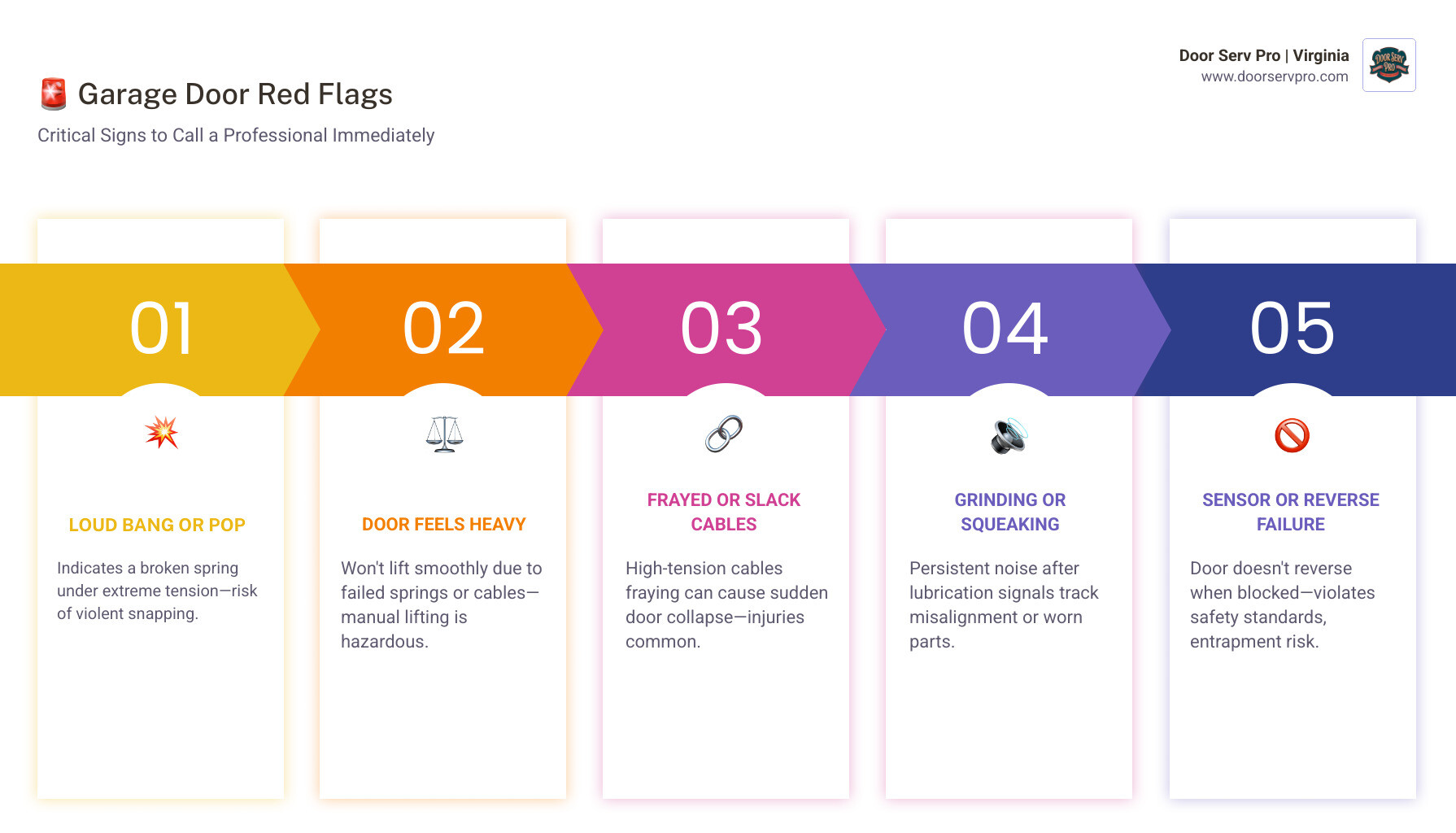
- A loud bang or pop coming from the door (possible broken spring)
- The door feels unusually heavy or won't lift smoothly
- Cables appear frayed, slack, or visibly damaged
- The door moves unevenly, jerks, or stops midway
- Grinding, scraping, or persistent squeaking that doesn't stop after lubrication
- The door reverses on its own or won't reverse when it should
- The door is visibly off-track, sagging, or bent
- Safety sensors fail to stop or reverse the door when blocked
- The opener runs but the door doesn't move
For most of these situations, stopping use of the door immediately and scheduling a professional inspection is the safest call.
Below, we'll walk through each of these warning signs in detail, explain the real risks behind DIY repairs on high-tension components, and help you understand what a trained technician can safely fix that you simply shouldn't attempt on your own.
Recognizing the Red Flags: When to Call a Professional for Garage Door Problems
In April 2026, as we look at modern home maintenance, it is clear that garage doors are more complex than ever. They aren't just pieces of wood or steel; they are integrated systems of electronics and heavy-duty mechanics. Recognizing the early warning signs can prevent a minor annoyance from turning into a total system collapse.
One of the most common indicators that something is wrong is the sound. While no garage door is silent, certain noises are immediate cries for help. Grinding sounds often point to worn-out rollers or a struggling motor. If you hear a loud banging or popping noise, it’s often the sound of a torsion spring snapping—a clear signal to stop using the door immediately.
Slow response times are another red flag. If you press your remote and there is a noticeable delay before the door begins to move, or if the door moves at a snail's pace, the opener may be failing, or the door may be severely out of balance. We often see homeowners ignore intermittent operation, where the door works "most of the time." This is a recipe for getting your car trapped inside at the worst possible moment.
Visual damage should never be ignored. Bent tracks, frayed cables, or cracked panels compromise the structural integrity of the entire unit. For a deeper dive into what these visual cues mean, check out our Garage Door Repair Frederick MD Guide. Furthermore, understanding the signs your garage door spring is about to break can help you call us before the door becomes a 400-pound dead weight.
High-Tension Hazards: Why Springs and Cables Require Expert Hands
If there is one area where we strongly advise homeowners to put down the wrench, it is the spring and cable system. These components are the "muscles" of your door. While the opener directs the movement, the springs do the heavy lifting.
Garage door springs—whether torsion (mounted above the door) or extension (mounted along the tracks)—operate under extreme tension. This tension is what allows a human or a small motor to lift a door weighing hundreds of pounds. However, this same force makes them incredibly dangerous. Approximately 1,500 injuries occur annually specifically involving springs or other components under tension.
Garage door cables are equally formidable, boasting a tensile strength of 1,800 to 2,200 pounds. When a cable frays or a spring snaps, that stored energy is released instantly. Without the proper tools and training, a DIY attempt at garage door services common spring repair and replacement can result in broken bones, facial injuries, or worse.
When a spring breaks, the door becomes impossible to operate safely. Attempting to force it open with the electric opener can burn out the motor, leading to even more expensive repairs. To learn more about how we handle these high-pressure situations safely, read our guide on Garage Door Spring Repair: Spring to Life with Expert Repairs.
Structural Failures and Modern Sensor Troubleshooting
Sometimes the problem isn't the "muscle" but the "skeleton" or the "eyes" of the system. Structural issues like an off-track door or bent tracks are often the result of a minor vehicle impact or simply years of vibration loosening the hardware. An off-track door is a major safety hazard; it is unstable and could collapse.
Modern doors are also equipped with photo-eye safety sensors. These are the small sensors located near the floor on either side of the door. Their job is to ensure the door reverses if an object—or a pet or child—is in the path. If your door starts reversing for no reason, or worse, fails to reverse when obstructed, you have a serious safety failure.
Common causes for sensor issues include:
- Signal Interference: Dust, cobwebs, or direct sunlight can blind the sensors.
- Wiring Issues: Pests or general wear can damage the delicate wires connecting the sensors to the opener.
- Weather Impact: Extreme Virginia humidity or freezing temperatures can cause components to shift or fail. You can learn more about this in our article on how weather can affect your garage door opener repair.
Whether you are dealing with a sensor glitch or need to decide on garage door panel replacement vs full guide, a professional diagnostic is the only way to ensure the door meets 2026 safety standards. For more information on motor-related issues, see our Garage Door Opener Repair Guide.
Identifying an off-balance door and when to call a professional for garage door problems
A door that is off-balance is a door that is wearing itself out. When the tension isn't distributed evenly, one side of the system works harder than the other. This leads to sagging sections and uneven wear on the rollers and tracks.
You can check this yourself by performing a manual balance test (detailed in the FAQ below). If the door slams shut or flies open when released halfway, it is off-balance. This isn't just a performance issue; it’s a safety risk. An unbalanced door can drop unexpectedly, causing property damage or injury. Residents in the Shenandoah Valley can find more localized tips in our Garage Door Repair Guide Front Royal VA.
Dealing with unresponsive openers and when to call a professional for garage door problems
It is a classic Monday morning frustration: you press the button, and nothing happens. Or perhaps you hear the motor whirring and straining, but the door stays put. This motor strain is often a symptom of a mechanical problem elsewhere—like a broken spring—rather than a fault in the opener itself.
Electrical faults, incorrect limit settings, and remote malfunctions are all reasons to seek expert help. While changing a battery is a great DIY step, digging into the circuit board or the drive gear is best left to us. Understanding the benefits of routine garage door maintenance for homeowners can help you avoid these unresponsive moments entirely.
The Importance of Routine Maintenance and Professional Inspections
The average garage door spring has a lifespan of about 7 to 10 years, or roughly 10,000 cycles (one "cycle" is the door opening and closing once). Because most families use their garage as the primary entrance to the home, those cycles add up faster than you might think.
Routine maintenance is the key to longevity. We recommend a professional inspection at least once a year. During these visits, we don't just look at the door; we perform safety tests, tighten hardware that has vibrated loose, and check the weather stripping to keep Virginia's humidity out of your garage.
To help you distinguish between what you can do and what we should do, see the table below:
| Task | DIY Maintenance | Professional Inspection |
|---|---|---|
| Visual Inspection for Rust/Wear | Yes | Yes |
| Cleaning Tracks (No Oil!) | Yes | Yes |
| Lubricating Rollers & Hinges | Yes | Yes |
| Tightening Hardware | Yes | Yes |
| Torsion Spring Adjustment | NO | Yes |
| Sensor Alignment/Wiring | Limited | Yes |
| Door Balance Adjustment | NO | Yes |
| Cable Replacement | NO | Yes |
For those in the tri-state area, our Garage Door Maintenance Hagerstown MD Guide offers specific advice on keeping your system running smoothly year-round.
Frequently Asked Questions about Garage Door Repairs
How do I perform a simple balance test on my garage door at home?
To test the balance, start with the door closed. Pull the red emergency release cord to disconnect the door from the opener. Manually lift the door about halfway up and let go. A perfectly balanced door should stay in place or move only slightly. If it crashes to the floor or bolts upward, the spring tension is incorrect, and you should call a professional for garage door problems immediately. Do not attempt to adjust the springs yourself!
Why is my garage door making a loud grinding or squeaking noise?
Squeaking is usually a sign that the moving parts—rollers, hinges, and springs—need lubrication. Use a silicone-based or lithium spray; never use WD-40, as it is a degreaser, not a lubricant. However, grinding or clanging usually indicates a more serious mechanical failure, such as worn-out bearings, a misaligned track, or a failing opener gear. If lubrication doesn't solve the noise, it's time for a professional diagnostic.
What should I look for when choosing a reliable professional repair service?
Look for a company with deep roots in the community and a proven track record. A reliable service should be licensed and insured, offer transparent communication, and provide warranties on their work. At Door Serv Pro, we pride ourselves on our 30+ years of craftsmanship and our commitment to the Virginia communities we serve, from Ashburn to Winchester.
Conclusion
Your garage door is more than just an entryway; it is a vital component of your home's security and convenience. While DIY projects can be rewarding, the high-tension world of garage door mechanics is one place where safety must come first. Knowing when to call a professional for garage door problems ensures that your door remains a reliable asset rather than a safety hazard.
At Door Serv Pro, we bring over three decades of expertise to every service call. Whether you are in McLean, Leesburg, or Stephens City, our family-owned team is dedicated to providing the highest level of craftsmanship. We don't just fix doors; we provide peace of mind. Experience the considerable benefits of professional garage door services for yourself.
If your door is acting up, don't wait for a total failure. Contact our experts for reliable garage door repair today and let us keep your home safe and accessible.
Need Help?
Contact us today to discuss your needs. Our team is ready to help.
About the author
Door Serv Pro
More articles
View all postsKeep reading
Related articles
Ready to Get Started?
Whether you need a repair, maintenance, or a new installation, our expert team is here to help.