Blog
How to Check Your Garage Door After a Long Winter
Door Serv Pro
Reviewed by the Door Serv Pro service team · Trained, professional garage door technicians
Last updated June 24, 2026
Why Your Garage Door Needs Attention After Every West Virginia Winter
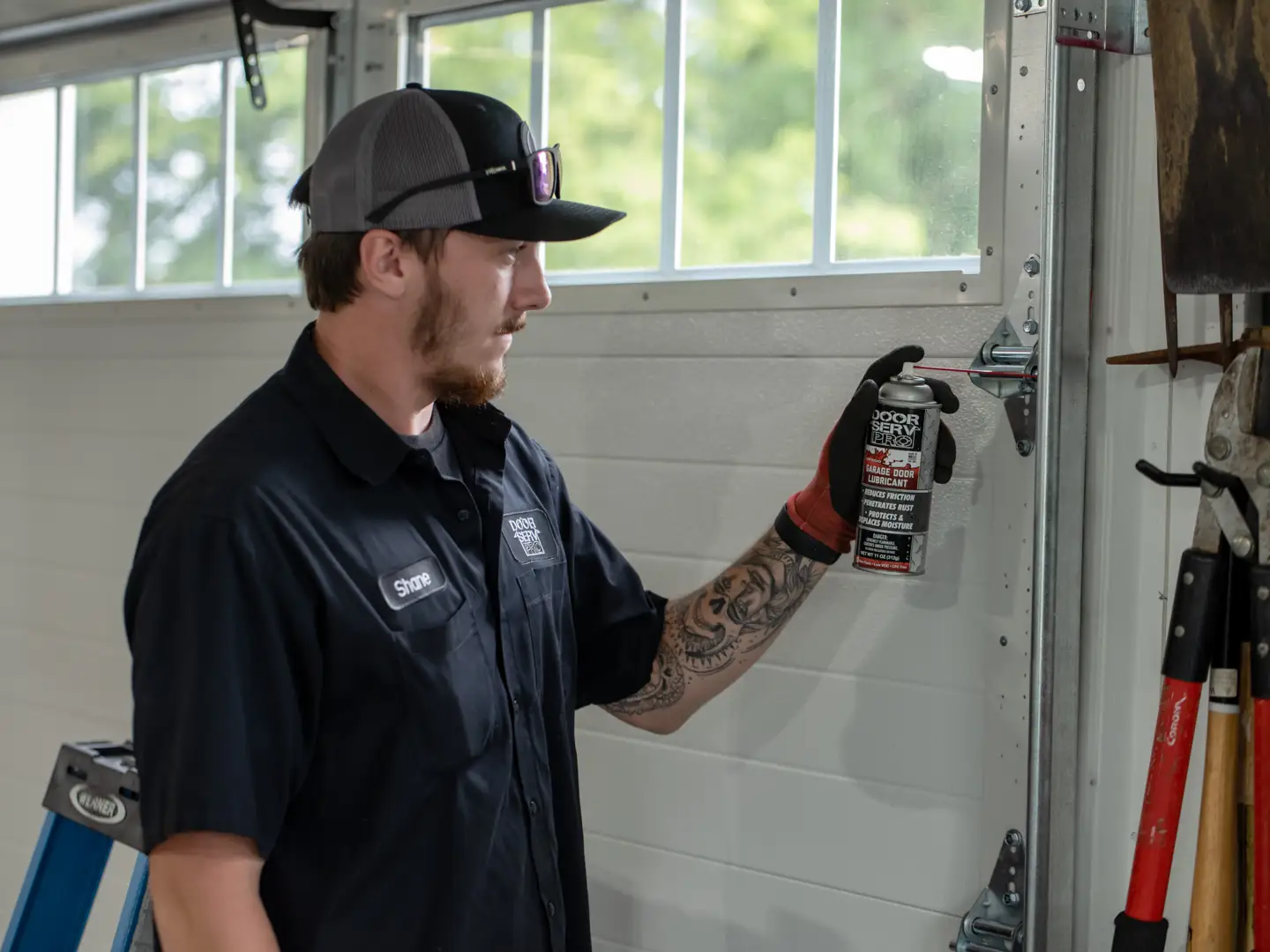
A spring garage door maintenance checklist is a step-by-step inspection process that helps homeowners catch winter damage, lubricate worn parts, test safety features, and extend the life of their garage door system before small problems become expensive ones.
Quick Spring Garage Door Maintenance Checklist:
- Visual inspection - Check springs, cables, rollers, and tracks for rust, cracks, or wear
- Balance test - Disconnect the opener and manually lift the door to the halfway point; it should hold steady
- Lubricate moving parts - Apply silicone-based lubricant to springs, hinges, and rollers
- Clean the tracks - Wipe out dirt, debris, and salt residue (do not lubricate tracks)
- Test auto-reverse - Place a block of wood in the door's path and close it; the door should reverse on contact
- Check safety sensors - Clean the photo-eye lenses and verify the beam is aligned
- Inspect weatherstripping - Replace any sections that are cracked, brittle, or missing
- Tighten hardware - Check bolts and brackets with a socket wrench
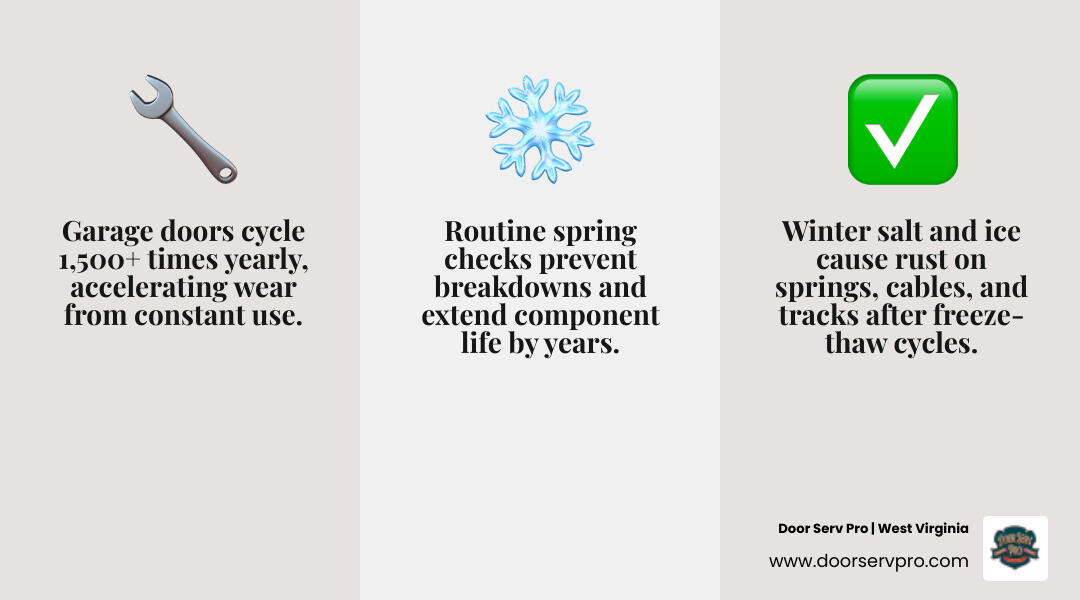
Your garage door is the largest moving part of your home. The average door opens and closes more than 1,500 times a year — and West Virginia winters add extra stress on top of that. Freeze-thaw cycles, road salt, ice, and temperature swings all take a toll on springs, cables, tracks, and seals. By the time spring arrives, components that looked fine in October may already be showing signs of wear.
The good news? A simple seasonal checkup can catch these issues early, before they lead to a broken spring on a busy morning or a safety hazard you didn't see coming.
The Essential Spring Garage Door Maintenance Checklist
When we think about home maintenance in places like Martinsburg or Hedgesville, we often focus on the garden or the gutters. However, your garage door is a complex mechanical system that undergoes significant stress. With the average door completing over 1,500 cycles annually, the internal components experience natural fatigue.
By following a structured spring garage door maintenance checklist, you aren't just cleaning up; you are performing vital preventive care. This routine helps ensure The Benefits of Routine Garage Door Maintenance for Homeowners are fully realized, including improved safety and lower long-term repair costs. Whether you are a veteran DIYer or looking at Garage Door Maintenance for New Homeowners a Complete Guide, understanding how these parts work together is the first step toward a reliable door.
Why a spring garage door maintenance checklist matters
Spring is the ideal time for this work because the harsh West Virginia winter has finally retreated. During the colder months, metal components contract, and lubricants can thicken or become "gummy," leading to increased friction. If ignored, this friction can cause springs to snap prematurely or motors to burn out.
Proactive maintenance identifies safety hazards like frayed cables or failing sensors before they cause an accident. We use The Longevity Blueprint Essential Garage Door Maintenance Techniques to ensure every part of the system—from the smallest bolt to the heavy-duty springs—operates at peak efficiency. Furthermore, checking your seals helps to Protect Garage Door from Weather, keeping spring rain and local pests out of your garage.
Tools for your spring garage door maintenance checklist
You don’t need a workshop full of heavy machinery to handle basic maintenance. Most of these tasks can be completed in about 30 minutes with a few household items:
- Flashlight: Essential for spotting hairline cracks in springs or debris hidden in the tracks.
- Silicone-based Lubricant: This is the "gold standard" for garage doors. Avoid WD-40 (which is a cleaner, not a long-term lubricant) and heavy greases that attract dirt.
- Microfiber Cloth: For wiping down tracks and cleaning sensor lenses.
- Socket Wrench Set: To gently tighten any nuts or bolts that have vibrated loose over the winter.
- Level: To ensure your tracks haven't shifted due to house settling or ice expansion.
Understanding Lubrication Essentials for Effective Garage Door Maintenance is key to doing the job right. For those looking to save, there are many Budget Friendly Garage Door Maintenance Hacks for Homeowners that use simple tools to achieve professional-level results.
Step-by-Step Visual and Auditory Inspections
Before you touch a single tool, start with your eyes and ears. A thorough visual and auditory inspection is often the most important part of any spring garage door maintenance checklist. In communities like Falling Waters and Inwood, the humidity can fluctuate wildly, which often leads to surface rust on metal parts.
Walk around the door while it is closed. Look at the cables—are they frayed? Check the rollers—are they chipped or worn flat? Look at the tracks—are they bent or misaligned? It is also helpful to Understand Overhead Garage Door Noises. A healthy door should hum; it shouldn't shriek, grind, or bang. For a deeper dive into what to look for, our Ultimate Garage Door Maintenance Guide Front Royal VA provides excellent visual cues for common wear patterns.
Identifying spring fatigue and damage
The springs are the "muscles" of your door. They do the heavy lifting so your opener doesn't have to. Most springs have a lifespan of 7 to 10 years, or roughly 10,000 cycles. During your spring check, look closely at the torsion springs (the large coils above the door) or extension springs (the ones along the tracks).
Look for "gaps" in the coils. A visible gap usually means the spring has already snapped. Also, check for a reddish-brown tint, which indicates rust. Rust creates friction between the coils, eating away at the steel and significantly increasing the risk of a sudden break. Utilizing Essential Garage Door Maintenance Services for Improved Performance can help you stay ahead of these issues. For residents in areas like Chambersburg, following Garage Door Maintenance Chambersburg PA Tips can provide localized advice on handling regional weather impacts on spring steel.
Listening for operational red flags
While the door is moving, stay in the garage and listen.
- Grinding or Scraping: This often points to a lack of lubrication or rollers that are no longer turning freely.
- Jerky Movement: If the door hitches or jumps, you might have a track alignment issue or a spring that has lost its "memory" (tension).
- Hardware Rattling: This is a sign that the vibration of the door has loosened the mounting brackets or hinges.
Learning How to Maintain Your Garage Door with Regular Garage Door Services involves training your ears to catch these sounds early.
Testing Balance and Safety Features
A garage door that is out of balance is a ticking time bomb for your opener. When the springs aren't properly tensioned, the motor has to work twice as hard to move the door, leading to a premature—and expensive—burnout.
Performing a manual balance test
This is a critical part of the spring garage door maintenance checklist.
- Close the door completely.
- Pull the red emergency release cord to disconnect the opener.
- Manually lift the door about halfway up and let go.
A perfectly balanced door will stay in place or move only slightly. If the door slams shut, the springs have lost tension. If it shoots upward, the springs are under too much tension. In either case, do not attempt to adjust them yourself. This balance is a delicate equilibrium, and as we mention in DIY Garage Door Maintenance Mistakes That Could Cost You More, messing with high-tension springs is one of the most dangerous things a homeowner can do.
Verifying safety sensor alignment
Since 1993, all garage doors are required to have an auto-reverse safety feature. This is powered by the photoelectric "eyes" located near the bottom of your tracks.
- Cleaning: Use a soft cloth to wipe the lenses. Winter salt and dust can cloud the sensors, causing the door to refuse to close.
- Alignment: Ensure the indicator lights on both sensors are solid (not flickering).
- Testing: Place a roll of paper towels or a 2x4 wood block in the door's path. When you close the door, it should immediately reverse upon contact or when the beam is broken.
For those interested in green living, Eco Friendly Garage Door Maintenance Sustainable Lubricants Materials can be used to keep these sensors and other parts clean without harsh chemicals. Always perform a Garage Door Safety Check at least twice a year to protect your family and pets.
Lubrication and Cleaning for Longevity
Cleaning is about more than just "curb appeal." In West Virginia, road salt is a major enemy of garage doors. Salt spray from cars can settle on the tracks and hardware, accelerating corrosion.
Start by cleaning the tracks with a damp cloth to remove dirt and salt. Crucial Tip: Do not lubricate the inside of the tracks. Lubricant in the tracks actually collects dust and grime, which can cause the rollers to slide rather than roll, leading to flat spots. Instead, focus your efforts on the moving metal parts.
Proper lubricants for your spring garage door maintenance checklist
The goal of lubrication is to reduce friction and noise. We recommend using a high-quality silicone-based or lithium-based spray.
- Springs: Lightly coat the entire length of the torsion spring. You don't need it dripping; just enough to get between the coils.
- Hinges: Apply a small amount to the pivot points.
- Rollers: Lubricate the bearings inside the rollers (if they are metal), but avoid the actual "tire" of the roller.
- Opener Chain/Screw: If you have a chain-drive or screw-drive opener, apply a light coat to the rail.
The Importance of Lubrication in Regular Garage Door Maintenance cannot be overstated—it is the simplest way to prevent wear and tear. For more specific details on application, see our guide on Lubrication Essentials for Effective Garage Door Maintenance.
When to Call a Professional for Spring Maintenance
While many items on this spring garage door maintenance checklist are DIY-friendly, some tasks are strictly for the pros. Garage door springs and cables are under extreme tension—enough to cause serious injury or even death if they snap or are released improperly.
You should call us at Door Serv Pro if you notice:
- A snapped spring: (Look for that 2-inch gap we mentioned earlier).
- Frayed or loose cables: These are the "safety nets" of your door. If they fail, the door can fall.
- The door is off-track: Do not try to force it back; you could bend the panels or damage the tracks further.
- Unusual motor behavior: If the opener is smoking, smelling of burnt electronics, or making a straining sound.
Professional technicians have the winding bars and specialized tools required for DIY Garage Door Maintenance Mistakes That Could Cost You More to be avoided. An annual professional tune-up ensures that your door’s calibration is perfect, giving you peace of mind throughout the year.
Frequently Asked Questions about Spring Maintenance
How often should I lubricate my garage door springs?
We recommend lubricating your springs every three to six months. In our West Virginia service areas—like Berkeley Springs or Charles Town—the humidity and temperature swings make a twice-yearly application (Spring and Fall) the absolute minimum for keeping rust at bay.
What are the warning signs that my springs are about to break?
Aside from visible rust or gaps, listen for "popping" or "creaking" sounds when the door moves. If the door feels exceptionally heavy when you try to lift it manually, the springs are likely fatigued and nearing the end of their life cycle.
Is it safe to adjust garage door spring tension myself?
No. Adjusting torsion springs requires specialized winding bars and an understanding of the immense torque involved. One slip can result in life-altering injuries. Always leave tension adjustments to a trained professional.
Conclusion
At Door Serv Pro, we are more than just a repair company; we are a family-owned business with over 30 years of craftsmanship dedicated to the West Virginia community. From Shepherdstown to Paw Paw and Ranson to Falling Waters, we take pride in providing top-rated service that keeps our neighbors safe.
Our commitment goes beyond garage doors. We are proud to support our local veterans and cancer charities, believing that a strong business is built on a foundation of community focus and excellence. Don't let a long winter lead to a spring breakdown. If your door failed the balance test or you’ve spotted rust on your springs, reach out to us today.
Schedule your professional spring garage door maintenance with Door Serv Pro and ensure your home is ready for the beautiful West Virginia spring ahead!
Need Help?
Contact us today to discuss your needs. Our team is ready to help.
About the author
Door Serv Pro
More articles
View all postsKeep reading
Related articles
Ready to Get Started?
Whether you need a repair, maintenance, or a new installation, our expert team is here to help.