Blog
How to Choose the Right Awning Fabric for Your Home
Door Serv Pro
Reviewed by the Door Serv Pro service team · Trained, professional garage door technicians
Last updated June 24, 2026
Why Knowing How to Choose the Right Awning Fabric for Your Climate Can Save You Time and Money
How to choose the right awning fabric for your climate comes down to matching the fabric's core properties — UV resistance, water repellency, breathability, and durability — to the specific weather demands of where you live. Here's a quick breakdown:
| Climate Type | Best Fabric Choice | Key Property Needed |
|---|---|---|
| Hot and sunny | Solution-dyed acrylic | UV resistance, breathability |
| Rainy or humid | Vinyl-coated polyester | Waterproofing, mildew resistance |
| High-wind areas | Tightly woven synthetic mesh | Tensile strength, reinforced seams |
| Cold or snowy | PVC-laminated polyester | Snow shedding, dimensional stability |
| Mixed/all-around | Solution-dyed acrylic or polyester | Balanced performance |
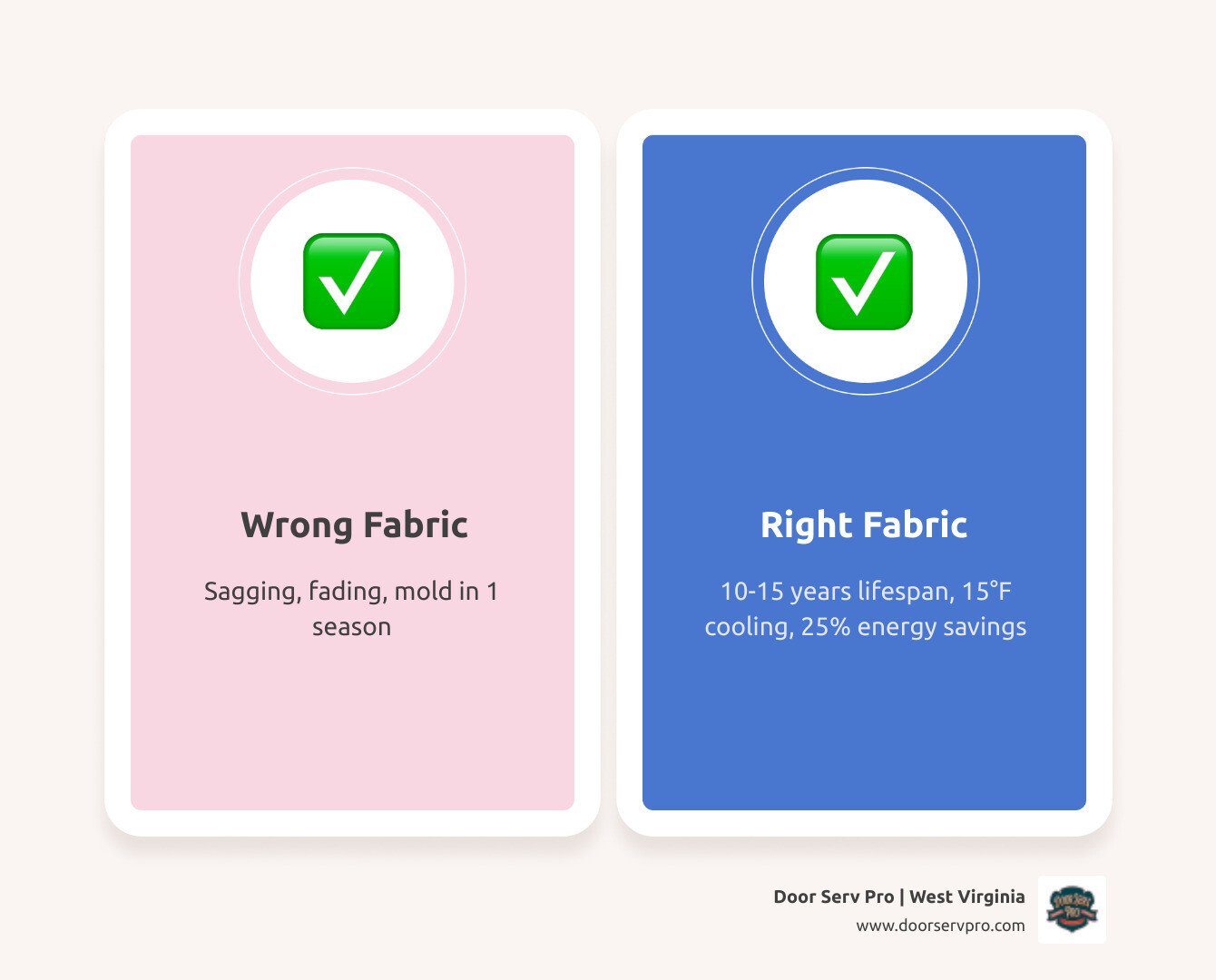
Your awning fabric is the first thing that faces the sun, rain, and wind every single day. Choose the wrong one, and you could be looking at sagging, fading, or mold within a single season. Choose the right one, and your awning can last 10 to 15 years while helping lower outdoor temperatures by up to 15 degrees — and cutting cooling costs by as much as 25%.
For homeowners in West Virginia, where summers bring humidity and winters can be unpredictable, fabric choice matters even more. The wrong material won't just look bad — it can compromise your home's comfort and cost you more in replacements over time.
This guide walks you through every fabric type, every climate scenario, and every key feature you need to know before making a decision.
Understanding the Main Types of Awning Fabrics
When we look at awning fabrics, we aren't just looking at colors and patterns. We are looking at the engineering behind the weave. In our experience serving the Eastern Panhandle, from Berkeley Springs to Ranson, we’ve seen how different materials react to the local air. Choosing the right "skin" for your awning frame determines whether you’ll be enjoying shade for a decade or calling for a replacement in three years.
| Fabric Type | Average Lifespan | Best Feature | Maintenance Level |
|---|---|---|---|
| Solution-Dyed Acrylic | 10–15 Years | Fade Resistance | Low |
| Polyester (Coated) | 5–10 Years | Tensile Strength | Moderate |
| Vinyl-Coated Polyester | 5–8 Years | 100% Waterproof | Low |
| Natural Canvas | 5–7 Years | Traditional Look | High |
| PTFE-Coated | 15+ Years | Self-Cleaning | Very Low |
If you are currently dealing with a worn-out cover, our Awning Fabric Replacement Chambersburg PA Guide offers deep insights into how a simple fabric swap can revitalize your entire outdoor space without the need for a full structural overhaul.
Solution-Dyed Acrylic for Long-Term Value
Solution-dyed acrylic is often considered the "gold standard" for residential use. Unlike traditional fabrics where the color is printed on the surface, solution-dyed fibers have the pigment added while the material is still in a liquid state. This means the color goes all the way through the thread—like a carrot rather than a radish.
This process provides exceptional UV resistance and colorfastness. Even after years of baking in the July sun in West Virginia, these fabrics remain vibrant. Furthermore, they are highly breathable, allowing hot air to escape rather than trapping it against your windows. For more on why this is a top pick locally, check out the Best Awning Fabric Choices Hagerstown.
Polyester and Vinyl Options for Durability
Polyester fabrics, particularly those with specialized coatings like the Platinum Series, offer incredible tensile strength. They don't sag or stretch easily, which is vital for retractable systems that move daily.
Vinyl-coated polyester is the heavyweight champion of waterproofing. If your primary goal is to stay bone-dry during a summer downpour in Falling Waters or Inwood, vinyl is a strong contender. It is tough, easy to wipe clean, and naturally resistant to fire and stains. However, it is heavier and less flexible than acrylic, making it more common for fixed commercial awnings or specific residential needs. You can learn more about these heavy-duty options in our guide to Awning Fabric Replacement Ashburn VA.
How to Choose the Right Awning Fabric for Your Climate
Every region has its own "weather personality." In the areas we serve, like Charles Town and Martinsburg, we deal with a mix of humid subtropical influences and occasional mountain winds. Understanding how to choose the right awning fabric for your climate means preparing for your local forecast.
Awnings act as your home's first line of defense against the elements. They protect your window seals from drying out and prevent rain from lashing against your door frames. For a deeper dive into this protective role, read Weathering the Elements: Awnings as Your Home's First Line of Defense.
How to Choose the Right Awning Fabric for Your Climate in Sunny Regions
If your backyard feels like a frying pan from noon until sunset, your fabric needs to be a heat-reflector. High-quality acrylics can block up to 98% of harmful UV rays. This doesn't just protect your skin; it protects your indoor carpets and furniture from fading.
In sunny spots like McLean, homeowners often find that a light-colored, breathable fabric can lower the temperature under the awning by 8 to 15 degrees. This "passive cooling" reduces the load on your HVAC system. Explore more about sun-centric choices at Awning Fabric Replacement McLean VA.
How to Choose the Right Awning Fabric for Your Climate in Humid Areas
Humidity is the silent enemy of outdoor fabrics. In places like Falling Waters or Shepherdstown, moisture in the air can lead to mildew if the fabric stays damp too long.
When choosing for humidity:
- Look for Mold/Mildew Resistance: Synthetic fibers like polyester and acrylic don't "feed" mold like natural cotton does.
- Quick-Drying Properties: You want a fabric that sheds water quickly so you can retract it without trapping moisture inside the roll.
- Water Repellency: While "waterproof" means no water gets through, "water-repellent" means the water beads up and rolls off.
For tips on keeping your space dry, see Weatherproof Your Outdoor Space with Waterproof Awnings.
Selecting Fabrics for High-Wind and Snowy Areas
In windier parts of the Eastern Panhandle, such as Great Cacapon or Hedgesville, fabric tension is everything. A loose fabric will "whip" in the wind, leading to frayed edges and strained arms. We recommend fabrics with reinforced seams and high dimensional stability—meaning they won't stretch out of shape over time.
For snow, the best defense is retraction. However, if you have a fixed awning, a smooth PVC-laminated polyester allows snow and ice to slide off more easily, preventing the weight from collapsing the frame. If you're in the mountains, read our Awning Fabric Replacement Berkeley Springs WV Tips for specialized advice.
Essential Features for Maximum Fabric Longevity
Beyond the material type, there are technical certifications and features that separate "cheap" fabric from "investment" fabric.
One of the most important is the UV Standard 801 certification. This is the most stringent testing for sun protection, ensuring the fabric blocks rays even when it is wet or stretched. Another key is the dyeing method. As we mentioned, solution dyeing is superior to surface dyeing because the color is part of the fiber itself.
Why Breathability Matters for Comfort
There is a big difference between standing under a plastic tarp and standing under a high-quality acrylic awning. Plastic (and some heavy vinyls) traps heat. On a 90-degree day in Martinsburg, the air under a non-breathable awning can actually become hotter than the air in the direct sun because the heat has nowhere to go.
Breathable fabrics allow air to circulate through the weave. This keeps the "micro-climate" under your awning fresh and cool. This is especially important for areas like Mount Airy; see more at Awning Fabric Replacement Mount Airy MD.
Signs It Is Time for an Awning Fabric Replacement
Even the best fabrics eventually reach the end of their lifespan. Here is what we tell our customers in Harpers Ferry and Gerrardstown to look for:
- Fading: If your vibrant stripes now look like pastel ghosts, the UV protection is likely compromised.
- Sagging: If water pools in the middle of the awning after a rain, the fabric has lost its "memory" and tension.
- Tears at Tension Points: Look where the fabric meets the arms or the valance. Small tears here can quickly become large ones during a storm.
- Stubborn Mold: If cleaning no longer removes black spots, the mold may have rooted into the fibers.
If you notice these signs, it’s often more cost-effective to replace the fabric rather than the whole system. Learn how at Enhance Awning with Fabric Replacement.
Maintenance Tips to Protect Your Investment
We want your awning to last as long as possible. Whether you are in Paw Paw or Falling Waters, a little bit of care goes a long way.
- Monthly Rinsing: Use a standard garden hose to rinse off dust, pollen, and bird droppings. This prevents "organic matter" from sitting on the fabric and becoming a breeding ground for mildew.
- Use Mild Soap Only: Never use harsh chemicals or bleach unless specifically directed by the manufacturer. A simple mixture of mild dish soap and lukewarm water is usually all you need.
- Air-Dry is Mandatory: Never retract your awning while it is wet. If you have to retract it during a sudden storm, roll it back out as soon as the sun comes out to let it dry completely.
- Check the Tension: Ensure the fabric is taut. Sagging fabric allows water to pool, which stretches the material and stresses the motor or crank.
For a detailed maintenance schedule, see our Awning Fabric Replacement Boonsboro MD Guide and our general guide on Maintaining Your Investment: Tips for Outdoor Awnings Care.
Frequently Asked Questions about Awning Fabrics
What is the longest-lasting awning fabric for my climate?
For the West Virginia climate, solution-dyed acrylic (like Sunbrella) is generally the longest-lasting choice. It handles our hot summers and humid springs exceptionally well. With proper care, these fabrics can last 10 to 15 years. They offer the best balance of UV stability and breathability. For more local insights, visit the Awning Fabric Replacement Hagerstown MD Guide.
Are there eco-friendly or sustainable awning fabric options?
Yes! Many manufacturers now offer fabrics made from recycled polyester yarns. Additionally, choosing a high-quality fabric that lasts 15 years instead of a cheap one that lasts 3 years is a form of sustainability—it keeps old fabric out of our local landfills. Natural fibers like cotton are eco-friendly but often require more chemical treatments to stay weather-resistant. See our thoughts on Awning Fabric Replacement Stephens City VA.
Can I replace the fabric without replacing the entire awning frame?
Absolutely. In fact, this is one of our most popular services in places like Chambersburg and Ranson. If your frame is still sturdy and the motor is running well, there is no reason to pay for a whole new system. We can provide a custom-fit fabric replacement that makes your awning look brand new at a fraction of the cost. Check out the process here: Awning Fabric Replacement Chambersburg PA.
Conclusion
Choosing the right awning fabric is about more than just picking a pretty color; it’s about ensuring your home stays cool, protected, and beautiful for years to come. At Door Serv Pro, we bring over 30 years of craftsmanship to every project. As a family-owned business, we care deeply about our neighbors in Berkeley Springs, Charles Town, Falling Waters, Gerrardstown, and throughout the Eastern Panhandle.
We don’t just install awnings; we build relationships. Whether we are supporting veterans’ charities or helping a local family reclaim their backyard, our focus is always on quality and community. If you’re ready to upgrade your outdoor living space with a fabric that truly fits your life, we are here to help.
Ready to refresh your shade? Explore our Awning Replacement Services and let’s find the perfect fit for your home today.
Need Help?
Contact us today to discuss your needs. Our team is ready to help.
About the author
Door Serv Pro
More articles
View all postsKeep reading
Related articles
Ready to Get Started?
Whether you need a repair, maintenance, or a new installation, our expert team is here to help.