Blog
The Bright Side of Shade: Reducing Energy Costs by Shading Windows
Door Serv Pro
Reviewed by the Door Serv Pro service team · Trained, professional garage door technicians
Last updated June 24, 2026
Why Shading Your Windows With Awnings Is One of the Smartest Energy Moves You Can Make
How awnings reduce energy costs by shading windows comes down to one simple idea: stop heat before it gets inside. When sunlight hits unshaded glass, it passes through and turns into trapped heat. That forces your air conditioner to work harder and run longer. Awnings block that sunlight on the outside — before it ever touches the glass — cutting solar heat gain by up to 65% on south-facing windows and up to 77% on west-facing windows, according to the U.S. Department of Energy. The result is a cooler home, lower AC usage, and real savings on your energy bill.
Here's a quick summary of how it works:
- Intercepts sunlight externally — Awnings shade the glass before solar radiation converts to indoor heat
- Reduces solar heat gain — Up to 65% on south-facing and 77% on west-facing windows (U.S. DOE)
- Lowers indoor temperature — Homes with awnings can be up to 15°F cooler on hot days
- Cuts AC workload — Nearly 20% of an air conditioner's effort comes from sunlight through windows
- Reduces cooling energy use — Studies show 15–36% reductions in HVAC energy consumption
- Saves money annually — Homeowners can save up to $200 per year on energy bills
- Works year-round — Retractable awnings can be pulled back in winter to let in passive solar warmth
For Pennsylvania homeowners, where summers bring long stretches of direct afternoon sun, this isn't a small difference. It's the kind of passive cooling strategy that pays for itself over time — without any chemicals, electricity, or complicated systems.
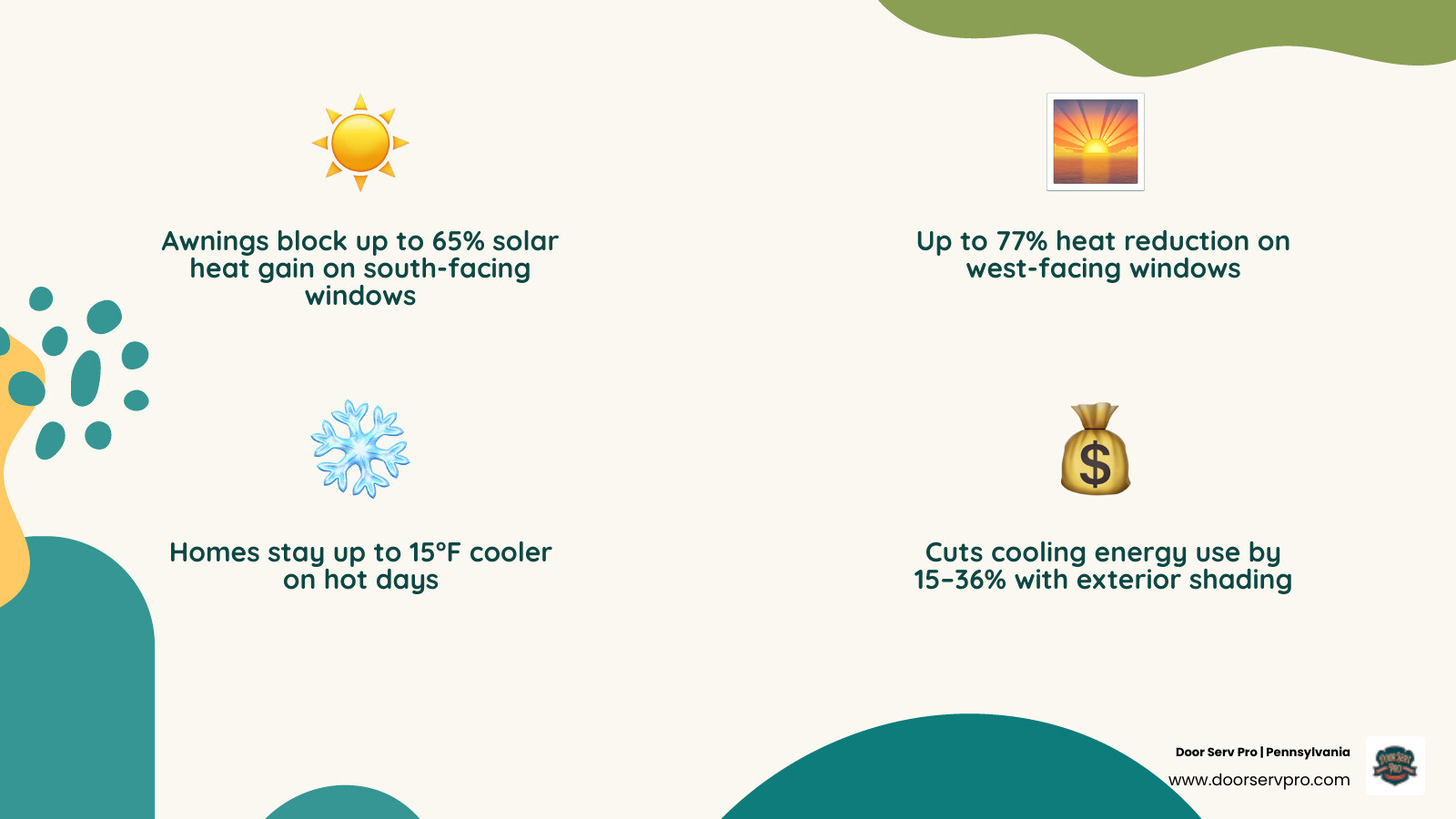
How awnings reduce energy costs by shading windows
As we head into April 2026, many of us in Chambersburg and Greencastle are already thinking about the upcoming summer humidity. To understand how awnings reduce energy costs by shading windows, we have to look at the physics of your home. Standard glass windows act like heat magnifiers. They allow short-wave solar radiation to pass through easily, but once that energy hits your carpet or sofa, it converts into long-wave infrared radiation (heat) that can't escape back through the glass. This is the "greenhouse effect" happening right in your living room.
By installing an awning, you are creating a professional-grade thermal barrier. Unlike interior blinds that try to stop heat after it’s already inside, awnings intercept solar radiation while it is still outside. This process is part of Weathering the Elements: Awnings as Your Home's First Line of Defense.
Furthermore, awnings facilitate "convective cooling." Because they are open on the sides, they allow air to circulate. This creates an "air gap" between the awning fabric and the window glass. This buffer zone slows down heat transfer, ensuring that even if the awning fabric gets warm, that heat isn't pressed directly against your window. It’s a natural, effective way to maintain a stable indoor climate while providing essential UV protection for your home’s interior.
Blocking solar heat gain through strategic placement
Not all windows are created equal when it comes to the sun. To get the most out of your investment, we focus on solar orientation. In Pennsylvania, the sun sits lower in the sky during the afternoon, which is why west-facing windows are often the biggest culprits for overheating.
According to the Department of Energy, window awnings can reduce solar heat gain by up to 77% on west-facing windows and 65% on south-facing windows. By installing UV Protected Awnings in Chambersburg, you can target these high-impact areas. South-facing windows receive consistent sun throughout the day, while west-facing windows catch the intense, direct heat of the late afternoon. Blocking this direct sunlight prevents your rooms from reaching "oven-like" temperatures by 4:00 PM.
Understanding how awnings reduce energy costs by shading windows in summer
During a typical Pennsylvania July, your air conditioner is fighting a constant battle. Did you know that nearly 20% of your AC's workload is caused solely by sunlight entering through windows? When we reduce that heat load, we see a massive boost in AC efficiency.
Awnings can cool indoor temperatures by as much as 15°F. Imagine your home reaches 85°F without an awning; your AC has to run for over an hour to pull it down to a comfortable 72°F. With an awning, that same room might only reach 78°F, meaning your system only needs a fraction of the energy to maintain comfort. This contributes to a significant reduction in "peak demand"—the time of day when energy is most expensive and the grid is most stressed. This synergy is one reason why we often discuss The Impact of Garage Door Services on Home Energy Efficiency as part of a whole-home approach to savings.
Quantifying energy savings and HVAC longevity
The numbers behind awning efficiency are quite impressive. Research from the Professional Awning Manufacturers Association (PAMA) and organizations like ASHRAE show that the savings are both quantifiable and consistent.
| Feature | Impact with Awnings |
|---|---|
| Solar Heat Gain Reduction | 65% (South) to 77% (West) |
| Indoor Temperature Change | Up to 15°F Cooler |
| Annual Energy Savings | Up to $200+ |
| Cooling Energy Reduction | 15% to 36% |
| HVAC Lifespan | Extended due to reduced cycling |
In a hot year, a home in a climate similar to Pittsburgh or Waynesboro can see cooling energy reductions of 46% to 50% compared to a house without any shading. That can equate to energy savings of up to 1,034 kWh for a standard-sized home.
Beyond the monthly bill, there is the factor of Energy Efficiency and Cost Savings: How Awnings Can Help regarding your HVAC equipment. When your air conditioner doesn't have to cycle on and off constantly to fight solar gain, there is less wear and tear on the compressor. This extends the lifespan of your expensive cooling system and reduces the frequency of repairs. Plus, by using less electricity, you're directly contributing to a smaller carbon footprint for your household.
Choosing the right design for year-round performance
When we help neighbors in Greencastle or Chambersburg choose an awning, we often discuss the choice between fixed and retractable models. While fixed awnings offer constant protection, retractable versions provide the ultimate in seasonal flexibility.
In the summer, you extend the awning to block the scorching sun. However, in a Pennsylvania winter, you actually want that solar heat. By retracting the awning during the colder months, you allow for "passive solar heating." The sun’s rays can then enter your windows and help warm your home naturally, which can reduce your heating bills. This ability to adapt to the seasons is why many homeowners choose to Enhance Home with Custom Awnings that offer operable shading.
Maximizing how awnings reduce energy costs by shading windows with fabric choice
The material you choose is just as important as the frame. To maximize how awnings reduce energy costs by shading windows, we recommend light-colored, opaque, and tightly woven fabrics.
- Light Colors: These reflect the most sunlight. While a dark fabric might look sleek, it can absorb heat; light colors like cream, beige, or light grey act as a mirror for solar radiation.
- Tight Weave: Tightly woven acrylic or canvas prevents "pinholes" of light from heating the glass.
- Ventilation: High-quality designs often include grommets or breathable weaves to prevent hot air from being trapped underneath the fabric.
- Durability: Using Storm Resistant Awning Solutions Hagerstown (and surrounding areas) ensures that your fabric won't fade or tear, maintaining its reflective properties for 10 to 15 years.
Comparing awnings to other window treatments
Homeowners often ask if they should just buy better blinds or window film instead. While those have their place, they operate differently.
Interior treatments like blinds and drapes are "reactive." They stop light, but because they sit inside the glass, the heat has already entered the room. The space between the blind and the window becomes a pocket of hot air that eventually leaks into the rest of the house.
Window films can be effective, but they are permanent and can sometimes void the warranty on double-pane windows. Awnings provide superior Weather Protection because they stop the energy before it even reaches the building's envelope. By managing airflow and blocking radiant heat externally, awnings offer a level of Weather Protection 5 that interior solutions simply can't match.
Frequently Asked Questions about energy-efficient awnings
Do awnings really lower my electric bill?
Yes! By reducing solar heat gain by up to 77%, you can see a 25% or greater reduction in cooling energy use. Most homeowners find that their air conditioner runs significantly less often, leading to annual savings of $200 or more depending on the size of the home and the local climate.
Which side of my house needs an awning most?
The west-facing windows should be your first priority. This is where the "low-angle" afternoon sun hits with the most intensity, often causing rooms to overheat right when you're trying to relax after work. South-facing windows are the second priority for consistent all-day shade.
Are retractable or fixed awnings better for energy savings?
Retractable awnings are generally considered better for year-round energy efficiency in Pennsylvania. They allow you to block the sun in the summer but retract in the winter to take advantage of free solar heating. Whether you choose manual or motorized operation, the ability to control when you shade your windows is key to maximizing savings.
Conclusion
At Door Serv Pro, we’ve spent over 30 years helping our neighbors in Chambersburg, Greencastle, and Waynesboro improve their homes. We believe that energy efficiency should be both functional and beautiful. Installing a high-quality awning isn't just about shade; it's about taking control of your home's climate and protecting your budget from rising energy costs.
Whether you're looking to Transform Your Patio with a Stylish and Functional Garage Door Awning or you're focused on Boosting Home Value: Garage Door Awnings and Curb Appeal, we are here to help. Our family-owned business prides itself on craftsmanship and community focus.
Ready to see the bright side of shade? Schedule an Awning Consultation in Chambersburg with us today, and let’s start saving you money while keeping your home cool and comfortable.
Need Help?
Contact us today to discuss your needs. Our team is ready to help.
About the author
Door Serv Pro
More articles
View all postsKeep reading
Related articles
Ready to Get Started?
Whether you need a repair, maintenance, or a new installation, our expert team is here to help.