Blog
Lubricate and Elevate: Your Post-Winter Garage Door Inspection Guide
Door Serv Pro
Reviewed by the Door Serv Pro service team · Trained, professional garage door technicians
Last updated June 24, 2026
Your Spring Garage Door Maintenance Checklist for Homeowners Starts Here
A spring garage door maintenance checklist for homeowners is the single best way to catch winter damage before it turns into a costly repair. Your garage door is the largest moving part of your home — and it works hard, opening and closing over 1,500 times per year on average. After months of ice, salt, and freezing temperatures here in West Virginia, spring is the right time to give it a proper look.
Here's a quick overview of what the checklist covers:
- Visual inspection — Check rollers, cables, springs, and panels for rust, fraying, or damage
- Hardware tightening — Secure loose bolts, brackets, and track hardware
- Cleaning and lubrication — Wipe down tracks and apply silicone or lithium-based lubricant to moving parts
- Balance test — Disconnect the opener and manually lift the door halfway to check for imbalance
- Safety feature testing — Test the auto-reverse mechanism and clean the photo-eye sensors
- Weatherstripping inspection — Look for cracks, brittleness, or gaps along the door's edges
- Opener check — Test remote batteries, listen for unusual noises, and verify smooth operation
Most of these tasks take just 15 to 30 minutes. Doing them now — in spring — means you stay ahead of bigger problems before the busy summer season hits.
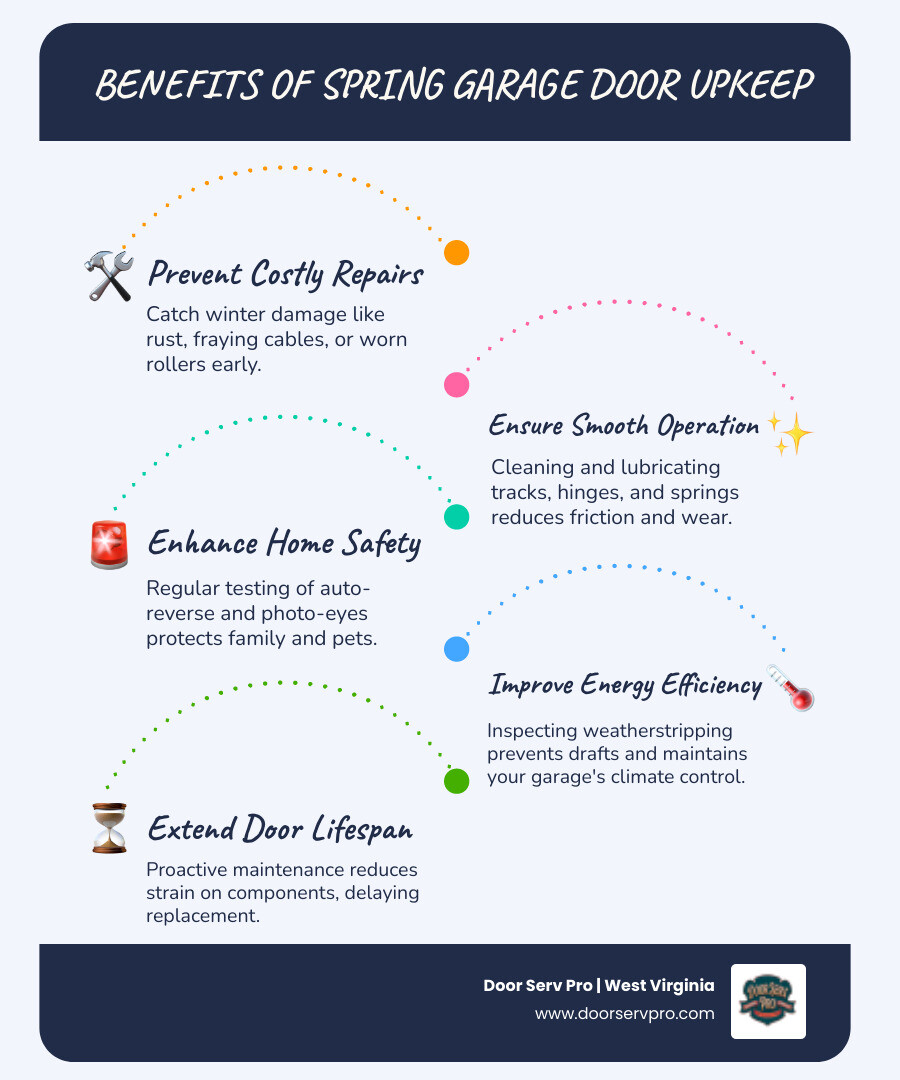
Why a Spring Garage Door Maintenance Checklist for Homeowners is Essential
As we move into April 2026, it is easy to focus on landscaping and interior spring cleaning while forgetting the literal "heavy lifter" of the household. Winter is notoriously hard on mechanical systems. In areas like Martinsburg or Hedgesville, the combination of freezing nights and milder afternoons creates a freeze-thaw cycle that stresses metal components.
When temperatures drop, metal contracts. This physical change can cause springs to lose their "memory" or tension, and it can make lubricants thicken and become gummy. Furthermore, road salt tracked into the garage doesn't just sit on the floor; it can atomize and settle on your tracks and springs, leading to rapid corrosion.
Adopting a preventative approach by using a spring garage door maintenance checklist for homeowners allows you to catch these issues early. A well-maintained door isn't just about convenience; it is a pillar of your home's protection. Beyond mechanical reliability, why regular garage door maintenance is crucial for home security cannot be overstated. A door that doesn't close fully or has weakened hardware is a vulnerability. By following our spring garage door maintenance complete guide, you ensure your family stays safe and your home remains energy-efficient.
Step-by-Step Visual Inspection and Hardware Tightening
The first step in your spring routine is a thorough "look and listen" test. Stand inside your garage and operate the door. Listen for grinding, popping, or straining sounds. These are often the first warnings that a component is struggling.
The Visual Hit-List:
- Rollers: Look for chipped, cracked, or worn rollers. If you have nylon rollers, look for flat spots. If they are metal, check for lopsidedness.
- Cables: Inspect the lift cables near the bottom roller brackets. Look for "fuzzy" appearance (fraying) or broken strands. Never touch these cables, as they are under extreme tension.
- Springs: Whether you have a torsion spring (the large coil above the door) or extension springs (along the side tracks), look for rust or gaps. A 2-inch gap in a torsion spring coil is a definitive sign that the spring has already snapped. A healthy spring makes a 200-pound door feel light as a feather; a broken one makes it a safety hazard.
Because a garage door moves and vibrates constantly, hardware naturally loosens over time. Use a socket wrench to check the mounting brackets that attach the tracks to the wall and the bolts holding the door tracks together. Even a shift of a quarter-inch out of alignment can cause the door to bind or wear down the opener motor prematurely. Avoiding these top garage door maintenance mistakes to avoid for optimal function starts with keeping things tight and aligned. For those living in our local service areas, these garage door maintenance Chambersburg PA tips offer great localized insights into keeping hardware secure against regional weather shifts.
Identifying Winter Wear in Your Spring Garage Door Maintenance Checklist for Homeowners
Winter damage isn't always mechanical; sometimes it is structural. Take a close look at your door panels. If you have a wooden door, check for warping or rot caused by moisture penetration. For steel doors, look for dents or "spiderweb" cracks in the paint where rust might start to take hold.
Don't ignore the weatherstripping. Freeze-thaw cycles often cause the rubber or vinyl seals to become brittle and crack. If you can see daylight peeking through the bottom or sides of your closed door, you're losing money on energy bills and inviting pests inside. insulations vital role in garage door maintenance and efficiency is key to keeping your garage comfortable through the humid West Virginia summers that follow spring.
Cleaning and Lubricating for Smooth Operation
Cleaning is perhaps the most underrated part of the spring garage door maintenance checklist for homeowners. Before you grab the lubricant, grab a damp cloth. Wipe the inside of the tracks to remove dirt, grease buildup, and debris.
Pro-tip: Never apply heavy grease or thick oil to the tracks. This is a common mistake that actually attracts more dirt, creating a "gritty paste" that acts like sandpaper on your rollers.
Once the surfaces are clean, it's time to lubricate. We recommend using a high-quality silicone spray or a white lithium-based grease. These products are designed to withstand temperature swings without becoming sticky.
- Hinges: Apply a small amount to the pivot points.
- Metal Rollers: Lubricate the bearings, but avoid getting excess oil on the surface of the roller itself if it is nylon.
- Springs: A light coat of lubricant on the coils reduces friction between the metal loops, quieting the door and preventing rust.
- Opener Chain/Screw: If your opener uses a metal chain or screw drive, give it a light coating to ensure the "drive" stays smooth.
For those who are new to the area or recently purchased a home in Falling Waters or Inwood, check out our garage door maintenance for new homeowners: a complete guide for more details on product selection.
Critical Safety and Balance Testing Procedures
Safety is our top priority at Door Serv Pro. Because the garage door is a heavy mechanical system, it relies on specific safety features to prevent accidents.
| Task | DIY Friendly? | Why It Matters |
|---|---|---|
| Visual Inspection | Yes | Catches early signs of wear. |
| Lubrication | Yes | Reduces friction and noise. |
| Tightening Bolts | Yes | Prevents parts from falling off. |
| Auto-Reverse Test | Yes | Prevents the door from crushing objects. |
| Balance Test | Yes | Protects the opener motor from burnout. |
| Spring Adjustment | NO | Extreme tension; high risk of injury. |
| Cable Replacement | NO | Requires specialized high-cycle tools. |
The Auto-Reverse and Photo-Eye Test
To test the auto-reverse mechanism, place a 2x4 board or a roll of paper towels flat on the ground in the center of the door's path. Close the door using the button. When the door strikes the object, it should reverse immediately.
Next, check the photo-eye sensors located near the floor on either side of the door. Use a soft cloth to wipe the lenses—dust and spiderwebs are common culprits for a door that won't close. Ensure the indicator lights are solid and not flickering. You can test these by waving an object in front of the "eye" while the door is closing; it should stop and reverse instantly. This is a vital part of opening up to safety the importance of regular garage door maintenance.
Performing the Balance Test in Your Spring Garage Door Maintenance Checklist for Homeowners
A door that is out of balance is a "ticking time bomb" for your opener. If the springs aren't doing the heavy lifting, the motor has to, which leads to a premature (and expensive) breakdown.
- Close the door completely.
- Pull the red emergency release cord to disconnect the opener.
- Manually lift the door about halfway up and let go.
- The Result: A perfectly balanced door should stay in place or move only slightly. If the door slams shut or shoots upward, the spring tension is incorrect.
If your door fails this test, do not attempt to fix the springs yourself. This is where the longevity blueprint essential garage door maintenance techniques transition from DIY to professional expertise.
Frequently Asked Questions about Spring Garage Door Care
How often should I lubricate my garage door?
While spring is the most critical time, we recommend a "mini-check" every three months. Quarterly lubrication keeps the moving parts moving freely and prevents the "grinding" sounds that often lead to hardware failure. If you live in a particularly dusty area or near high-traffic roads in Berkeley Springs, you might need to wipe the tracks more frequently.
Can I adjust my own garage door springs?
In a word: No. Garage door springs are under immense tension—enough to move a 200-pound door. Adjusting them requires specialized high-cycle tools and training. Attempting a DIY spring repair is one of the most common causes of emergency room visits related to home maintenance. Always call a professional for any task involving the counterbalance system.
What are the signs of a failing garage door cable?
Look for "fraying," which looks like the cable is becoming fuzzy or has loose individual wire strands. You might also see heavy rust or kinks in the line. If a cable snaps, the door can become crooked in the tracks or fall entirely. If you see any signs of wear on the cables, stop using the door immediately and call for service.
Conclusion
At Door Serv Pro, we’ve spent over 30 years perfecting the craft of garage door care. As a family-owned business, we take pride in serving our neighbors across West Virginia—from the quiet streets of Great Cacapon to the bustling neighborhoods of Ranson and Shepherdstown. We aren't just technicians; we are members of the community, committed to supporting our veterans and local cancer charities.
Don't wait until the summer heat arrives to fix a winter problem. Scheduling your professional service in March or April typically takes only a couple of days, whereas waiting until the "busy season" in June could mean a two-week wait for a technician. Understanding how garage door services can extend the lifespan of your door is the first step toward long-term savings and peace of mind.
Ready to ensure your door is in peak condition for the year ahead? Schedule your professional spring maintenance today and let our experts handle the heavy lifting.
Need Help?
Contact us today to discuss your needs. Our team is ready to help.
About the author
Door Serv Pro
More articles
View all postsKeep reading
Related articles
Ready to Get Started?
Whether you need a repair, maintenance, or a new installation, our expert team is here to help.