Blog
How to clean or care for a Dickson folding arm awning
Door Serv Pro
Reviewed by the Door Serv Pro service team · Trained, professional garage door technicians
Last updated June 24, 2026
Why Awning Fabric Care and Maintenance Tips Matter for Your Home
Awning fabric care and maintenance tips are something every homeowner with a retractable or fixed awning needs to know — because even the toughest outdoor fabrics won't last without a little regular attention.
Here is a quick overview of the core steps:
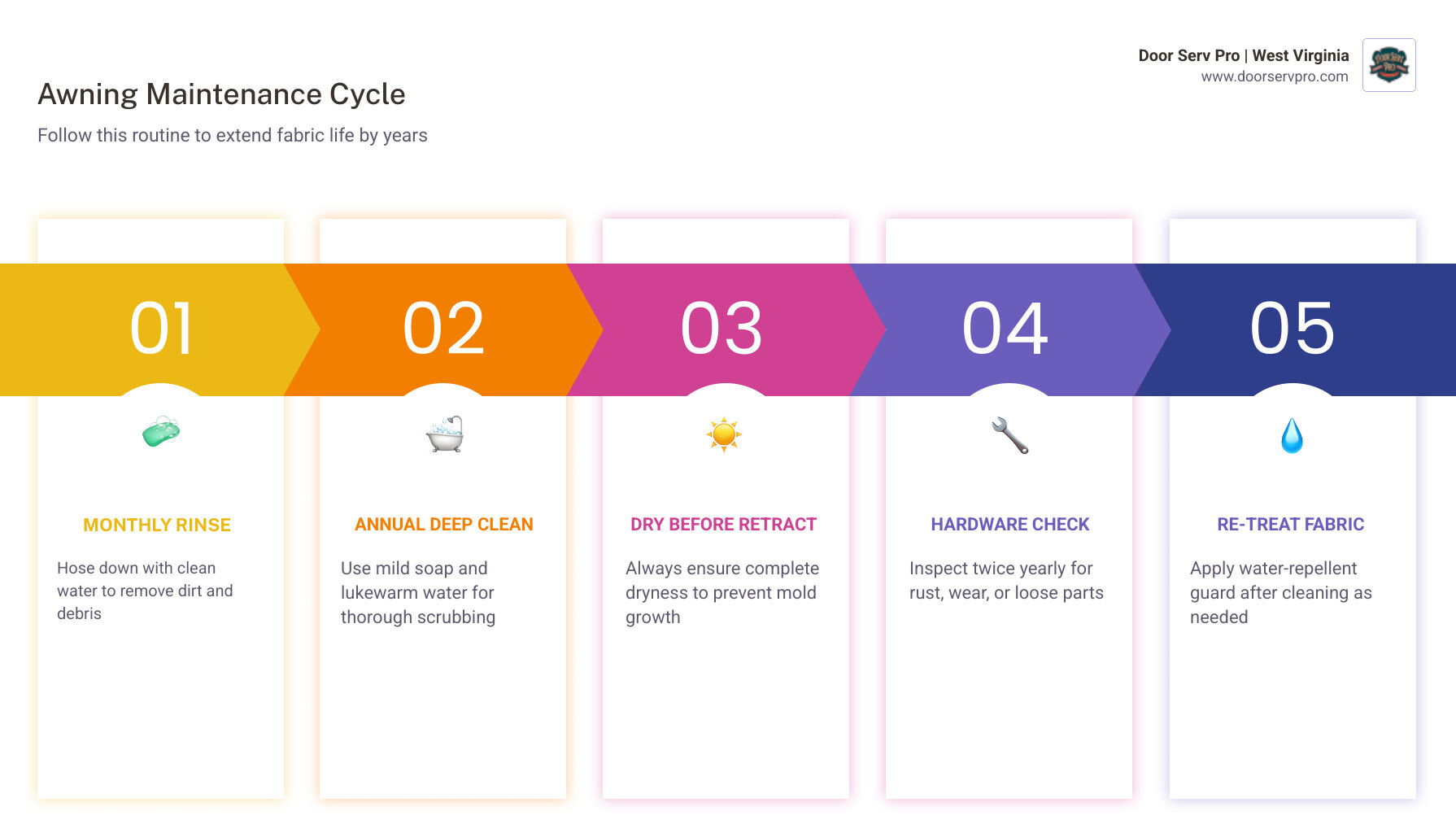
- Rinse monthly - Hose down your awning with clean water once a month to prevent dirt from embedding into the fabric.
- Deep clean annually - Scrub with mild soap and lukewarm water at least once a year, ideally at the start or end of the season.
- Dry completely before retracting - Never roll up a wet awning. This is the leading cause of mold and mildew growth.
- Avoid harsh chemicals and pressure washers - These can strip the fabric's protective finish and shorten its lifespan.
- Inspect hardware twice a year - Check hinges, arms, and mounting points for rust, loose fittings, or wear.
- Retract during high winds - Wind gusts over 20 mph can cause serious damage to awning fabric and the structure it's attached to.
- Re-treat fabric as needed - Restore water repellency after deep cleaning with an appropriate fabric guard product.
Your awning does a lot of work — blocking UV rays, shading your patio, and boosting your home's curb appeal. But exposure to sun, rain, bird droppings, tree debris, and humidity adds up over time. Without basic upkeep, fabric can fade, develop mildew, or lose its water-resistant coating well before its time.
The good news? Most awning fabric problems are entirely preventable with simple, routine care. In this guide, we walk you through everything step by step — from monthly rinsing to deep cleaning, stain removal, hardware checks, and knowing when it is time for a fabric replacement.
Essential Awning Fabric Care and Maintenance Tips for Longevity
When we think about outdoor investments, we often focus on the installation. However, as of April 2026, we have seen that the longevity of your Dickson or Sunbrella fabric depends heavily on how you treat it during the "off" hours. The most important of our awning fabric care and maintenance tips is consistency.
The Monthly Rinse and Debris Removal
You don't need a bucket and sponge every week, but you do need a garden hose. Statistics show that awnings should be gently hosed down once a month to avoid most dirt, mold, and grime issues. This simple act prevents dust and pollen from settling into the weave of the fabric.
Before you turn on the water, use a soft-bristle brush or a household broom to sweep away loose debris. Leaves, twigs, and cobwebs are more than just eyesores; they can trap moisture against the fabric, leading to premature decay. By maintaining your investment: tips for outdoor awnings care, you ensure that small particles don't become permanent stains.
Fabric Tension and Water Management
Proper positioning is key to fabric health. We recommend ensuring your awning frame is adjusted so the fabric remains perfectly taut when extended. If the fabric is loose, it can rub against the metal arms, causing "scuffing" or physical wear.
Furthermore, taut fabric prevents water from "pooling" or pocketing during a light rain. Standing water adds immense weight to the frame and can stretch the fibers of the fabric, leading to sagging. Think of your awning as weathering the elements: awnings as your home's first line of defense; it needs to be in top physical shape to do its job.
Step-by-Step Guide to Deep Cleaning Your Awning
While monthly rinsing is great, a deeper clean is required periodically. For most residential awnings in West Virginia, we suggest a thorough cleaning once a year, ideally at the beginning of the spring season or the end of autumn.
| Feature | Routine Rinsing | Deep Cleaning |
|---|---|---|
| Frequency | Monthly | Annually (or every 2-3 years) |
| Tools Needed | Garden Hose | Soft brush, bucket, mild soap |
| Purpose | Remove surface dust/pollen | Remove embedded grime and stains |
| Drying Time | 30-60 minutes | 2-4 hours (must be bone dry) |
To perform a deep clean, follow these steps:
- Dry Brush: Use a soft-bristle brush to remove all loose dirt.
- Wet the Fabric: Hose down the entire surface with lukewarm water.
- Apply Solution: Use a mixture of mild soap and water.
- Scrub Gently: Use a soft brush to work the soap into the fabric. Avoid excessive rubbing, which can damage the UV-protective coating.
- Soak: Allow the solution to sit for 15–20 minutes to break down organic matter.
- Rinse Thoroughly: This is the most important step. Rinse until all soap bubbles are gone. Soap residue left on the fabric actually attracts more dirt.
- Air Dry: Leave the awning fully extended until it is completely dry.
Following a spring garage door and awning maintenance checklist is a great way to stay on top of these tasks.
Safe Cleaning Solutions for Awning Fabric Care and Maintenance Tips
Not all soaps are created equal. We strongly advise against using harsh detergents, bleach (unless specifically for mildew), or oil-based cleaners.
Safe options include:
- Mild Dish Detergent: Like Dawn or Ivory.
- Woolite: Excellent for delicate synthetic fibers.
- Vinegar Solution: A 1:1 mix of white vinegar and water is great for light surface stains.
- Specialized Cleaners: Products like Tex’Aktiv Clean (for Dickson fabrics) or 303 Multi-Surface Cleaner are specifically formulated for marine and outdoor fabrics.
For more details on fabric specifications, you can always check our awning brochures.
Treating Stubborn Stains and Mildew
Mildew is a common concern in the humid climate of the Eastern Panhandle. It is important to remember that most high-quality fabrics, like Sunbrella or Dickson, are mildew-resistant, but mildew can still grow on the dirt that sits on top of the fabric.
- For Bird Droppings: These are acidic and can eat through fabric coatings. Wash them off immediately with soapy water.
- For Tree Sap: Use a small amount of turpentine or a specialized citrus cleaner, but test it on an inconspicuous area first.
- For Mildew: If you see black spots, use a solution of 1 cup bleach and 1/4 cup mild soap per gallon of water. Let it soak for 15 minutes, scrub gently, and rinse.
Note: Using bleach will often strip the water-repellent finish. After a bleach cleaning, you must apply a re-waterproofing treatment like 303 Fabric Guard to maintain awning fabric sun protection.
Maintaining Hardware and Protecting Against the Elements
While the fabric is the star of the show, the "bones" of the awning—the frame and hardware—need love too.
Frame and Hardware Inspection
We recommend inspecting your awning hardware twice a year. Look for:
- Loose Bolts: Vibration from wind can loosen mounting points over time.
- Rust: If you have a steel frame, look for rust spots and touch them up with outdoor paint.
- Moving Parts: Hinges and folding arms should move smoothly. We suggest using a silicone-based lubricant once a year. Avoid WD-40, as it can attract dust and eventually gum up the mechanism.
If you notice any structural issues during your inspection, it may be time to consult a professional for awning installation adjustments to ensure the unit is safely secured to your home.
Wind and Storm Protection
In West Virginia, sudden storms can appear without much warning. One of the most critical awning fabric care and maintenance tips is to retract your awning whenever you aren't using it. Wind gusts over 20 miles per hour can cause extensive damage to the arms and the fabric.
Many modern retractable awnings come with wind sensors that automatically retract the unit when things get breezy. This is a vital part of sun safety: how retractable awnings shield against harmful UV rays; they can't protect you if they are broken by a storm!
Seasonal Awning Fabric Care and Maintenance Tips
As winter approaches in Berkeley Springs or Martinsburg, your awning needs to be prepared for the cold.
- Clean and Dry: Never store your awning for the winter while it is dirty or damp.
- Retract Fully: For retractable models, ensure they are fully retracted.
- Off-Season Protection: Some homeowners use an "awning boot" or winter cover to protect the rolled-up fabric from snow and ice.
Even if you have UV-protected awnings in Chambersburg or surrounding areas, the weight of snow can bend the frame, so keep them retracted during the winter months.
When to Consider Awning Fabric Replacement
Even with the best care, fabric eventually reaches the end of its life. Typically, a high-quality acrylic fabric will last 10 to 15 years.
Signs you need a replacement include:
- Thinning or Holes: If you can see through the fabric or notice small "pinpricks" of light, the fibers are breaking down.
- Permanent Fading: While some fading is normal, extreme discoloration means the UV protection is gone.
- Brittleness: If the fabric feels crunchy or cracks when folded, it is time for a change.
Replacing just the fabric is a sustainable and cost-effective way to modernize your home without the expense of a whole new frame.
Frequently Asked Questions about Awning Maintenance
Can I use a pressure washer for awning fabric care and maintenance tips?
No. We strongly recommend against using pressure washers. The high-pressure stream can blast away the water-repellent finish, tear the stitching, and even create holes in the fabric. A standard garden hose with a spray nozzle is all the pressure you need.
How often should I perform a deep clean on my awning?
For residential homes, once a year is perfect. If you live in a heavily wooded area with lots of tree sap and bird activity, you might want to do it twice a year (spring and fall). Commercial awnings near high-traffic roads may need cleaning every 4 to 8 weeks due to exhaust soot and city grime.
What is the best way to prevent mold and mildew?
The "Golden Rule" of awnings: Never retract a wet awning for long periods. If you have to roll it up during a rainstorm, extend it as soon as the sun comes out to let it air dry completely. Air circulation and dryness are the only true enemies of mold.
Conclusion
Taking care of your awning doesn't have to be a chore. By following these awning fabric care and maintenance tips, you can ensure your outdoor space remains a comfortable, stylish oasis for years to come.
At Door Serv Pro, we are a family-owned business with over 30 years of craftsmanship. We are proud to serve our neighbors across West Virginia, from the historic streets of Harpers Ferry and Charles Town to the growing communities in Martinsburg, Inwood, and Hedgesville. Whether you are in Falling Waters, Ranson, or Shepherdstown, we are here to help you maintain your home's exterior.
If your fabric has seen better days and cleaning just isn't enough, we offer professional recovery services to make your awning look brand new again. Contact us for professional awning replacement services today, and let’s get your patio ready for the season!
Our team also provides expert service in Berkeley Springs, Gerrardstown, Great Cacapon, Paw Paw, and throughout the region. We look forward to helping you protect your investment.
Need Help?
Contact us today to discuss your needs. Our team is ready to help.
About the author
Door Serv Pro
More articles
View all postsKeep reading
Related articles
Ready to Get Started?
Whether you need a repair, maintenance, or a new installation, our expert team is here to help.