Blog
How to clean or care for a Dickson folding arm awning
Door Serv Pro
Reviewed by the Door Serv Pro service team · Trained, professional garage door technicians
Last updated June 24, 2026
Why Proper Awning Fabric Care and Maintenance Tips Matter for Your Home
Awning fabric care and maintenance tips are something every homeowner with an outdoor awning needs to know — because a neglected awning can fade, grow mold, and wear out years before it should.
Here's a quick overview of the essential steps:
- Brush off loose dirt weekly with a soft-bristle brush
- Hose down the fabric with clean water once a month
- Deep clean with mild soap and water at least once or twice a year
- Treat stubborn stains (bird droppings, mildew, tree sap) with appropriate solutions promptly
- Allow the fabric to air dry completely before retracting
- Re-treat with a fabric guard after any bleach-based cleaning to restore water repellency
- Inspect and lubricate hardware — hinges, arms, and mounting points — twice a year
Awning fabrics — whether acrylic, vinyl, or natural canvas — are built to handle sun, rain, and wind. But they are not maintenance-free. Dirt left sitting on the surface creates the conditions mildew needs to grow, even on fabrics that are marketed as mildew-resistant. Bird droppings are acidic and can degrade the material if left too long. And retracting a wet awning without letting it dry first is one of the most common causes of mold damage.
The good news? Consistent, simple habits go a long way. Most awnings only need a thorough deep clean every two to three years when routine upkeep is done regularly. At Door Serv Pro in Pennsylvania, we see how well-maintained awnings hold up compared to ones that have been ignored — and the difference in lifespan is significant.
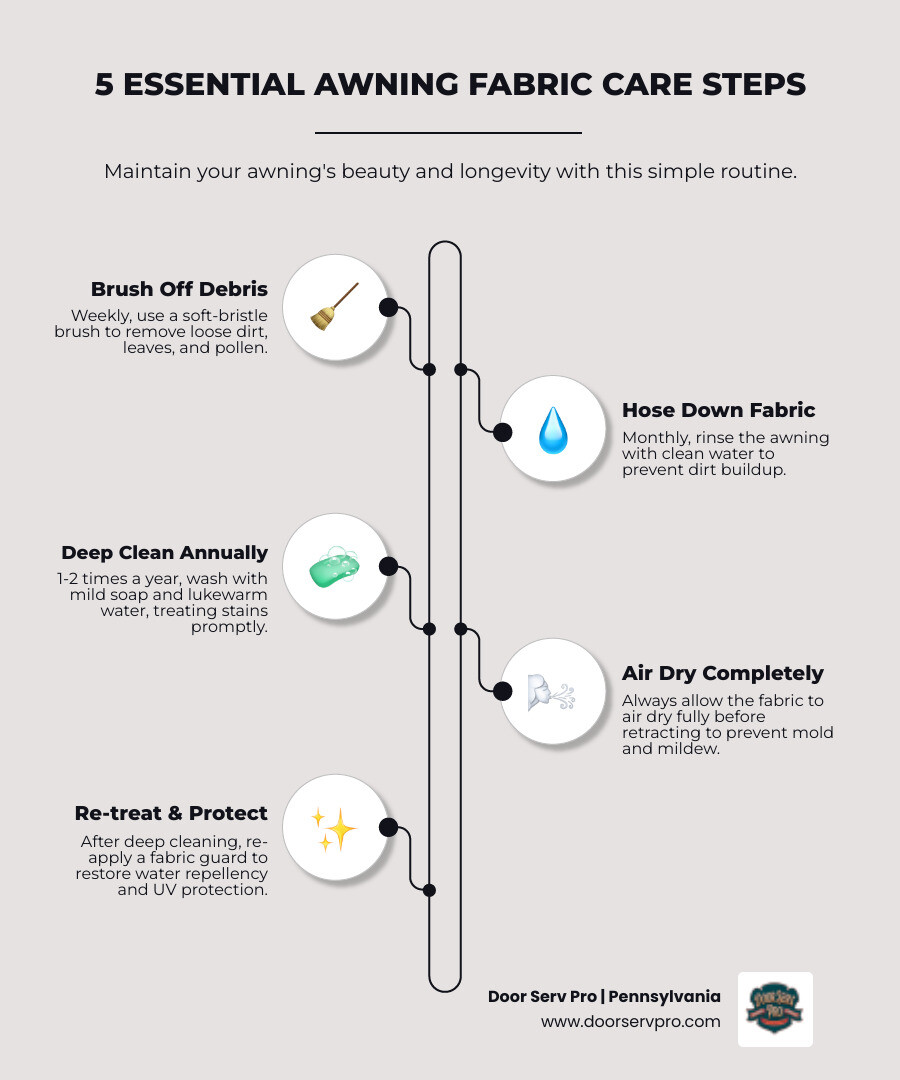
Establishing a Routine for Awning Fabric Care and Maintenance Tips
Maintaining a beautiful outdoor space in Pennsylvania requires a bit of strategy, especially as we head into the beautiful spring of April 2026. Whether you are enjoying the mountain views in Chambersburg or the historic charm of Waynesboro, your awning is your first line of defense against the sun and sudden rain showers.
The secret to longevity isn't a magic chemical; it’s a simple routine. We recommend a "top-down" approach. Start by removing loose debris. In our region, wind gusts can easily blow leaves, twigs, and pollen onto your awning. If left alone, these organic materials break down and create a "compost" layer that invites mold.
A monthly hosing is perhaps the most effective of all awning fabric care and maintenance tips. It prevents dirt from becoming deeply embedded in the fibers. Think of it like rinsing your car; if you do it often, the dirt never has a chance to bond with the surface. This simple act can extend the life of your fabric by several years.
Essential Tools for Awning Fabric Care and Maintenance Tips
You don't need a shed full of high-tech gadgets to keep your awning looking sharp. In fact, simpler is usually better. Here is what we suggest keeping on hand:
- A Soft-Bristle Brush: Never use a wire brush or anything abrasive. A soft broom or a dedicated fabric brush will dislodge dirt without fraying the fibers.
- A Standard Garden Hose: Skip the power washer! High pressure can strip away protective coatings and even tear the fabric.
- Mild Detergent: Look for gentle soaps like Ivory Snow, Woolite, or even a basic clear dish soap. Avoid anything with harsh degreasers or "power" additives unless specifically recommended for your fabric type.
- A Sturdy Ladder: Safety first! If you're working in Fayetteville PA, ensure your ladder is on level ground and you have a spotter if you’re reaching for high corners.
Using the wrong tools is a common mistake. We’ve seen fabrics that look "fuzzy" because a homeowner used a stiff scrub brush, effectively sanding down the material. Be gentle; the soap and water should do most of the heavy lifting.
Seasonal Schedules for Awning Fabric Care and Maintenance Tips
In Pennsylvania, our seasons dictate our maintenance. April 2026 is the perfect time for a "Spring Awakening" cleaning. After a long winter, your awning likely has a layer of dust or even some salt residue if it’s near a road.
- Spring (March/April): Perform a deep clean. Inspect for any winter damage, such as small tears or loose bolts. This prepares the fabric for the intense UV rays of summer.
- Monthly (May-September): Hose it down on a sunny morning. This clears off pollen and dust.
- Fall (October/November): Before the first snow, give it one last thorough rinse and ensure it is 100% dry before retracting it for the season. If you live in Frederick MD or nearby areas with heavy tree cover, pay extra attention to removing fallen leaves that can cause staining over the winter.
Environmental exposure varies. If your home is under a large oak tree, you might need to brush off debris weekly. If you’re in a wide-open area with lots of sun, your focus will be more on UV protection and rinsing away dust.
Safe Cleaning Solutions for Acrylic, Vinyl, and Natural Fibers
Not all fabrics are created equal. Knowing what your awning is made of is the first step in choosing a safe cleaning solution. Most modern awnings use solution-dyed acrylic (like Sunbrella) or vinyl-coated polyester.
Solution-Dyed Acrylic: This is the gold standard for many Pennsylvania homes. The color is "to the core," meaning it won't wash out. For these, a mixture of 1/4 cup mild soap per gallon of lukewarm water is usually perfect. Acrylic is breathable and water-repellent, but it isn't waterproof.
Vinyl-Coated Fabrics: These are common for commercial properties and some residential models. They are generally waterproof and highly resistant to mildew. You can be a bit more aggressive with cleaning here, but still avoid harsh bleach unless you have a serious mold issue.
Natural Canvas: While rarer today, some older homes still use natural cotton or hemp blends. These require the most care as they are prone to shrinking and rot if left damp.
Regardless of the material, always test your cleaning solution on a small, inconspicuous spot first. This is especially true if you are using a new brand of soap or a specialty stain remover in Boonsboro MD.
Tackling Stubborn Stains: From Bird Droppings to Mildew
Sometimes a simple rinse isn't enough. Nature can be messy, and your awning often takes the brunt of it. Here is how to handle the "big three" problems we see most often:
| Stain Type | Recommended Cleaning Agent | Procedure |
|---|---|---|
| Bird Droppings | Mild soap & water (immediate) | Rinse with cold water first, then gently scrub with soap. Do not let them bake in the sun! |
| Tree Sap | Turpentine & liquid soap | Lightly dab the sap with a cloth soaked in turpentine, then wash with soapy water. |
| Mold/Mildew | Bleach & mild soap solution | 1 cup bleach + 1/4 cup soap per gallon of water. Soak for 15 mins, rinse thoroughly. |
| Grease/Oil | Dish soap or volatile solvent | Apply soap directly to the spot, let sit, then rinse. For heavy grease, a specialized degreaser may be needed. |
| Rust | Oxalic acid or rust remover | Follow manufacturer instructions carefully; rinse immediately to prevent fabric damage. |
For homeowners in Williamsport MD, mildew is often the biggest concern due to humidity. Remember: mildew doesn't actually grow on the fabric itself (if it's synthetic); it grows on the dirt trapped in the fabric. If you keep it clean, you won't have mold. If you do need to use a bleach solution, you must re-treat the fabric afterward, as bleach strips away the water-repellent finish.
Protecting the Fabric: Re-treatment and Drying Procedures
One of the most overlooked awning fabric care and maintenance tips is the re-treatment process. Most high-quality fabrics come from the factory with a fluorocarbon finish that makes water bead up and roll off. Over time — and especially after a deep cleaning — this finish wears away.
How to tell if you need to re-treat: Next time it rains, look at your awning. Does the water bead up like a freshly waxed car? Or does it soak into the fabric, making it look dark and heavy? If it’s soaking in, it’s time for a protector like 303® Fabric Guard™.
The Drying Rule:Never, ever retract your awning while it is wet for more than a few hours. We know that in Funkstown MD, a sudden afternoon thunderstorm might force you to roll it up quickly. That’s fine — just make sure you extend it again as soon as the sun comes out so it can air dry completely. Trapping moisture inside a rolled-up awning is like putting a wet towel in a gym bag; it’s a recipe for a smelly, moldy mess.
Maintaining Hardware and Knowing When to Replace Fabric
While the fabric is the "face" of your awning, the hardware is the "skeleton." At Door Serv Pro, we emphasize that a beautiful cover is useless if the arms don't move or the mounting bolts are rusting.
- Inspection: Twice a year, check the mounting points. In the Greencastle and Waynesboro areas, temperature swings can cause bolts to loosen over time. Give them a quick tighten if needed.
- Lubrication: Use a dry silicone spray on moving parts like hinges and pivot points. Avoid heavy oils or grease, which can actually attract dirt and eventually gunk up the mechanism.
- Rust Prevention: If you have a steel frame and notice a chip in the paint, touch it up immediately. Rust can drip down and permanently stain your fabric.
- Fabric Sagging: If you notice your fabric is sagging or "pocketing" water, your tension arms might need adjustment. This is a common issue in Rohrersville MD after heavy wind events.
Sometimes, despite your best efforts, the fabric simply reaches the end of its life. If you see persistent thinning, large tears that can't be patched, or "sun-rot" where the fibers crumble when touched, it’s time to consider a replacement. The great news is that you often don't need a whole new system — we can frequently replace just the fabric, giving your home a brand-new look at a fraction of the cost.
Frequently Asked Questions about Awning Care
How often should I deep clean my awning?
For most homes in Pennsylvania, a thorough deep cleaning every two to three years is sufficient. However, if your awning is located near a busy road (more exhaust and soot) or under heavy tree cover, you might want to move to an annual cycle. Regular monthly hosing will keep you on that three-year schedule by preventing dirt from "setting" into the weave. Residents in Cavetown MD often find that an annual spring cleaning keeps their outdoor spaces looking pristine year-round.
Can I use a power washer on awning fabric?
We strongly advise against it. While it might be tempting to blast away the grime, power washers operate at pressures that can easily damage the delicate fibers of acrylic fabric or strip the protective UV and water-repellent coatings right off. A standard garden hose with a spray nozzle provides plenty of pressure for cleaning without the risk of permanent damage.
What is the best way to prevent mold?
The "Holy Trinity" of mold prevention is: Clean, Dry, and Air. Keep the fabric free of organic debris (leaves/pollen), never store it wet, and ensure there is enough space around the awning for air to circulate. If you have vines or shrubbery growing near your awning, keep them trimmed back; plants hold moisture and block the airflow that keeps your fabric dry.
Conclusion
Your awning is a significant investment in your home’s curb appeal and your family’s comfort. By following these awning fabric care and maintenance tips, you aren't just keeping things clean; you are protecting that investment for the long haul. Whether you're in Chambersburg, PA, or Yellow Springs MD, a little bit of effort goes a long way.
At Door Serv Pro, we’ve spent over 30 years helping our community maintain their homes with craftsmanship and care. We know that life gets busy, and sometimes maintenance falls by the wayside. If you find that your awning fabric has seen better days, or if the hardware needs a professional touch, we are here to help. From simple repairs to full fabric replacements, our family-owned team is dedicated to ensuring your outdoor oasis remains a place of relaxation and beauty for many years to come. Clean it often, dry it well, and enjoy the shade!
Need Help?
Contact us today to discuss your needs. Our team is ready to help.
About the author
Door Serv Pro
More articles
View all postsKeep reading
Related articles
Ready to Get Started?
Whether you need a repair, maintenance, or a new installation, our expert team is here to help.