Your Garage Door Can Last 30 Years — If You Do This
If you want to know how to extend the life of your garage door, the short answer is: follow a simple maintenance routine, fix small problems before they grow, and know when to call a professional.
Here's a quick overview of the 7 steps covered in this guide:
- Know what determines lifespan - Material, usage cycles, installation quality, and climate all play a role
- Follow a maintenance routine - Monthly visual checks, quarterly lubrication and hardware tightening, annual professional tune-up
- Test balance and lubricate correctly - Use silicone or white lithium grease; never WD-40; test balance by hand twice a year
- Protect safety features, seals, and hardware - Test auto-reverse monthly, replace weatherstripping when cracked, keep hardware snug
- Adjust for your local climate - UV, salt air, humidity, and temperature swings all accelerate wear
- Recognize red flags that need a pro - Frayed cables, spring gaps, jerky movement, and heavy manual lifting are warning signs
- Build smarter daily habits - Always complete full cycles, avoid forcing a stuck door, limit unnecessary operation
Your garage door is the largest moving part of your home. It opens and closes more than 1,500 times a year — and most homeowners never think about it until something goes wrong. By then, a small fix has often turned into a costly repair or a full replacement. The good news? Research shows that 68% of garage door failures are entirely preventable with regular maintenance.
I'm Paul Wiese, founder of Door Serv Pro, and with over 30 years of hands-on experience in the garage door industry, I've seen how a consistent maintenance routine can be the difference between a door that lasts 15 years and one that lasts 30 — and I built this guide to show you exactly how to extend the life of your garage door no matter what climate or conditions you're dealing with. Let's walk through each step.
Step 1: Know What Determines Garage Door Lifespan
Most residential garage doors last about 15 to 30 years. That range is wide because lifespan depends on more than age alone. Material matters, but so do daily use, maintenance habits, installation quality, and local weather. For a deeper look, see our Garage Door Lifespan Complete Guide.
In general:
- Steel doors often last 20 to 25 years with good care
- Wood doors can last 30 years or more if they are sealed and maintained
- Aluminum doors usually last 15 to 20 years and are more prone to dents
How to extend the life of your garage door starts with cycle awareness
Garage door parts wear by cycles, not just years. The average door opens and closes more than 1,500 times per year. Standard springs are often rated for about 10,000 cycles. That means:
- At 4 uses per day, a 10,000-cycle spring may last about 7 years
- At 6 uses per day, that same spring can be worn out in under 5 years
Openers and sensors usually last 10 to 15 years. Frequent use, kids treating the remote like a toy, or repeatedly stopping the door halfway all add wear faster than most homeowners realize.
The parts that usually wear out first
Some components age faster than others:
| Component | Typical lifespan | Common warning signs |
|---|---|---|
| Springs | 7-10 years or 10,000 cycles | visible gap, heavy door, loud bang |
| Cables | 7-10 years | fraying, rust, kinks |
| Openers and sensors | 10-15 years | slow response, humming, reversal issues |
| Basic plastic rollers | 2-3 years | noise, wobble, flat spots |
| Nylon rollers with sealed bearings | 10+ years | less noise, smoother travel |
| Weatherstripping | varies by exposure | cracks, compression, drafts |
Step 2: Follow a Monthly, Quarterly, and Annual Maintenance Routine
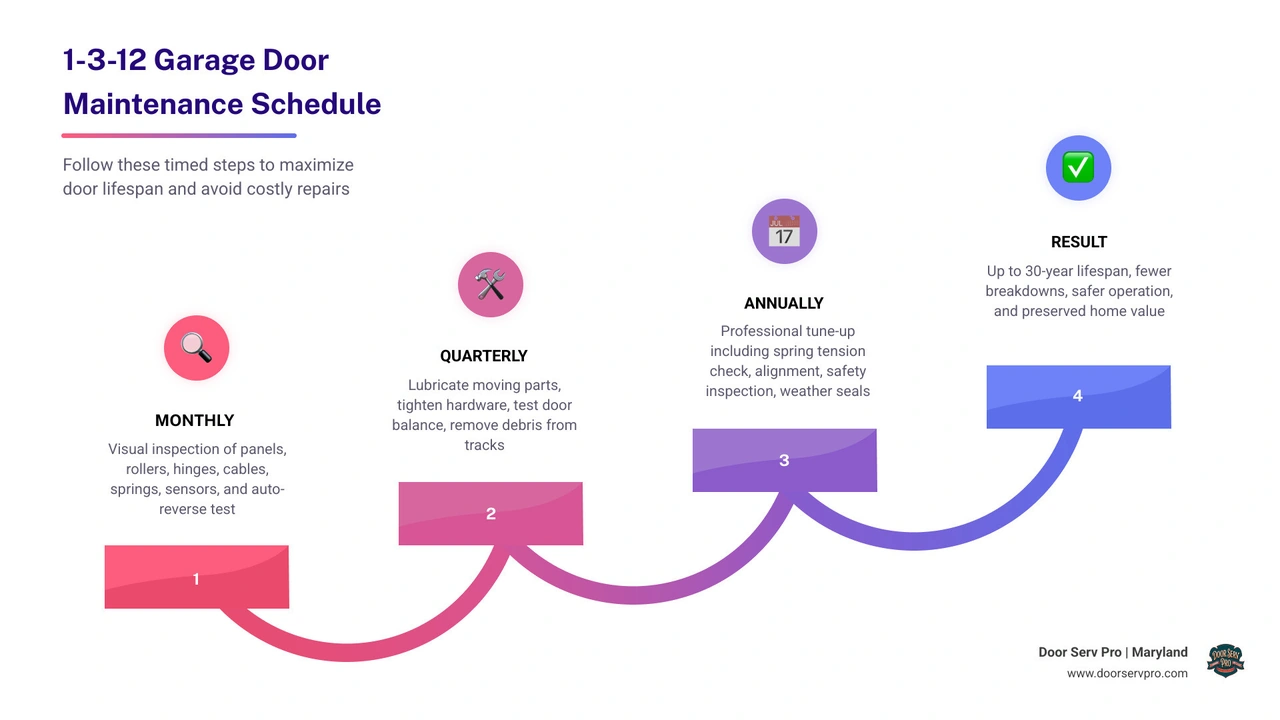
The best system is simple enough to actually do. We recommend a practical 1-3-12 approach:
- Monthly: visual and safety checks
- Quarterly: lubrication, cleaning, hardware tightening
- Annually: professional tune-up
This kind of preventive care helps catch problems early and keeps wear from spreading. You can also read more in The Benefits of Routine Garage Door Maintenance for Homeowners and Preventive Tips to Avoid Costly Garage Door Repairs in the Future.
Monthly tasks that take just a few minutes
Once a month, stand inside and outside the garage while the door runs through a full cycle. Look and listen for:
- Cracked or dented panels
- Loose hinges or brackets
- Worn rollers
- Bent track sections
- Frayed cables
- Rusty or stretched springs
- Jerky travel or new noises
- Dirty photo-eye sensor lenses
Also test the auto-reverse system monthly. More on that in Step 4.
Quarterly tasks that reduce friction and strain
Every 3 months:
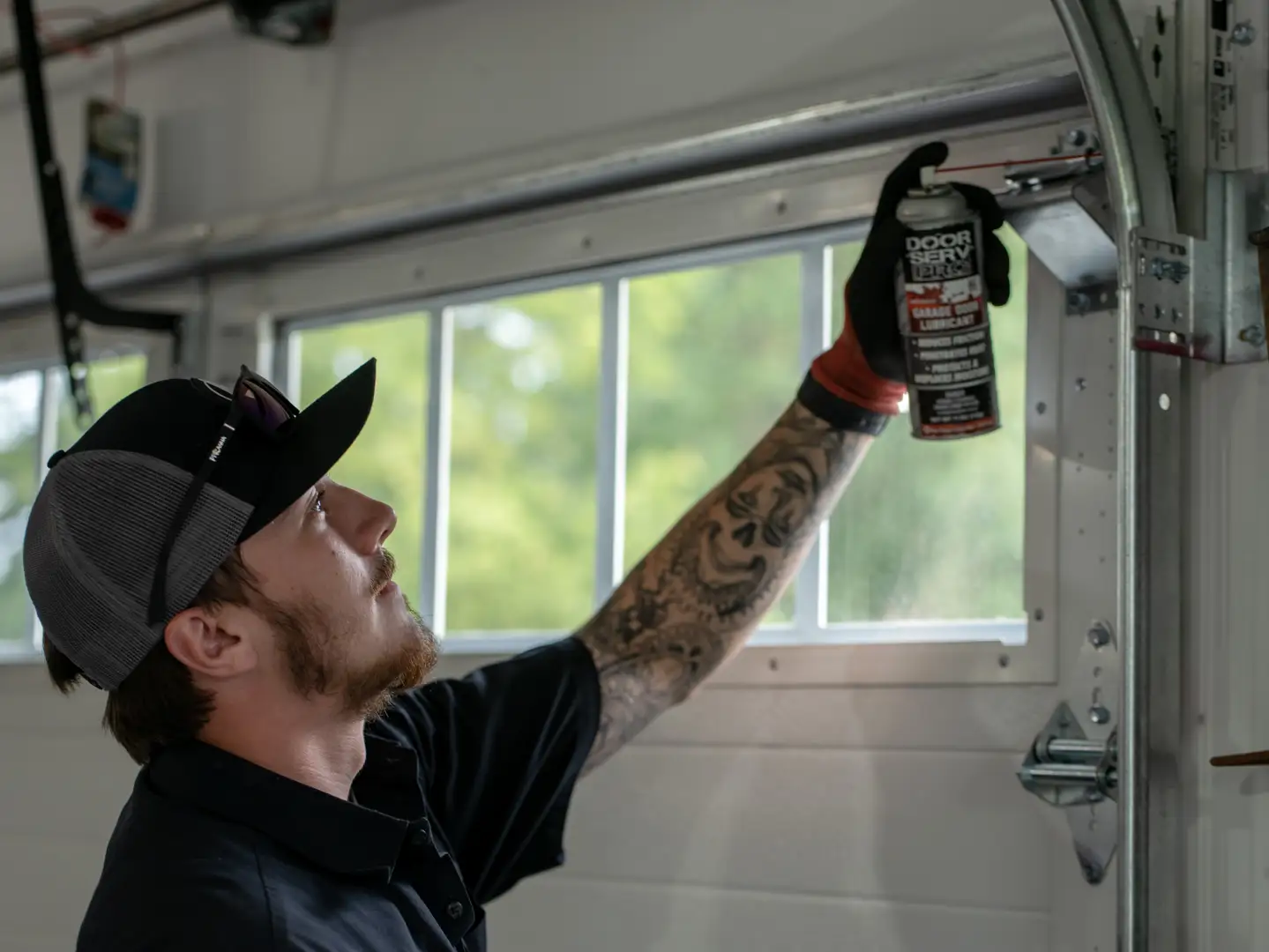
- Lubricate hinges, roller stems, bearings, and springs
- Wipe debris from tracks
- Tighten visible nuts and bolts carefully
- Check the opener rail and chain or belt area as recommended by the manufacturer
- Inspect the top curve of the track where rollers transition
Annual tasks homeowners should never skip
At least once a year, schedule a full professional inspection. That annual visit should include:
- Spring tension and balance evaluation
- Track and alignment check
- Opener force and travel review
- Safety reversal testing
- Weather seal inspection
- Wear assessment on rollers, cables, and bearings
Our Professional Maintenance Plan is built for exactly this kind of long-term care.
Step 3: Test Balance and Lubricate the Right Way
Balance and lubrication are two of the biggest factors in door longevity. When either is ignored, the opener works harder, the springs wear faster, and the whole system gets noisy and rough.
For more guidance, visit Lubrication Essentials for Effective Garage Door Maintenance and Ensure Overhead Door Operates Smoothly.
How to extend the life of your garage door with a simple balance test
Do this test with the door closed:
- Pull the emergency release cord to disconnect the opener
- Lift the door by hand to about halfway
- Let go carefully
A balanced door should stay in place or move only slightly. If it drops, feels extremely heavy, or rises on its own, the spring tension is off.
That matters because an unbalanced door is one of the fastest ways to wear out an opener.
What to lubricate, what not to lubricate, and how often
Use a garage-door-safe silicone spray or white lithium grease. Avoid WD-40. It is a solvent and degreaser, not a long-term lubricant.
Lubricate every 3 to 6 months:
- Roller stems and bearings
- Hinges and pivot points
- Torsion springs lightly
- Bearing plates
- Opener drive components if the manufacturer recommends it
Do not lubricate:
- The full length of the tracks
- Photo-eye sensors
- Belts unless the manufacturer specifically says to
Tracks should be kept clean and mostly dry. Wipe away dust and old buildup with a dry rag or mild cleaner, then wipe off any excess lubricant anywhere else so it does not attract grime.
Why spring balance is critical to the entire system
Springs do roughly 95% of the lifting work on an overhead door. If they are weak or out of balance:
- The opener strains
- Cables take more stress
- The door may lift unevenly
- Rollers and hinges wear faster
If your balance test fails, call for service instead of trying to adjust springs yourself. High-tension parts are not DIY-friendly. For more on this, see our Spring Garage Door Maintenance Complete Guide.
Step 4: Protect Safety Features, Weather Seals, and Hardware
Longevity is not only about moving parts. Safety devices, seals, and hardware protect the door from damage, weather, and avoidable strain. Our Garage Door Maintenance for New Homeowners: A Complete Guide covers the basics well.
How to extend the life of your garage door by testing safety features monthly
Garage door openers have had reversal safety requirements for decades, yet many still fail when tested.
Use the 2x4 auto-reverse test:
- Place a flat 2x4 board on the floor in the center of the opening
- Close the door
- When the door touches the board, it should reverse quickly
Then test the photo-eyes:
- Start the door closing
- Wave an object through the sensor beam near the floor
- The door should reverse immediately
If the sensor lights are blinking, clean the lenses and check alignment first. If the system still fails, stop using the automatic function until it is serviced.
Inspect and replace weatherstripping before it fails
Check bottom and side seals at least seasonally and after rough weather. Replace them when they are:
- Cracked
- Brittle
- Torn
- Flattened so badly they no longer seal
Good weatherstripping can change the garage's inside temperature by as much as 20 degrees. It also helps block moisture, dust, insects, and rodents.
Tighten hardware and keep tracks clean without overdoing it
Vibration slowly loosens hardware. Check hinges, brackets, and fasteners every few months. Tighten snugly, but do not over-tighten. Too much force can damage components.
For cleaning:
- Use mild detergent and a soft brush on the door surface
- Use a dry rag on tracks
- Avoid abrasive cleaners
- Avoid corrosive chemicals
- Do not coat the tracks with grease
Step 5: Adjust Your Care for Sun, Humidity, Salt Air, and Temperature Swings
Garage doors in Maryland, West Virginia, Pennsylvania, and nearby service areas deal with real seasonal change. Heat, humidity, rain, winter cold, and freeze-thaw cycles all affect performance. Neglect lets those conditions speed up wear. Our article on The Cost of Neglecting Garage Door Maintenance explains why consistency matters.
Climate-specific habits that prevent premature wear
Use these habits in our region:
- Inspect weather seals before winter and after storms
- Never force a frozen door open
- Watch for rust where water sits near the bottom section
- Keep drainage moving away from the garage
- Clean road salt residue from metal doors in winter
- Check wood doors for swelling or finish breakdown during humid months
- Watch for hardware loosening during seasonal expansion and contraction
Material-specific care that helps doors last longer
- Steel: wash periodically, touch up scratches quickly, watch for rust
- Wood: reseal or repaint as needed, monitor for swelling and warping
- Aluminum: inspect for dents and track alignment issues
- Insulated doors: inspect panel edges and seals so moisture does not get into the core
Climate and material care tips:
- Recheck lubrication during high humidity or after harsh winters
- Keep the door finish clean so UV and moisture do less damage
- Inspect bottom seals more often on doors exposed to standing water
- Fix small rust spots or finish damage early before they spread
Step 6: Know the Red Flags That Mean Call a Professional
Some issues are maintenance items. Others are warning flares. If you see these, do not wait. Early repair usually prevents bigger system damage. You can also learn more in Save Money and Extend Door Life with Regular Garage Door Repair.
Warning signs in springs, cables, rollers, and tracks
Call a pro if you notice:
- Frayed or broken cable strands
- Rusted or kinked cables
- Gaps in torsion springs
- A loud bang from the garage
- Flat-spotted or wobbling rollers
- Bent tracks
- Door sections moving unevenly
- A door that looks crooked while traveling
Opener and sensor problems that should not be ignored
Professional attention is also smart when you have:
- A motor that hums but does not lift
- Slow response or intermittent movement
- Door reversing for no clear reason
- Repeated sensor flashing after cleaning and alignment
- An opener nearing or past the 10- to 15-year mark
- Trouble with backup battery performance in cold weather
DIY vs professional maintenance: what homeowners can safely do
Safe DIY tasks:
- Visual inspections
- Cleaning door surfaces and tracks
- Lubrication
- Sensor lens cleaning
- Replacing basic weather seals
- Testing balance and safety features
Leave these to a pro:
- Spring adjustment or replacement
- Cable repair or replacement
- Off-track doors
- Bottom bracket work
- Opener force adjustments when safety tests fail
- Anything involving high-tension parts or the "red parts" homeowners should not touch
Step 7: Use Smarter Daily Habits to Reduce Wear
Sometimes the biggest lifespan gains come from boring habits. Boring is good here. Boring means your garage door is not planning a dramatic breakdown on a rainy morning.
Small behavior changes that add years to the system
- Let the door complete full open and full close cycles
- Avoid leaving the door partially open for long periods
- Do not reverse direction repeatedly mid-cycle
- Never force a stuck door
- Keep the opening clear of tools, bikes, and storage bins
- Check the area after storms for branches or debris
- Minimize unnecessary cycles when possible
Partial opening is especially hard on the system because the springs and opener are holding an awkward load instead of completing the movement they were designed for.
Upgrades that can improve longevity
Some upgrades reduce future wear:
- Nylon rollers with sealed bearings for quieter, longer-lasting operation
- Smart monitoring so you can confirm the door is closed without cycling it again
- Newer openers with smoother starts and stops
- Periodic checks of the manual release so it works when needed
Frequently Asked Questions about How to Extend the Life of Your Garage Door
How often should weatherstripping, hardware, and other components be inspected or replaced?
Inspect weatherstripping seasonally and replace it when cracked, torn, or compressed. Check visible hardware every few months and tighten when loose. Rollers, hinges, cables, and springs should be visually inspected monthly and professionally assessed annually.
How long do springs, cables, and openers usually last?
Springs usually last about 7 to 10 years or roughly 10,000 cycles. Cables often last 7 to 10 years, though harsh weather and heavy use can shorten that. Openers and sensors commonly last 10 to 15 years.
What is the safest rule for deciding when to call a professional?
If the balance test fails, a cable is frayed, a spring looks damaged, the door comes off track, or the safety reversal system does not work correctly, call a professional. A good rule is simple: if the repair involves tension, lifting force, or safety settings, it is not the right DIY project.
Conclusion
If you have been wondering how to extend the life of your garage door, the answer is not one big secret. It is consistent attention to the right small things: inspections, lubrication, balance checks, safety testing, climate-specific care, and smart daily habits.
At Door Serv Pro, we have spent more than 25 years helping homeowners protect their doors for the long haul across Maryland, West Virginia, Pennsylvania, and Virginia service areas. If you want help keeping your system safe, smooth, and dependable, explore our garage door maintenance services.
A longer-lasting garage door is usually not about luck. It is about not ignoring the squeak, the wobble, the crooked close, or the seal that gave up three seasons ago. Stay ahead of those, and your door has a much better chance of making it to the long end of that 15- to 30-year lifespan.