How Summer Storms Affect Your Garage Door and Awning in Chambersburg, PA
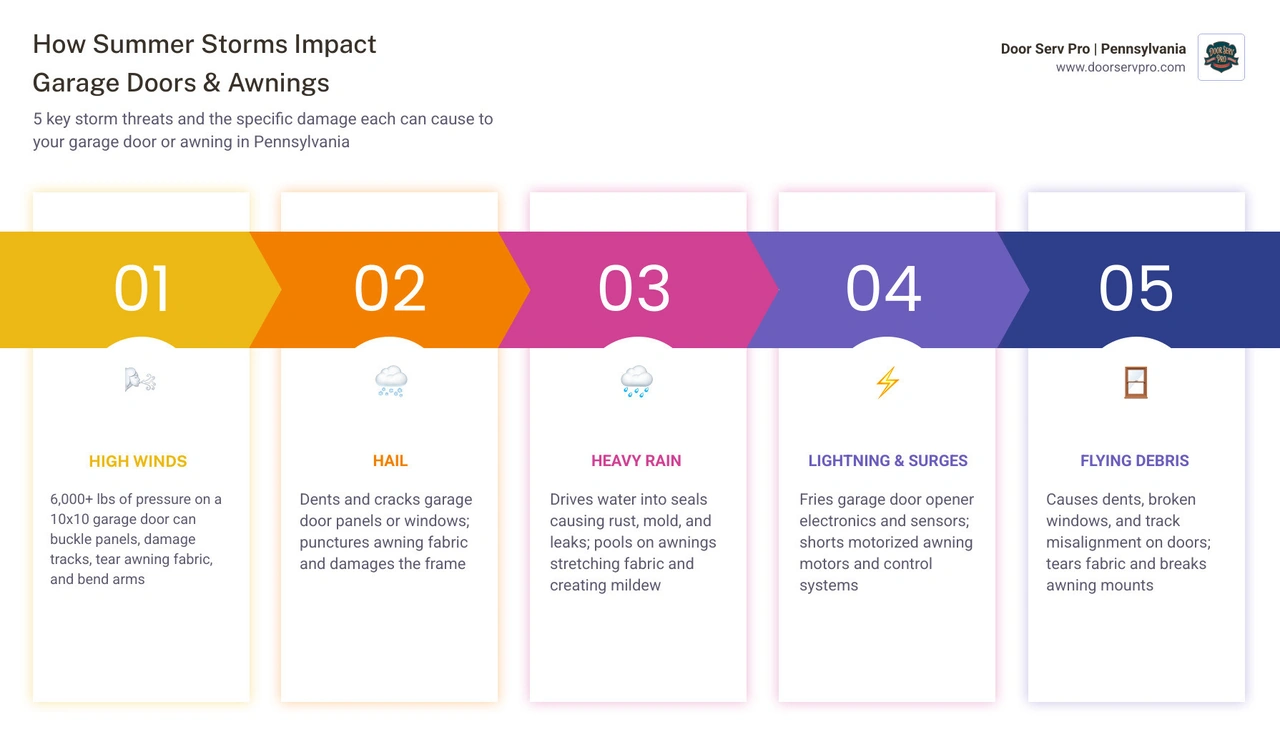
Understanding how summer storms affect your garage door and awning starts with recognizing how quickly severe weather can damage important parts of your home in Chambersburg, PA and nearby Pennsylvania communities. Here is a quick overview of the main risks:
| Storm Threat | Garage Door Impact | Awning Impact |
|---|---|---|
| High winds | Panel buckling, track damage, structural failure | Torn fabric, bent arms, bracket failure |
| Hail | Dents, cracked windows, weakened panels | Holes, torn seams, frame damage |
| Heavy rain | Water intrusion, rust, seal failure, mold | Pooling water, fabric stretching, mildew |
| Lightning/power surges | Opener electronics damaged, sensors fried | Motorized systems shorted out |
| Flying debris | Dents, broken windows, track misalignment | Fabric tears, bent frame, broken mounts |
Summer storms are not just a minor inconvenience for homeowners. They can quickly turn a small maintenance issue into a major repair problem or the need for replacement. A standard 10-by-10-foot garage door can face more than 6,000 pounds of wind pressure when winds hit 130 mph, which puts serious stress on the door, tracks, hardware, and opener system.
Awnings face their own weather risks. Pooling water can stretch and distort fabric in a single storm, and bent arms from wind stress can compromise the entire frame. Without preparation, systems that should last for years may wear out much sooner.
This guide is a practical checklist for homeowners in Chambersburg, PA and surrounding areas who want to protect both systems before, during, and after a Pennsylvania summer storm.
How Summer Storms Affect Your Garage Door and Awning
Summer storms put garage doors and awnings under stress in very different ways, but the result is often the same: weakened materials, reduced safety, and a shorter lifespan. Garage doors are large moving walls. Awnings are exposed shade systems with fabric, frames, and sometimes motors. Neither loves hail, high wind, or surprise downpours.
How summer storms affect your garage door and awning during high winds
Wind is often the biggest threat. A garage door has a wide surface area, so strong gusts push against it like a sail. If the door is older, lightly built, or already loose on the tracks, panels can bow, hinges can strain, and tracks can shift. In the worst cases, the door buckles inward or pulls out of alignment.
If a garage door fails during a major storm, it can also create pressure problems inside the home. That extra pressure may increase the risk of damage to surrounding walls and roofing. This is one reason storm reinforcement matters so much. We cover more seasonal protection basics in our Weather Protection resources.

Awnings react differently. Wind grabs fabric edges, arms, and frames. Retractable awnings can jerk, twist, or snap back under sudden gusts. Fixed awnings may loosen at the mounting points or bend at the frame. Even if the awning does not fully fail, repeated wind stress can loosen fasteners and create sagging that shows up later.
How summer storms affect your garage door and awning in hail and heavy rain
Hail is blunt-force damage. On garage doors, hail can leave dents, crack window inserts, chip finishes, and worsen any existing weak spots. Steel and aluminum doors may still function after a hailstorm, but the impacts can affect alignment and create places for rust to start.
Heavy rain creates a different set of problems. Water can seep through worn bottom seals, damaged weather stripping, or small panel gaps. Over time, that leads to rust, mold, swollen trim, and moisture inside the garage. If your driveway slopes toward the door, the risk gets worse.
For awnings, hail can tear seams, puncture fabric, and bend lightweight framing. Heavy rain can be just as damaging if water pools on the fabric. Once fabric stretches, it may never return to its original shape. Standing water also encourages mildew, staining, and frame strain. Our guide on Awnings Protect Home Sun Rain Guide explains how weather exposure affects awning performance over time.
What lightning and power surges do to openers and motorized awnings
Lightning does not have to strike your home directly to cause trouble. Nearby strikes can trigger power surges that damage garage door opener boards, wall controls, remotes, and safety sensors. Motorized awnings can suffer similar electrical damage.
Storm-related outages also create practical issues. If your opener loses power, you may need to use the manual release. If the door is already damaged or off balance, forcing it can be dangerous. The same goes for an awning motor straining after moisture exposure or surge damage. More on seasonal electronic protection can be found in this Weather Protection article.
The Most Common Storm Damage Homeowners Should Check First
After a storm, visible damage is only part of the story. Some of the most serious problems start small: a slightly bent track, a loosened awning bracket, a sensor that suddenly acts up. These are easy to miss until the next storm or the next time you use the system.
Garage door damage signs after a summer storm
Look for:
- Dented or bowed panels
- Tracks that appear bent or pulled away from the wall
- Jerky movement or unusual grinding noises
- Frayed cables
- Broken or fatigued springs
- Cracked garage door windows
- Gaps around the bottom or sides of the door
- Opener delays, blinking sensors, or failure to close properly
Garage door springs usually last about 7 to 10 years with normal use, but storm stress can speed up failure. A well-maintained garage door may last 15 to 30 years, but neglected hardware can cut that lifespan down fast. For routine prevention, see our Seasonal Garage Door Maintenance Tips.
Awning damage signs after a summer storm
Check awnings for:
- Torn seams or holes in the fabric
- Sagging or stretched canopy sections
- Loose wall brackets or mounting bolts
- Bent arms or twisted frame members
- Rust or corrosion at joints
- Mildew, staining, or musty odors
- Fading and brittle fabric from combined UV and moisture exposure
- Water pooling after the storm has passed
Fabric problems often start at the seams and edges. Hardware problems usually show up where the awning connects to the home. Our Awning Fabric Care Guide is helpful if you are trying to tell the difference between cosmetic wear and damage that needs service.
When storm damage is unsafe to ignore
Some damage should never wait.
Immediate danger signs include:
- A garage door hanging unevenly
- Snapped springs or loose cables
- Tracks separating from the wall
- An awning frame pulling away from the house
- Electrical burning smell near opener or awning motor
- Water entering around the garage door during rain
- Large gaps that affect home security
- Sharp bent metal, torn fabric, or exposed fasteners creating injury hazards
Ignoring these issues can lead to collapse risk, pinch-point injuries, electrical hazards, pest entry, and bigger structural damage. In short, a “we’ll deal with it later” problem can become a “why is my garage door sideways?” problem.
Pre-Storm Checklist to Prepare Your Garage Door and Awning
The best storm repair is the one you never need. A little preparation before severe weather can prevent a lot of frustration later.
Garage door steps to complete before severe weather arrives
Use this checklist before Pennsylvania summer storms ramp up:
- Tighten loose brackets, hinges, and bolts
- Inspect bottom, side, and top seals for cracks or flattening
- Test door balance by disconnecting the opener and lifting halfway by hand
- Lubricate rollers, hinges, and moving metal parts with a proper garage door lubricant
- Clear debris from tracks and the area around the door
- Check for rust, dents, or panel damage
- Replace worn weather stripping if daylight shows around the edges
- Protect garage door windows if severe weather is forecast
- Consider a brace kit or reinforced door if your current system is older or lightly built
- Unplug the opener before major storms if recommended for your setup and safety plan
For more homeowner steps, visit Prepare Your Garage Door for Summer and our Garage Door Maintenance page.
Awning steps to complete before a summer storm
Awnings reward routine attention.
Before storms hit:
- Retract retractable awnings during strong wind, hail, or heavy rain
- Check awning pitch so water runs off properly
- Follow the 14-degree rule when applicable to help prevent pooling
- Make sure fabric is dry before long-term storage or full retraction after rain
- Tighten mounting hardware and inspect brackets
- Remove leaves, twigs, and debris from the awning surface and housing
- Test wind sensors on motorized units
- Replace weak sensor batteries at the start of the season
- Lubricate pivot points and joints with silicone-based lubricant
- Never use WD-40 on awning mechanisms, since it can attract dirt
Our Maintaining Your Investment Tips for Outdoor Awnings Care and Storm Resistant Awning Solutions Hagerstown articles offer more detail on storm-minded awning upkeep.
Yard and drainage habits that reduce storm damage
Storm prep is not just about the door and awning themselves.
Also do this:
- Trim tree limbs hanging near the garage or awning
- Bring in or secure loose outdoor furniture and tools
- Keep gutters and downspouts clear
- Make sure downspouts discharge away from the garage
- Check driveway grading if water flows toward the garage door
- Use threshold seals where water intrusion is a recurring problem
- Identify low spots where floodwater tends to collect
Just one inch of floodwater can cause more than $26,000 in damage to a house and belongings, so drainage is not a small detail. More weather-readiness tips are available in our Weather Protection content.
Maintenance Habits That Help Storm-Exposed Doors and Awnings Last Longer
Storm resistance is not one upgrade. It is a habit. Consistent maintenance helps both systems handle wind, moisture, and heat better year after year.
Garage door maintenance that extends service life
Garage doors usually last 15 to 25 years, and a well-maintained one may reach 15 to 30 years. The difference often comes down to maintenance.
Key habits include:
- Lubricating hinges, rollers, and bearings on schedule
- Watching spring condition, especially once the system is 7 to 10 years old
- Replacing cracked or brittle weather seals
- Cleaning and touching up chipped finishes to slow rust
- Testing the auto-reverse safety system regularly
- Checking opener response and sensor alignment
- Scheduling an annual professional tune-up
Heat, humidity, and storm debris all add wear. In Pennsylvania, that means summer is a smart time to stay ahead of problems rather than wait for a breakdown during the next thunderstorm.
Awning maintenance that protects fabric and frame
Most awnings last around 5 to 15 years, while a quality unit with proper care may reach 10 to 15 years or longer. The frame can sometimes outlast the fabric by many years.
Good awning habits include:
- Cleaning fabric with mild pH-neutral soap and a soft brush twice a year
- Avoiding harsh cleaners and high-pressure washing
- If pressure washing is ever used, keeping it below 1200 PSI and at a safe distance
- Reapplying protective treatment every 12 to 24 months when appropriate
- Lubricating moving joints monthly during spring and summer with silicone spray
- Inspecting monthly for tears, rust, loose hardware, and mildew
- Letting fabric dry fully before retracting for long periods
Acrylic fabrics are breathable and dry quickly, which helps reduce mold risk. Vinyl-coated polyester is more waterproof, but less breathable. Neither material likes standing water.
Best materials and features for better summer storm resistance
If you are upgrading, certain materials and features hold up better in storm-prone weather.
| System | Better Storm-Resistant Features | Why It Helps |
|---|---|---|
| Garage door | Wind-rated construction | Better resistance to pressure and buckling |
| Garage door | Reinforced panels and horizontal braces | Adds rigidity during gusts |
| Garage door | Heavy-duty tracks and hardware | Reduces failure at stress points |
| Garage door | Insulated steel construction | Improves strength and rigidity |
| Garage door | Impact-resistant design | Helps with hail and debris |
| Awning | Solution-dyed acrylic fabric | Better UV and fade resistance |
| Awning | Enclosed housing | Protects fabric and mechanism when retracted |
| Awning | Wind sensors | Retracts unit during gusty conditions |
| Awning | Shock-absorbing arms | Reduces frame strain in wind |
| Awning | Proper pitch | Prevents pooling water |
Repair or Replace After a Summer Storm?
Not every storm-damaged system needs full replacement. But not every damaged system should be patched either.
When a garage door can be repaired instead of replaced
Repair may make sense when the damage is limited, such as:
- Minor dents that do not affect operation
- One damaged panel on a newer model
- Worn or torn weather seals
- Slight track or hardware adjustments
- Sensor realignment
- Opener reset after a power event
- Cosmetic hail damage without structural issues
If the rest of the system is in good shape, repair is often the practical choice.
When an awning can be repaired instead of replaced
Awning repair may be possible for:
- Small fabric tears or seam damage
- Loose brackets or hardware
- Minor arm alignment issues
- Surface rust and frame cleaning
- Motor reset after a temporary electrical issue
- Replacement of fabric when the frame is still sound
This is especially true when the fabric has aged faster than the hardware.
When replacement is the safer long-term choice
Replacement is usually smarter when you see:
- Structural bending or frame failure
- Repeated storm-related failures
- Severe corrosion
- Major track damage
- Broken mounting points
- Multiple damaged garage door panels
- An older garage door, especially in the 15 to 25 year range, with recurring repairs
- Outdated safety features
- Awning fabric and frame both nearing end of life
For garage doors, the common rule of thumb is to think seriously about replacement if repair needs keep piling up or major structural parts are compromised. Newer storm-resistant upgrades often provide better safety, better sealing, and better durability.
Why professional inspections help prevent bigger problems later
A professional inspection can catch what homeowners often cannot safely test on their own, including:
- Track alignment
- Spring tension
- Cable wear
- Opener diagnostics
- Sensor issues
- Hidden bracket damage
- Fabric integrity problems
- Fastener pull-out at mounting points
That matters because hidden storm damage tends to get worse under normal daily use. One rough storm followed by a few weeks of “it still mostly works” is often how small damage becomes major failure.
Frequently Asked Questions About How Summer Storms Affect Your Garage Door and Awning
Can one strong summer storm shorten the life of a garage door or awning?
Yes. A single storm can dent panels, shift tracks, tear fabric, or stretch awning material enough to permanently affect performance. Hail can create weak points. Heavy rain can start rust or mildew. High wind can knock parts slightly out of alignment, which increases wear every time the system operates afterward.
What should I do immediately after a storm if my garage door or awning looks damaged?
Start with a visual inspection from a safe distance. Do not force the garage door open or closed if it looks crooked, jammed, or off track. Disconnect power if there are signs of electrical damage or water near the opener. Document visible damage with photos. Then schedule a professional inspection.
Are newer storm-resistant materials worth considering for Pennsylvania homes?
In many cases, yes. Wind-rated garage doors, reinforced hardware, insulated steel construction, and stronger seals can improve both durability and day-to-day performance. For awnings, UV-resistant fabrics, enclosed housings, wind sensors, and sturdier arm systems can help reduce storm wear. They can also improve comfort and energy performance. For example, window awnings can reduce solar heat gain by up to 65% on south-facing windows and 77% on west-facing windows in summer.
Conclusion
Summer weather in Pennsylvania can be hard on exterior systems, and how summer storms affect your garage door and awning is not something homeowners in Chambersburg, Greencastle, Waynesboro, or nearby communities should ignore. Wind, hail, heavy rain, and lightning each create different risks, but regular maintenance and timely inspections go a long way toward preventing serious damage.
As a family-owned company, we believe storm preparation is about more than protecting parts and hardware. It is about keeping your home safer, more secure, and easier to use when weather turns rough.
If you want help inspecting, maintaining, repairing, or upgrading your garage door or awning, Contact us.